
What is S460MC steel equivalent material in China
Explore the Chinese equivalent of S460MC steel, primarily Q460MC. This guide covers chemical composition, mechanical properties, and industrial applications for high-strength steel.
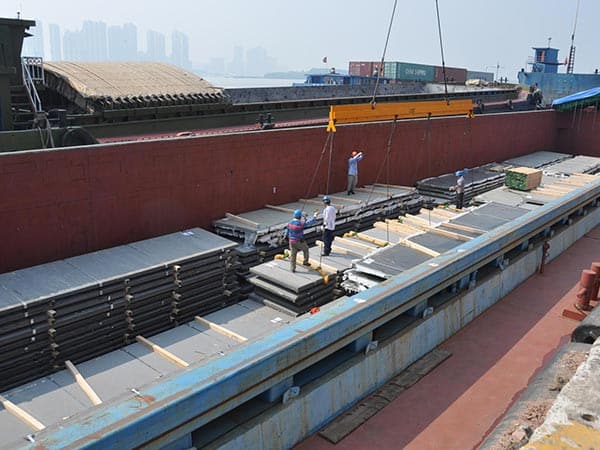
Understanding S460MC and Its Chinese Counterpart Q460MC
S460MC is a high-strength, thermomechanically rolled steel specifically designed for cold forming. It is defined under the European standard EN 10149-2. As global supply chains integrate, engineers and procurement specialists often seek the Chinese equivalent to optimize costs and lead times. The most direct equivalent in the Chinese national standard (GB) is Q460MC, governed by GB/T 1591 or more specifically GB/T 20887.1 for automotive applications.
The 'S' in S460MC stands for structural steel, '460' represents the minimum yield strength of 460 MPa, 'M' indicates the thermomechanical rolling process, and 'C' signifies its suitability for cold forming. Similarly, in the Chinese designation Q460MC, 'Q' stands for 'Qu' (Yield), '460' is the yield value, and 'MC' aligns with the European processing and forming descriptors. These materials are prized for their ability to reduce weight in structural components without sacrificing safety or durability.
Chemical Composition Comparison
The chemical makeup of S460MC and Q460MC is engineered to ensure excellent weldability and formability. Both standards emphasize low carbon content and the strategic use of micro-alloying elements like Niobium (Nb), Vanadium (V), and Titanium (Ti).
| Element (Max %) | S460MC (EN 10149-2) | Q460MC (GB/T 1591) |
|---|---|---|
| Carbon (C) | 0.12 | 0.12 |
| Manganese (Mn) | 1.60 | 1.60 |
| Silicon (Si) | 0.50 | 0.50 |
| Phosphorus (P) | 0.025 | 0.025 |
| Sulfur (S) | 0.015 | 0.015 |
| Aluminium (Al) | 0.015 | 0.015 |
| Nb+V+Ti | 0.22 | 0.22 |
The low carbon equivalent (CEV) is a critical factor for both materials. By keeping carbon levels low and utilizing grain refinement through thermomechanical rolling, these steels achieve high strength while remaining highly ductile. This chemical balance ensures that the heat-affected zone (HAZ) during welding does not become excessively brittle, a common issue with older high-strength steel grades.
Mechanical Performance and Structural Integrity
The primary reason for selecting S460MC or Q460MC is the high yield-to-tensile ratio. This allows for thinner sections to carry the same loads as thicker, lower-grade steels like S355 or Q355, leading to significant weight savings in mobile equipment and transport vehicles.
- Yield Strength: Both materials require a minimum of 460 MPa. This is the stress level where the steel begins to plastically deform.
- Tensile Strength: Typically ranges between 520 and 670 MPa. This ensures a sufficient safety margin between the onset of yielding and ultimate failure.
- Elongation: Minimum elongation values (usually around 14% to 17% depending on thickness) ensure that the material can absorb energy and withstand deformation without cracking.
- Impact Toughness: While S460MC is often tested at -20°C, Q460MC can be specified with various impact test temperatures (e.g., Q460D or Q460E) to meet specific environmental demands.
Advanced Processing and Cold Forming Capabilities
The 'C' suffix in both S460MC and Q460MC highlights their exceptional cold-forming properties. Fabricators can perform tight-radius bending without surface cracking, provided the correct tooling and grain orientation are considered. Typically, the minimum bending radius for a 90-degree bend is expressed as a multiple of the plate thickness (t). For S460MC, a radius of 1.0t to 1.5t is often achievable for thicknesses under 6mm.
Thermomechanical rolling (TMCP) is the secret behind this performance. Unlike traditional normalized steels, TMCP steels are rolled at specific temperatures that control the microstructural grain size. This results in a fine-grained ferrite-pearlite or bainitic structure that provides a superior combination of strength and toughness. It also means these steels should not be heat-treated above 580°C, as excessive heat can destroy the specialized microstructure created during the rolling process.
Welding and Fabrication Best Practices
Welding S460MC and its Chinese equivalent Q460MC is straightforward due to the low carbon content. Standard methods such as MAG (Metal Active Gas), TIG (Tungsten Inert Gas), and Submerged Arc Welding (SAW) are all highly effective. Because the carbon equivalent is low, preheating is generally not required for thinner sections, which reduces fabrication time and energy costs.
However, it is vital to use consumables that match or slightly exceed the strength of the base metal. For S460MC, E80 series electrodes or equivalent wires are standard. Maintaining a controlled heat input is essential; too much heat can soften the thermomechanically processed zone, while too little can lead to lack of fusion. Professionals recommend keeping the interpass temperature below 200°C to preserve the mechanical properties of the joint.
Expanding Industrial Applications
The shift toward S460MC and Q460MC is driven by the global demand for efficiency. In the automotive sector, these steels are used for truck chassis, cross members, and longitudinal beams. By switching from S355 to S460MC, manufacturers can often reduce component weight by 15-20%, directly improving fuel efficiency and payload capacity.
In the lifting and transition industry, these grades are found in crane booms, telescopic handlers, and aerial work platforms. The high strength allows for longer reach and higher lift capacities. Furthermore, the agricultural sector utilizes Q460MC for heavy-duty trailers and tillage equipment, where resistance to mechanical stress and environmental wear is paramount.
Environmental Adaptability and Longevity
High-strength low-alloy (HSLA) steels like Q460MC offer better atmospheric corrosion resistance than plain carbon steels. While they are not "stainless," the dense grain structure and micro-alloying elements provide a slight advantage in resisting the onset of oxidation. For harsh environments, these steels are excellent candidates for galvanizing or high-performance coating systems. The low silicon content can be specifically requested (controlled silicon) to ensure a high-quality, uniform zinc coating during the hot-dip galvanizing process.
Sourcing and Quality Verification
When substituting S460MC with Chinese Q460MC, it is imperative to verify the Mill Test Certificate (MTC). A valid MTC should confirm compliance with GB/T 1591 or GB/T 20887.1 and list the actual chemical analysis and mechanical test results. Look for reputable Tier-1 Chinese mills such as Baosteel, Shougang, or Ansteel, which have the advanced TMCP equipment necessary to produce these high-performance grades consistently.
Key checkpoints for procurement include thickness tolerances (often conforming to EN 10051 or equivalent GB standards), flatness requirements, and surface finish. Since these materials are often used in automated laser cutting and robotic welding cells, consistency in coil or plate flatness is critical to prevent production downtime.
Final Considerations for Engineers
Choosing between S460MC and Q460MC often comes down to regional availability and project specifications. From a technical standpoint, the materials are nearly identical and can be used interchangeably in most structural and automotive applications. The focus should remain on the specific requirements of the design—such as minimum bend radii and impact toughness at low temperatures—to ensure the selected grade meets the operational reality of the final product.
Leave a message