
What are the main factors affecting the hardenability of s460 steel welding
Explore the critical factors influencing the hardenability of S460 high-strength steel during welding, including chemical composition, cooling rates, and microstructure evolution in the Heat Affected Zone.
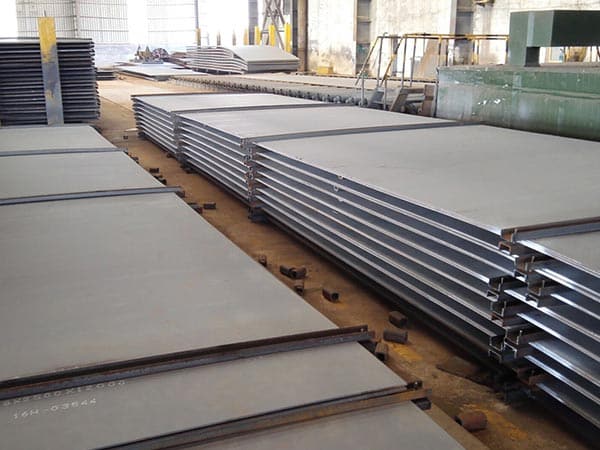
Understanding the Metallurgical Profile of S460 steel
S460 steel represents a high-strength structural steel grade governed by the EN 10025 standard, specifically within parts 3, 4, and 6. Whether it is normalized (S460N), thermomechanically rolled (S460M), or quenched and tempered (S460Q), the primary challenge during welding is managing the hardenability of the Heat Affected Zone (HAZ). Hardenability in this context refers to the tendency of the steel to form hard, brittle microstructures, primarily martensite, when subjected to the rapid thermal cycles of welding. High hardness in the HAZ is the precursor to cold cracking, also known as hydrogen-induced cracking (HIC), which can compromise the structural integrity of heavy-duty components.
The Dominant Role of Chemical Composition and Carbon Equivalent
The most fundamental factor affecting the hardenability of S460 steel is its chemical makeup. Although S460 is designed with low carbon content to improve weldability, the addition of alloying elements to achieve a 460 MPa yield strength increases the Carbon Equivalent Value (CEV). Elements such as Manganese (Mn), Chromium (Cr), Molybdenum (Mo), Vanadium (V), and Nickel (Ni) all contribute to the stability of austenite and delay its transformation during cooling, thereby increasing the likelihood of forming hard phases.
Engineers typically use the CEV formula (IIW) to quantify this risk:
CEV = C + Mn/6 + (Cr + Mo + V)/5 + (Ni + Cu)/15
For S460 steel, the CEV typically ranges between 0.45 and 0.48. A higher CEV directly correlates with increased hardenability. When the CEV exceeds 0.45, the risk of HAZ hardening becomes significant, necessitating strict control over welding parameters. Additionally, the Pcm (parameter for cracking) is often used for modern low-carbon micro-alloyed steels like S460M, as it provides a more accurate assessment of weldability for steels with carbon content below 0.12%.
| Element | Typical Max % (S460M) | Effect on Hardenability |
|---|---|---|
| Carbon (C) | 0.16 | Primary driver of martensite hardness. |
| Manganese (Mn) | 1.70 | Increases hardenability by lowering transformation temperature. |
| Silicon (Si) | 0.60 | Solid solution strengthener; minor effect on hardenability. |
| Vanadium (V) | 0.20 | Forms carbides; can increase hardness through precipitation. |
| Niobium (Nb) | 0.05 | Refines grain size, but can increase hardenability in solution. |
Influence of the Welding Cooling Rate (t8/5)
The thermal cycle of welding is characterized by the cooling rate, specifically the time taken to cool from 800°C to 500°C, known as the t8/5 value. This specific temperature range is critical because it is where the transformation of austenite into ferrite, pearlite, bainite, or martensite occurs. For S460 steel, a very fast cooling rate (short t8/5) traps carbon in the lattice, resulting in a hard martensitic structure. Conversely, an excessively slow cooling rate (long t8/5) can lead to grain coarsening in the HAZ, which reduces toughness even if hardness is kept low.
Several factors dictate the cooling rate:
- Heat Input: Measured in kJ/mm, higher heat input slows the cooling rate, reducing the peak hardness of the HAZ.
- Plate Thickness: Thicker plates act as a larger heat sink, accelerating the cooling rate and increasing the risk of hardening.
- Joint Geometry: T-joints and corner welds dissipate heat faster than butt welds, leading to higher local hardenability.
- Preheating: Raising the initial temperature of the base metal is the most effective way to extend the t8/5 time and prevent the formation of brittle phases.
Microstructural Evolution in the Heat Affected Zone
The HAZ of S460 steel is not uniform; it consists of several sub-zones, each with different hardenability characteristics. The Grain Coarsened HAZ (GCHAZ), located immediately adjacent to the fusion line, is the most critical. In this region, the temperature exceeds 1100°C, causing significant growth of austenite grains. Large austenite grains have lower surface-area-to-volume ratios, which reduces the number of nucleation sites for ferrite, thereby promoting the formation of hard bainite or martensite upon cooling.
In S460M (thermomechanically rolled) steels, the presence of fine precipitates like Titanium Nitrides (TiN) helps pin grain boundaries and limit coarsening. However, if the heat input is too high, these precipitates can dissolve or coalesce, losing their effectiveness. The balance between maintaining a fine grain structure and avoiding excessive hardness is the core of S460 welding metallurgy.
The Impact of Diffusible Hydrogen
While hydrogen does not change the theoretical hardenability of the steel, it interacts catastrophically with a hardened microstructure. S460 steel, due to its high strength, is particularly sensitive to Hydrogen-Induced Cold Cracking. When the HAZ hardness exceeds 350-380 HV10, even small amounts of diffusible hydrogen can trigger crack initiation. The hydrogen originates from moisture in electrode coatings, flux, or atmospheric humidity. Therefore, while managing hardenability through heat control is vital, it must be paired with low-hydrogen welding processes (e.g., using H5 or H10 classified consumables) to ensure the integrity of the S460 weldment.
Environmental Adaptability and Service Performance
The hardenability of S460 welding also impacts how the structure performs in its operating environment. In offshore applications or bridge construction in cold climates, a hardened HAZ is highly susceptible to brittle fracture. If the welding process results in excessive hardness, the local fracture toughness (CTOD value) drops significantly. Furthermore, in environments where Stress Corrosion Cracking (SCC) is a risk, a hard HAZ acts as a preferential site for crack propagation. Achieving a uniform hardness profile across the weld, HAZ, and base metal is essential for long-term durability in aggressive environments.
Practical Strategies for Controlling Hardenability
To successfully weld S460 steel without detrimental hardening, a multi-faceted approach is required. First, the selection of the welding process is paramount. Submerged Arc Welding (SAW) and Gas Metal Arc Welding (GMAW) are often preferred for their ability to provide consistent heat input. Second, preheating temperatures should be calculated based on the CEV and plate thickness, typically ranging from 75°C to 150°C for thicker sections of S460.
Monitoring the interpass temperature is equally important. If the interpass temperature is too low, the cooling rate of subsequent passes increases. If it is too high, the cumulative heat can lead to excessive grain growth. For S460M steel, the interpass temperature is usually capped at 200°C to preserve the benefits of the thermomechanical processing. Finally, post-weld heat treatment (PWHT) is rarely used for S460M as it can degrade the base metal properties, making the initial control of welding hardenability even more critical.
Expanding Application Horizons for S460 Steel
The demand for S460 steel is growing in sectors requiring high strength-to-weight ratios. In the wind energy sector, S460 is used for tower flanges and heavy foundations where fatigue resistance is tied to weld quality. In the heavy machinery industry, crane booms and chassis benefit from the weight savings S460 provides. Understanding the factors affecting hardenability allows these industries to push the limits of design, ensuring that welds are as robust as the high-performance steel they join. By mastering the interplay between chemistry, thermal cycles, and microstructure, fabricators can unlock the full potential of S460 structural steel.
Leave a message