
Why is water seeping out of the slit when cutting s460mc mechanical properties
An expert analysis of why moisture appears during S460MC steel cutting, combined with a deep dive into its mechanical properties, metallurgical structure, and industrial applications.
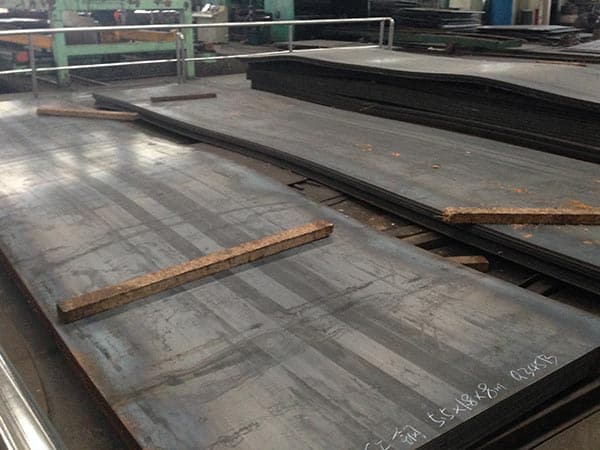
The Phenomenon of Moisture Seepage During S460MC Cutting
When processing S460MC, a high-strength low-alloy (HSLA) steel, operators occasionally observe a peculiar phenomenon: water or moisture seeping out from the cutting slit, particularly during laser or plasma cutting. This is not a sign of the steel being 'wet' in a traditional sense, but rather a complex interaction between environmental storage, surface morphology, and the thermal physics of the cutting process. S460MC is produced via thermomechanical rolling, which creates a very fine-grained microstructure. If the steel plates are stored in environments with high humidity or significant temperature fluctuations, condensation can become trapped within the microscopic pores of the surface scale (mill scale) or within minute laminations near the edges. When the high-energy beam hits the material, this trapped moisture is rapidly heated, turning into steam and then condensing back into liquid as it is forced out of the narrow slit by the assist gas.
Another technical reason involves the capillary action of the material's surface. S460MC often has a tightly adherent oxide layer. If there are micro-fissures or if the plate has undergone leveling processes that created internal stresses, moisture can be 'wicked' into the material. During cutting, the release of residual stress and the localized heat input act as a pump, forcing this moisture to the surface. Understanding this is vital because moisture during cutting can lead to oxidation of the cut edge, potential hydrogen embrittlement in the heat-affected zone (HAZ), and interference with the laser beam's stability, leading to a rougher finish.
Metallurgical Excellence: The Composition of S460MC
S460MC is defined by the EN 10149-2 standard, which specifies hot-rolled flat products made of high yield strength steels for cold forming. The 'MC' suffix denotes that the material is thermomechanically rolled (M) and is intended for cold forming (C). The secret to its high strength-to-weight ratio lies in its chemical composition and the controlled cooling process during manufacturing. Unlike traditional structural steels that rely on high carbon content for strength, S460MC maintains a low carbon equivalent (CEV), which significantly enhances its weldability and toughness.
The micro-alloying elements—primarily Niobium (Nb), Vanadium (V), and Titanium (Ti)—play a crucial role. These elements facilitate grain refinement during the thermomechanical rolling process. A finer grain size according to the Hall-Petch relationship directly increases yield strength and improves low-temperature impact toughness. This metallurgical strategy ensures that S460MC remains ductile even at high stress levels, making it a preferred choice for safety-critical components.
| Chemical Element | Maximum Content (%) |
|---|---|
| Carbon (C) | 0.12 |
| Manganese (Mn) | 1.60 |
| Silicon (Si) | 0.50 |
| Phosphorus (P) | 0.025 |
| Sulfur (S) | 0.015 |
| Aluminium (Al) | 0.015 (min) |
Mechanical Properties: Beyond the Yield Point
The primary draw of S460MC is its minimum yield strength of 460 MPa. However, its mechanical profile is multi-dimensional. The tensile strength ranges between 520 and 670 MPa, providing a robust safety margin between the point of permanent deformation and actual fracture. This range is critical for engineers designing lightweight structures that must withstand dynamic loads without catastrophic failure.
Elongation and Ductility: Despite its high strength, S460MC exhibits excellent elongation properties. For thicknesses less than 3mm, the minimum elongation is typically 14%. This allows the material to be bent and formed into complex shapes without cracking. The ability to absorb energy through plastic deformation is a key reason why it is used extensively in the automotive industry for chassis components and crash-relevant structures.
Fatigue Resistance: The fine-grained structure of S460MC provides superior resistance to fatigue crack initiation. In applications like heavy-duty truck frames or crane booms, where cyclic loading is constant, S460MC outperforms standard S355 grade steels by offering a longer service life under the same stress cycles, or allowing for a reduction in material thickness to save weight while maintaining the same fatigue life.
Advanced Processing Performance
Processing S460MC requires an understanding of its unique physical characteristics. Because it is designed for cold forming, its behavior during bending, punching, and welding is predictable and highly efficient for mass production. Unlike higher carbon steels, S460MC does not work-harden as aggressively, which preserves the life of tooling and dies.
- Cold Bending: S460MC can be bent to very tight radii. For a 90-degree bend, the recommended internal bending radius is often as low as 1.0 to 1.5 times the material thickness (depending on the direction of rolling). This allows for compact designs in mechanical engineering.
- Welding Compatibility: Due to its low carbon content and low CEV, S460MC is easily weldable using standard methods like MIG/MAG, TIG, and submerged arc welding. It does not typically require preheating, which reduces production time and energy costs. However, care must be taken to control heat input to avoid excessive grain growth in the HAZ, which could locally reduce strength.
- Laser Cutting Precision: When laser cutting, using high-purity oxygen or nitrogen as an assist gas is recommended. If moisture seepage occurs, as mentioned earlier, it is advisable to pre-heat the plate slightly (to around 50-60°C) or perform a 'dry run' with the laser at low power to evaporate surface moisture before the final cut.
Environmental Adaptability and Durability
S460MC demonstrates impressive environmental adaptability, particularly in cold climates. Many structural steels become brittle as temperatures drop, but the fine-grained HSLA structure of S460MC maintains its impact toughness at sub-zero temperatures. This makes it suitable for equipment used in arctic environments or high-altitude mining operations.
Regarding corrosion, while S460MC is not a 'weathering steel' like Corten, its uniform surface and tight mill scale provide a decent baseline for protective coatings. When galvanized or painted, the chemical consistency of S460MC ensures excellent adhesion and a uniform protective layer, preventing the 'peeling' issues sometimes seen with steels that have high silicon or phosphorus segregation.
Strategic Applications in Modern Engineering
The shift towards sustainable engineering and carbon footprint reduction has propelled S460MC into the spotlight. By using S460MC instead of traditional S235 or S355, manufacturers can reduce the weight of a structure by 20% to 30% without sacrificing load-bearing capacity. This 'lightweighting' is essential for reducing fuel consumption in transportation and lowering material usage in construction.
In the heavy machinery sector, S460MC is the backbone of telescopic crane booms, agricultural machinery, and earth-moving equipment. These applications require a balance of high strength to lift heavy loads and high toughness to withstand the shocks of operation. In the automotive sector, it is used for longitudinal beams, cross members, and bumper reinforcements, where energy absorption during an impact is a matter of passenger safety.
| Industry | Specific Application | Key Benefit of S460MC |
|---|---|---|
| Automotive | Chassis and Frames | Weight reduction and crash safety |
| Construction | Support Brackets | High load capacity with thin profiles |
| Lifting Equipment | Crane Booms | High strength-to-weight ratio |
| Agriculture | Plow Frames | Fatigue resistance and weldability |
The technical challenges, such as moisture seepage during cutting, are minor hurdles compared to the immense structural advantages offered by S460MC. By optimizing storage conditions and refining cutting parameters, fabricators can fully harness the potential of this HSLA steel. The combination of high yield strength, exceptional formability, and reliable weldability ensures that S460MC remains a cornerstone of modern high-performance steel design.
Leave a message