
What is the difference between open flat and original steel for truck chassis assemblies
A deep dive into the metallurgical and mechanical differences between open flat and original mill plate steel for truck chassis manufacturing, covering stress, durability, and processing.
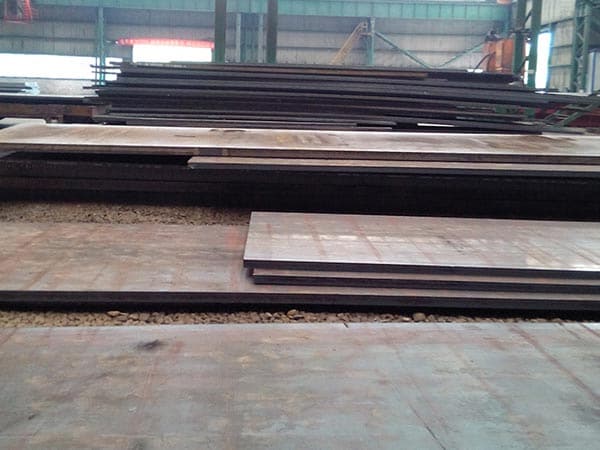
Understanding the Fundamental Metallurgy of Chassis Steel
The truck chassis is the structural backbone of any heavy-duty vehicle, responsible for bearing the weight of the cargo, the engine, and the cabin while simultaneously absorbing the dynamic stresses of road irregularities. When engineers select materials for these critical components, the choice often boils down to two forms of high-strength steel: open flat (decoiled/leveled plate) and original steel (mill plate or Quarto plate). While they might share the same chemical grade, such as S500MC or S700MC, their manufacturing histories create divergent physical properties that significantly impact the longevity and safety of the vehicle.
Original steel is produced through a discrete rolling process where individual slabs are rolled into plates of specific dimensions. This method allows for precise control over the cooling rate and grain refinement across the entire surface. In contrast, open flat steel starts its life as a continuous hot-rolled coil. This coil is later unrolled, flattened through a leveling machine, and cut to length. The act of uncoiling and leveling introduces a complex set of mechanical variables that do not exist in original mill plates, primarily centered around the concept of residual stress and elastic-plastic deformation.
Residual Stress: The Invisible Force in Chassis Fabrication
The most significant technical difference between these two material forms is the state of internal stress. During the production of a hot-rolled coil, the steel is wound tightly while still retaining heat. As it cools in a coiled state, the inner and outer layers experience different thermal contractions. When this coil is later processed into an open flat, the leveling machine must apply enough pressure to exceed the yield strength of the material to flatten it. This process, known as plastic deformation leveling, leaves behind residual stresses within the crystalline lattice of the steel.
For truck chassis assemblies, which often involve long longitudinal beams, these residual stresses can lead to "spring-back" or warping during subsequent processing. When a manufacturer uses laser cutting or plasma cutting on an open flat, the heat release can cause the plate to bow or twist as the internal stresses seek equilibrium. Original steel, having never been coiled, maintains a much more stable internal state. This stability ensures that when a 12-meter chassis rail is cut, it remains straight, reducing the need for expensive post-cutting correction and ensuring that the bolt holes for suspension mounts align perfectly every time.
Mechanical Performance and Fatigue Resistance
Trucks operate in environments characterized by constant vibration and cyclic loading. This makes fatigue resistance a paramount concern. Original mill plates typically exhibit a more uniform grain structure. Because they are rolled individually, the reduction ratio is often more consistent, leading to isotropic properties—meaning the steel performs similarly whether the stress is applied longitudinally or transversely.
Open flat steel, due to the high-speed continuous rolling of the strip mill, often exhibits a more pronounced "grain direction." This anisotropy can be a double-edged sword. While the strength in the rolling direction might be exceptional, the transverse toughness can sometimes lag. In chassis components like cross-members or brackets that experience multi-axial loading, the superior impact toughness of original steel at low temperatures (often tested at -20°C or -40°C) provides an extra margin of safety against brittle fracture in cold-weather operations. The following table highlights the core comparative metrics between these two formats:
| Feature | Open Flat (Decoiled) | Original Steel (Mill Plate) |
|---|---|---|
| Internal Stress | High (Residual from leveling) | Low (Naturally stable) |
| Flatness Consistency | Variable after cutting | High stability during fabrication |
| Thickness Tolerance | Very tight (Strip mill precision) | Standard (Quarto mill range) |
| Surface Quality | Smooth, thin oxide scale | Textured, robust mill scale |
| Fatigue Life | Standard for medium loads | Superior for heavy-duty cycles |
| Processing Cost | Lower (High-volume production) | Higher (Individual handling) |
Dimensional Accuracy and Thickness Control
From a manufacturing efficiency standpoint, open flat steel offers a distinct advantage in thickness tolerance. Modern hot strip mills are equipped with advanced Automatic Gauge Control (AGC) systems that maintain incredibly tight tolerances across the length of a coil. For a truck manufacturer looking to optimize weight (lightweighting), the ability to use a 7.8mm plate that is consistently 7.8mm allows for more precise FEA (Finite Element Analysis) modeling. Original mill plates, while meeting standard tolerances, often have a slight "crown" (the center being thicker than the edges) due to the deflection of the heavy rollers during the Quarto process.
However, the Bauschinger Effect must be considered when using open flats. This phenomenon describes how the yield strength of a material changes as a result of prior plastic deformation. The leveling process can slightly lower the compressive yield strength while increasing the tensile yield strength in certain directions. For chassis engineers designing for crashworthiness and energy absorption, these subtle shifts in material behavior require sophisticated compensation in the design phase that is generally unnecessary when using original mill plates.
Welding and Heat-Affected Zone (HAZ) Behavior
Welding is the primary joining method for chassis assemblies. The reaction of the steel to the intense heat of the welding arc is critical. Original steel, with its lower residual stress, is less prone to hydrogen-induced cracking in the heat-affected zone. When welding an open flat, the heat can trigger a redistribution of the leveling stresses, which might lead to micro-distortion in the weld seam. This is particularly problematic in automated robotic welding cells where a deviation of even 1mm can result in a failed weld bead.
Furthermore, the chemical composition of original mill plates is often more "clean" in terms of micro-alloying elements like Niobium (Nb), Vanadium (V), and Titanium (Ti). These elements are used to achieve high strength without increasing carbon content, maintaining excellent weldability. While open flats also use these alloys, the rapid cooling on a run-out table of a strip mill can lead to different precipitate sizes compared to the controlled cooling of a plate mill, subtly affecting the hardness profile across the weld joint.
Environmental Adaptability and Long-term Durability
Trucks are exposed to corrosive road salts, humidity, and abrasive debris. The surface of the steel plays a vital role in the adhesion of protective coatings like E-coating (electrophoretic deposition) or powder coating. Open flat steel usually has a thinner, more uniform scale that is easily removed by shot blasting, providing a pristine surface for paint. Original steel has a thicker mill scale which requires more aggressive blasting but can sometimes offer a more "mechanical" key for heavy-duty primers.
In terms of long-term durability, the choice depends on the vehicle's duty cycle. For long-haul highway trucks where weight saving is the priority, the high-strength-to-weight ratio and tight tolerances of open flats are often preferred. For off-road mining trucks or heavy construction vehicles that face extreme torsional stresses, the structural integrity and stress-free nature of original mill plates are indispensable. The higher initial cost of original steel is offset by a reduction in warranty claims related to frame cracking or structural fatigue.
Strategic Selection for Modern Chassis Engineering
The decision between open flat and original steel is not a matter of one being universally better than the other; rather, it is about matching the material's inherent characteristics to the specific demands of the chassis component. Longitudinal beams, which require extreme straightness over long distances, often benefit from the stability of original steel. Conversely, smaller brackets, cross-members, and reinforcement plates can be efficiently produced from open flats, taking advantage of their cost-effectiveness and superior surface finish.
As the automotive industry moves toward even higher strength grades, such as S900MC and S1100MC, the nuances of the leveling process become even more critical. The energy required to level such high-strength coils is immense, and the resulting residual stresses are proportionally higher. This is pushing many premium truck OEMs (Original Equipment Manufacturers) back toward original mill plates for their top-tier heavy-duty platforms, ensuring that the "backbone" of the truck is as resilient and predictable as possible. Engineers must weigh the precision of strip-mill tolerances against the structural serenity of mill-rolled plates to achieve the perfect balance of performance, weight, and cost.
Leave a message