
Whether the cutting cost of carbon plate S355MC is related to the cutting method
Detailed analysis of how different cutting technologies impact the total processing cost of S355MC high-strength steel, covering mechanical properties and economic efficiency.
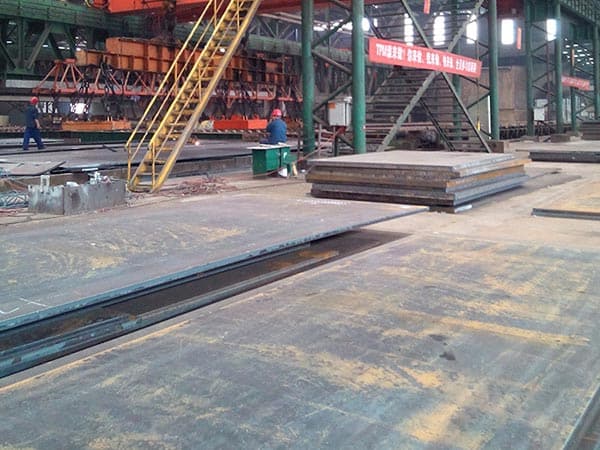
Understanding the Material Essence of S355MC Carbon Plate
S355MC is a high-yield-strength, hot-rolled steel specifically designed for cold forming applications, governed by the EN 10149-2 standard. Unlike traditional structural steels, S355MC undergoes thermomechanical rolling, which refines its grain structure to achieve a minimum yield strength of 355 MPa while maintaining excellent ductility. This unique metallurgical profile directly influences how the material reacts to thermal and mechanical stresses during the cutting process. When discussing whether the cutting cost is related to the method, we must first acknowledge that S355MC is not a generic carbon plate; its low carbon content and fine-grain structure make it highly sensitive to heat-affected zones (HAZ) and edge hardening.
Direct Correlation Between Cutting Methods and Operational Costs
The selection of a cutting method is the primary determinant of the direct cost per meter. For S355MC plates, which are frequently used in thicknesses ranging from 3mm to 20mm, the choice usually lies between flame (oxy-fuel), plasma, and laser cutting. Flame cutting is the most traditional method. While the initial equipment investment is low, the operational cost for S355MC is often higher due to the slow cutting speed and high gas consumption. Moreover, the intense heat of flame cutting can alter the thermomechanical properties of the S355MC edge, potentially leading to micro-cracking during subsequent cold bending processes.
Plasma cutting offers a middle ground. It is significantly faster than flame cutting for medium thicknesses, which reduces labor costs per part. However, the cost of consumables (electrodes and nozzles) and the high electricity demand must be factored in. For S355MC, plasma cutting provides a narrower HAZ compared to flame, but still leaves a slight taper on the edge that might require secondary machining if high precision is required.
Laser cutting, particularly fiber laser technology, has revolutionized the processing of S355MC. Although the hourly rate for a laser machine is high, the extreme speed and precision often result in the lowest cost per part for thicknesses under 12mm. The minimal kerf width ensures maximum material utilization, which is a critical cost-saving factor when dealing with premium high-strength steels like S355MC.
Mechanical Properties and Their Influence on Cutting Efficiency
The chemical composition of S355MC is optimized for weldability and formability. With a maximum carbon content of 0.12% and low levels of manganese and silicon, the material is less prone to the hardening that affects higher carbon steels during thermal cutting. This "clean" chemistry allows for higher cutting speeds in laser and plasma processes without sacrificing edge quality.
| Property | S355MC Specification | Impact on Cutting Cost |
|---|---|---|
| Yield Strength | Min 355 MPa | Higher resistance requires stable cutting platforms to prevent vibration. |
| Tensile Strength | 430 - 550 MPa | Influences the energy required for mechanical shearing or sawing. |
| Elongation | Min 19% (at 3mm) | Ensures the edge remains ductile after cutting for further forming. |
| Carbon Content | Max 0.12% | Reduces the risk of edge brittleness, lowering post-processing costs. |
The Hidden Costs: Secondary Processing and Quality Assurance
The "cost of cutting" S355MC extends far beyond the moment the torch or beam is active. Indirect costs often stem from the quality of the cut edge. S355MC is frequently used in the automotive and heavy machinery industries for components that undergo significant stress. If a cutting method produces a large heat-affected zone or significant dross (slag), the cost of manual grinding and cleaning can exceed the cost of the cutting itself.
- Dross Removal: Flame cutting often leaves heavy slag on S355MC, requiring intensive labor to remove.
- Edge Taper: High-definition plasma reduces taper, but laser cutting provides nearly vertical edges, eliminating the need for edge milling before welding.
- Thermal Distortion: S355MC plates are often used in large, thin sections (like truck chassis). Laser cutting minimizes heat input, preventing plate warping and the associated costs of straightening.
Environmental Adaptability and Industry-Specific Economic Choices
In different industrial environments, the definition of "cost-effective" changes. In the heavy crane and lifting equipment industry, where S355MC is prized for its strength-to-weight ratio, the integrity of the material is paramount. Here, waterjet cutting might be considered despite its high cost because it is a cold process. By avoiding heat entirely, waterjet cutting preserves the thermomechanical rolling benefits of S355MC perfectly, ensuring no loss of yield strength at the edges. While the cost per hour is high, the elimination of metallurgical testing and the guarantee of structural integrity can save thousands in liability and long-term performance costs.
Conversely, in the general construction sector, where S355MC might be used for simple brackets, the speed of plasma cutting offers the best ROI. The key is to match the cutting method's precision with the final application's tolerance requirements. Over-specifying the cutting method (e.g., using laser for a part with +/- 2mm tolerance) is a common source of unnecessary expenditure.
Optimizing S355MC Processing for Maximum Profitability
To minimize the total cost of S355MC carbon plate processing, manufacturers must adopt a holistic view. This involves nesting optimization to reduce scrap, choosing the right assist gas (nitrogen vs. oxygen for laser cutting), and considering the downstream operations. For instance, using nitrogen as an assist gas in laser cutting S355MC prevents oxidation of the edge, allowing for immediate painting or welding without the cost of oxide removal. While nitrogen is more expensive than oxygen, the savings in the assembly line are substantial.
The relationship between S355MC cutting cost and the chosen method is absolute and multifaceted. It is a balance between speed, precision, material preservation, and labor. By understanding the specific metallurgical advantages of S355MC, such as its low carbon equivalent and high ductility, processors can select the method that minimizes the Total Cost of Ownership (TCO) rather than just the initial cutting price. Efficient processing of S355MC not only preserves its high-strength characteristics but also ensures that the final product remains competitive in a demanding global market.
Leave a message