
What is the difference between S355MC hot-rolled pickled strip and medium thick plate
A comprehensive comparison between S355MC hot-rolled pickled strip and medium thick plate, covering production processes, mechanical properties, and industrial applications.
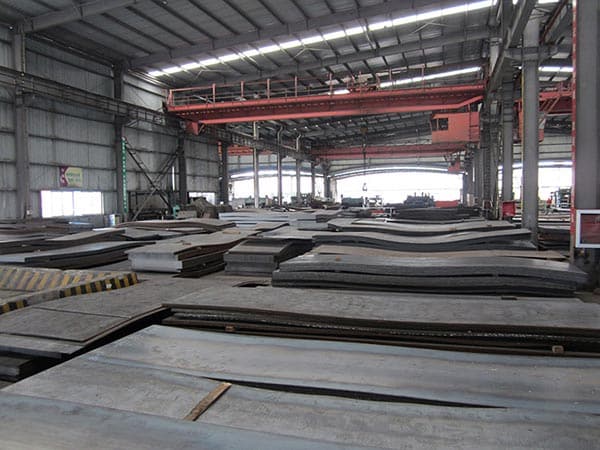
The Core Identity of S355MC: High-Strength Cold-Forming Steel
S355MC is a high-yield-strength steel grade governed by the EN 10149-2 standard. The designation 'S' stands for structural steel, '355' represents the minimum yield strength of 355 MPa, and 'MC' indicates that the material is thermomechanically rolled (M) and intended for cold forming (C). While the chemical composition remains relatively consistent, the physical form—whether it is delivered as a hot-rolled pickled strip or a medium thick plate—significantly influences its processing behavior, surface integrity, and final application suitability.
Understanding the nuances between these two product forms is essential for engineers and procurement specialists. Hot-rolled pickled strips are typically produced in continuous mills and then passed through a hydrochloric acid bath to remove scale. In contrast, medium thick plates (often referred to as 'heavy plates' or 'Quarto plates' when produced on reversing mills) follow a different thermal and mechanical trajectory. Even when a plate is 'cut-to-length' from a coil, its performance characteristics can differ from a discrete plate due to residual stresses and grain orientation.
Production Process: Continuous vs. Discrete Rolling
The most fundamental difference lies in the rolling technology. S355MC hot-rolled pickled strip is manufactured on a continuous hot strip mill (HSM). The steel slab is reduced in thickness through a series of finishing stands in a single pass, reaching speeds of up to 20 meters per second. This rapid reduction and controlled cooling (TMCP - Thermomechanical Controlled Processing) result in an extremely fine-grained ferrite-pearlite or bainitic microstructure. The pickling process then removes the black iron oxide scale, leaving a clean, 'silver-grey' surface that is ready for painting or galvanizing.
Medium thick plates, if produced via a Quarto mill, undergo a reversing process. The slab moves back and forth through the rolls, allowing for much greater thicknesses (often exceeding 20mm, which is the typical limit for coils). This process allows for more precise control over the cross-rolling ratio, which improves the isotropy of the steel. However, most S355MC 'plates' in the market are actually cut-to-length from hot-rolled coils. While these share the strip's microstructure, the leveling process used to flatten the coil introduces its own set of mechanical variables.
Surface Quality and Coating Adhesion
The pickling stage is a game-changer for the strip product. By removing the hard, abrasive mill scale, pickled strips offer several advantages:
- Extended Tool Life: During laser cutting or stamping, the absence of scale prevents premature wear on expensive machinery and fiber laser lenses.
- Superior Paint Adhesion: The clean, slightly etched surface provides an ideal substrate for powder coating or liquid painting without the need for intensive sandblasting.
- Visual Consistency: Pickled strips provide a uniform aesthetic, which is critical for exposed structural components in the automotive and machinery sectors.
Standard medium thick plates (non-pickled) retain their mill scale. This scale can flake off during bending or welding, leading to potential contamination and requiring secondary cleaning steps. For applications where aesthetics and precision are secondary to raw structural mass, the unpickled plate remains the cost-effective choice.
Mechanical Performance and Anisotropy
The mechanical properties of S355MC are defined by its fine grain structure, achieved through micro-alloying with elements like Niobium (Nb), Vanadium (V), and Titanium (Ti). However, the way these grains are 'stretched' during rolling differs between strip and plate.
| Property | S355MC Pickled Strip (Coil-sourced) | S355MC Medium Thick Plate (Quarto/Heavy) |
|---|---|---|
| Yield Strength (ReH) | Min 355 MPa (usually 380-420) | Min 355 MPa (more stable across thickness) |
| Tensile Strength (Rm) | 430 - 550 MPa | 430 - 550 MPa |
| Elongation (A5) | Min 19% (Highly ductile) | Min 19% (Slightly lower in transverse direction) |
| Internal Stress | Higher residual stress from coiling | Lower residual stress, better flatness stability |
Hot-rolled strips exhibit higher anisotropy. Because the steel is rolled in one direction at high speed, the properties in the longitudinal direction (rolling direction) differ from the transverse direction. This is particularly important when performing tight-radius bends. Medium thick plates, especially those produced on reversing mills, tend to be more isotropic, making them more predictable during complex multi-axis forming operations.
Dimensional Tolerance and Flatness
Dimensional precision is another area of divergence. Modern continuous strip mills utilize Automatic Gauge Control (AGC) and CVC (Continuously Variable Crown) technology, allowing for incredibly tight thickness tolerances across the length of a 30-ton coil. For S355MC pickled strip, thickness variations are often kept within microns.
However, flatness is where the medium thick plate often wins. When a strip is uncoiled and cut into plates, it retains 'coil set'—a memory of its curved state. Even after passing through a leveler, residual stresses can cause the plate to 'bow' or 'warp' during laser cutting as the heat releases these internal tensions. Discrete medium thick plates are rolled flat and cooled flat, generally offering superior dimensional stability for large-scale components like crane jibs or chassis frames.
Application Scenarios: Which to Choose?
The choice between S355MC pickled strip and medium thick plate is usually dictated by the manufacturing process and the end-use environment.
S355MC Pickled Strip is preferred for:
- Automotive Components: Chassis parts, brackets, and suspension arms where weight reduction and high strength are needed.
- Precision Laser Cutting: The scale-free surface allows for high-speed cutting with minimal dross.
- Stamping and Deep Drawing: The high ductility and clean surface protect the dies and ensure smooth material flow.
- Racking and Shelving: Where a clean finish is required for immediate powder coating.
S355MC Medium Thick Plate is preferred for:
- Heavy Machinery: Earthmoving equipment, mining machinery, and large crane components where thickness exceeds 12-15mm.
- Large Structural Weldments: Where the stability of the plate during high-heat welding is paramount to prevent distortion.
- High-Load Bearing Bases: Where the isotropic nature of the plate ensures uniform strength in all directions.
Environmental Adaptability and Longevity
In terms of environmental performance, S355MC is a 'clean' steel but not inherently corrosion-resistant like weathering steel or stainless steel. The pickled strip has a slight advantage in controlled environments because the removal of scale prevents the 'under-scale corrosion' that can occur if moisture gets trapped between the mill scale and the base metal. However, because the surface is 'active' (no longer protected by oxide), pickled steel must be lightly oiled or immediately processed to prevent flash rusting.
Medium thick plates with mill scale have a natural, albeit temporary, barrier against atmospheric corrosion during transport. However, for long-term durability in outdoor or industrial environments, both forms require secondary protection. The S355MC grade's low carbon equivalent (CEV) makes it exceptionally weldable, ensuring that the integrity of the joints remains robust even in sub-zero temperatures, which is a critical factor for equipment used in northern climates.
Economic Considerations in Procurement
From a cost perspective, S355MC pickled strip often carries a premium over black (unpickled) coil due to the extra processing step. However, this is frequently offset by the elimination of in-house cleaning or shot-blasting costs. Furthermore, the higher yield of usable material (less scrap from scale-related defects) and faster processing speeds on CNC machines make it the more economical choice for high-volume production.
Medium thick plates are priced based on their production route. Cut-to-length plates from coils are generally cheaper than Quarto plates but may require more effort to achieve perfect flatness. For high-end engineering projects where 'spring-back' and 'warpage' cannot be tolerated, investing in a true medium thick plate is the safer long-term strategy.
Final Technical Insights
When specifying S355MC, it is not enough to simply state the grade. Designers must consider the rolling direction and the surface condition. If the project involves intricate bending, the pickled strip’s superior surface will prevent cracking. If the project involves massive, high-heat welding, the stability of a medium thick plate is indispensable. By matching the specific attributes of the product form—be it the precision of the pickled strip or the stability of the thick plate—manufacturers can optimize both the performance and the cost-efficiency of their steel structures.
Leave a message