
What are the equivalent steel grades of S960MC automobile wheels steel?
Comprehensive guide on S960MC steel equivalents, mechanical properties, and processing advantages for high-strength automobile wheel manufacturing.
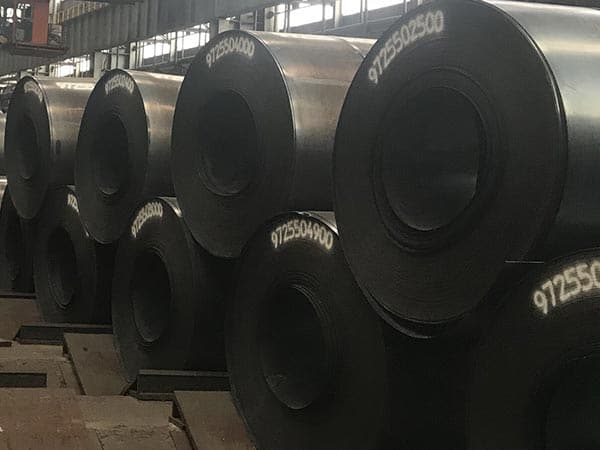
The Evolution of Ultra-High Strength Steel in Automotive Engineering
Modern vehicle manufacturing demands a delicate balance between structural integrity and weight reduction. S960MC stands at the pinnacle of thermomechanically rolled steels, offering a minimum yield strength of 960 MPa. This grade belongs to the EN 10149-2 standard, which governs hot-rolled flat products made of high yield strength steels for cold forming. As the industry shifts toward electric vehicles (EVs) and heavy-duty logistics, the demand for S960MC in wheel discs and chassis components has surged due to its exceptional strength-to-weight ratio.
Identifying Global Equivalents for S960MC
When sourcing materials across different regions, engineers must identify equivalent grades that match the rigorous mechanical demands of S960MC. While standards vary, the core characteristics—low carbon content, micro-alloying, and thermomechanical rolling—remain consistent across these alternatives.
1. Chinese Standard (GB/T 1591 / GB/T 3273): The most direct equivalent in the Chinese market is Q960E. The "Q" represents yield strength, and "960" matches the MPa rating. The "E" denotes impact toughness testing at -40°C, making it suitable for extreme climates. For specific automotive applications, BS960MC (Baosteel standard) is also frequently utilized.
2. Proprietary Brand Names: Many high-end manufacturers use their own branding for S960MC-equivalent steels. Strenx 960 (formerly Domex 960) by SSAB is perhaps the most globally recognized equivalent, known for its extreme consistency and tight thickness tolerances. Similarly, ThyssenKrupp offers PERFOR 960, which is optimized for laser cutting and cold forming.
3. American and Japanese Standards: In the US, ASTM standards like ASTM A1011 or A1018 do not have a direct "960" equivalent in their standard tables, often requiring custom specifications or reliance on proprietary grades like N-A-XTRA. In Japan, JIS G3134 (SPFC series) provides high-strength options, though reaching the 960 MPa threshold usually requires specialized manufacturer-specific designations.
| Standard | Equivalent Grade | Yield Strength (min) | Tensile Strength |
|---|---|---|---|
| EN 10149-2 | S960MC | 960 MPa | 980-1250 MPa |
| GB/T 1591 | Q960E | 960 MPa | 980-1250 MPa |
| SSAB (Proprietary) | Strenx 960 Plus | 960 MPa | 1000-1250 MPa |
| Baosteel (Proprietary) | BS960MC | 960 MPa | 1000-1200 MPa |
Chemical Composition and Micro-Alloying Strategy
The performance of S960MC and its equivalents is not merely a result of heat treatment but a precise chemical recipe. These steels utilize a low-carbon design (typically <0.12%) to ensure weldability. The strength is derived from micro-alloying elements such as Niobium (Nb), Vanadium (V), and Titanium (Ti).
- Niobium (Nb): Refines the grain size during the thermomechanical rolling process, significantly increasing toughness.
- Titanium (Ti): Provides precipitation hardening and stabilizes nitrogen, preventing grain growth in the heat-affected zone (HAZ) during welding.
- Manganese (Mn): Enhances hardenability and solid solution strengthening without compromising ductility.
- Sulfur Control: S960MC requires extremely low sulfur levels (<0.010%) to ensure excellent cold-forming properties and to prevent cracking during tight-radius bending.
Mechanical Performance in Wheel Applications
Automobile wheels are subject to cyclic loading, impact forces, and environmental stress. S960MC provides the necessary fatigue resistance to withstand millions of cycles. The high yield strength allows for thinner gauges, which reduces the unsprung mass of the vehicle. This reduction directly translates to improved suspension response, better fuel economy, and higher payload capacities for commercial trucks.
Ductility is another critical factor. Despite its high strength, S960MC maintains an elongation (A5) of approximately 7% to 10%. This allows the steel to be formed into complex wheel disc geometries without micro-fracturing. The material's hole expansion ratio is also superior to traditional quenched and tempered steels, which is vital for the bolt-hole areas of the wheel.
Processing and Manufacturing Considerations
Utilizing S960MC requires a deep understanding of its metallurgical behavior during fabrication. Unlike traditional structural steels, thermomechanically rolled steels gain their properties through controlled cooling and rolling. If heated above certain thresholds, the grain structure can coarsen, leading to a loss of strength.
Welding Integrity: S960MC exhibits excellent weldability due to its low carbon equivalent (CEV). However, excessive heat input must be avoided. Using low-heat welding techniques like MAG (Metal Active Gas) with appropriate filler metals ensures that the weld joint maintains at least 80-90% of the base metal's strength. Post-weld heat treatment is generally discouraged as it can soften the thermomechanical structure.
Cold Forming and Bending: For wheel manufacturing, the bending radius is a key parameter. S960MC allows for a minimum bending radius of approximately 2.0 to 2.5 times the material thickness (depending on the orientation relative to the rolling direction). Ensuring the edges are smooth and free of burrs before bending is essential to prevent edge cracking in such high-strength grades.
Environmental Adaptation and Durability
Automobile wheels operate in harsh environments, exposed to road salt, moisture, and temperature fluctuations. S960MC's fine-grained structure provides a natural resistance to atmospheric corrosion compared to coarser steels. However, for long-term durability, these steels are typically paired with advanced coating systems such as KTL (Cathodic Dip Painting) or zinc-rich primers. The chemical purity of S960MC ensures that the coating adheres uniformly, preventing the initiation of sub-film corrosion.
Expanding the Horizon: Beyond the Wheel
While the focus here is on automobile wheels, the attributes of S960MC make it indispensable for various high-stress components. Within the transport sector, it is used for crane booms, chassis frames, and agricultural machinery. The ability to replace 10mm thick standard steel with 6mm S960MC without losing load-bearing capacity is a game-changer for manufacturers aiming for carbon neutrality through material efficiency.
Choosing the right equivalent for S960MC involves more than just matching yield strength. It requires an analysis of the specific forming requirements, the welding environment, and the end-use fatigue cycles. By leveraging grades like Q960E or Strenx 960, manufacturers can achieve the same high-performance results across global supply chains, ensuring that the next generation of vehicles is lighter, stronger, and more efficient.
Leave a message