
Which mill is good choice for purchasing S500MC steel for car shell in China
Discover the top Chinese steel mills for S500MC high-strength steel. This guide covers mechanical properties, processing performance, and a detailed comparison of Baosteel, Shougang, and Ansteel for automotive applications.
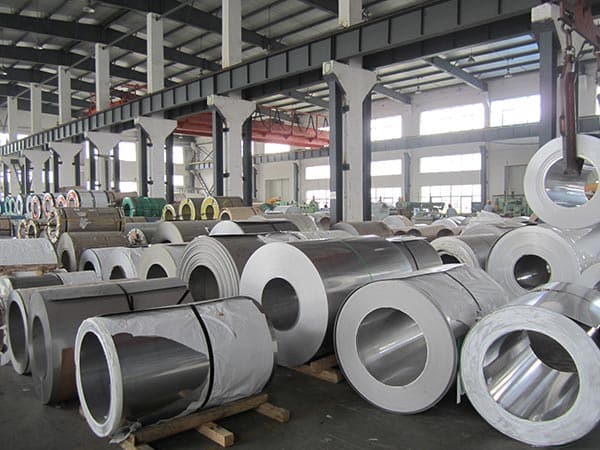
Understanding S500MC: The Backbone of High-Strength Automotive Structures
Selecting the right material for automotive structural components, often referred to as the 'car shell' or 'skeleton' in commercial and heavy-duty vehicles, requires a deep understanding of high-strength low-alloy (HSLA) steels. S500MC, a grade defined by the EN 10149-2 standard, stands out as a premier choice for engineers seeking a balance between weight reduction and structural integrity. This hot-rolled steel is specifically designed for cold forming, offering a minimum yield strength of 500 MPa. Its adoption is a direct response to the global automotive industry's push for 'lightweighting'-reducing vehicle mass to improve fuel efficiency and reduce emissions without compromising safety.
When sourcing S500MC in China, the landscape is dominated by several tier-one mills, each with unique metallurgical strengths and supply chain advantages. The decision of which mill to choose depends not only on the raw mechanical specifications but also on the consistency of the micro-alloying process, surface quality, and the mill's ability to meet the rigorous IATF 16949 quality management standards required by the automotive sector.
Mechanical Properties and Metallurgical Excellence
The performance of S500MC is rooted in its precise chemical composition and the Thermomechanically Controlled Processing (TMCP) it undergoes during rolling. Unlike traditional structural steels, S500MC utilizes micro-alloying elements such as Niobium (Nb), Vanadium (V), and Titanium (Ti) to achieve grain refinement and precipitation hardening.
| Property | Value (Typical for S500MC) |
|---|---|
| Yield Strength (ReH) | ≥ 500 MPa |
| Tensile Strength (Rm) | 550 - 700 MPa |
| Elongation (A80mm) | ≥ 12% (Thickness < 3mm) |
| Elongation (A5) | ≥ 14% (Thickness ≥ 3mm) |
| Bending Radius (180°) | 0.5t to 1.5t (depending on thickness) |
Carbon Content and Weldability: One of the most critical attributes of S500MC is its low carbon equivalent. By keeping carbon levels typically below 0.12%, mills ensure that the steel remains highly weldable using standard industrial methods such as MAG, TIG, and laser welding. This is essential for car shell assembly where hundreds of weld points must maintain structural integrity under dynamic loads.
Top Chinese Mills for S500MC Procurement
China's steel industry has evolved significantly, with several mills now producing automotive-grade HSLA steels that rival European and Japanese counterparts. Here is an analysis of the leading contenders:
- Baowu Steel (Baosteel): As the global leader in automotive steel, Baosteel's S500MC (often branded under their internal B500L or similar high-strength designations) is the gold standard. Their advantage lies in extreme consistency. For automated robotic welding and stamping lines, variations in thickness or yield strength can cause significant downtime. Baosteel's precision in TMCP ensures that every coil performs identically to the last.
- Shougang Group: Shougang has emerged as a major player in the high-end automotive sheet market. Their S500MC is highly regarded for its surface finish and flatness. They have invested heavily in continuous galvanizing and pickling lines, making them an excellent choice for components that require subsequent coating or are exposed to semi-corrosive environments.
- Ansteel (Angang): Known for their strength in heavy plates and structural sections, Ansteel provides highly cost-effective S500MC solutions. They are often the preferred choice for heavy-duty truck frames and trailer chassis where larger thicknesses (6mm to 12mm) are required. Their R&D center in Liaoning focuses heavily on the fatigue life of HSLA steels.
- HBIS Group (Tangsteel): HBIS offers a robust supply chain, particularly for export markets. Their S500MC products are widely used in the construction of specialized vehicle shells and agricultural machinery. They provide a competitive price-to-performance ratio for manufacturers who need reliable high-strength steel but are operating on tighter margins.
Processing Performance: Beyond the Data Sheet
Purchasing S500MC is not just about meeting the 500 MPa threshold; it is about how the material behaves on the factory floor. The 'car shell' involves complex geometries that require the steel to flow into dies without cracking or excessive springback.
Cold Forming and Bending: S500MC is designed for cold forming. High-quality mills ensure that the inclusions in the steel (like sulfides) are shape-controlled. This prevents 'lamellar tearing' or cracking when the steel is bent at tight radii. When evaluating a mill, engineers should look at the minimum bending radius guarantees, which are vital for designing compact and rigid structural pillars.
Laser Cutting and Edge Quality: In modern manufacturing, S500MC sheets are often laser-cut. Steels from premium mills like Baosteel or Shougang exhibit low internal stress, meaning the parts stay flat after cutting. This is crucial for the subsequent assembly of the car shell, where tight tolerances are mandatory for aerodynamic efficiency and safety.
Environmental Adaptability and Fatigue Resistance
The automotive environment is harsh. Components made from S500MC are often part of the vehicle's load-bearing structure, subjected to constant vibration, salt spray, and temperature fluctuations. While S500MC is not 'stainless,' its fine-grained structure provides a better substrate for modern E-coating (electrophoretic coating) than traditional mild steels.
Furthermore, the fatigue resistance of S500MC is superior to S355MC. In the context of a car shell, this means the vehicle can withstand more cycles of stress without developing micro-cracks in the chassis or support beams. This longevity is a key selling point for commercial vehicle manufacturers who guarantee high mileage for their fleets.
Strategic Selection Criteria for International Buyers
When deciding which Chinese mill is the 'good choice,' buyers should look beyond the price per ton. The total cost of ownership includes the scrap rate (caused by material inconsistency), the ease of welding, and the reliability of delivery. Baosteel remains the top choice for high-precision, high-volume passenger car components. Shougang is the rising star for surface-critical parts. Ansteel and HBIS offer the best value for heavy-duty structural applications.
Verification of certifications is the final step. Ensure the mill provides MTCs (Mill Test Certificates) that explicitly state compliance with EN 10149-2 and include the results of the Charpy V-notch impact test if the vehicle will operate in cold climates. By aligning the specific technical needs of the car shell design with the unique strengths of these Chinese steel giants, manufacturers can achieve the perfect balance of strength, weight, and cost.
Leave a message