
Why choose the S700MC sheet steel sheet
Discover why S700MC high-strength steel is the ultimate choice for heavy-duty engineering. Explore its mechanical properties, cold forming benefits, and weight-saving potential.
The Engineering Paradigm Shift: Why S700MC Dominates Modern Fabrication
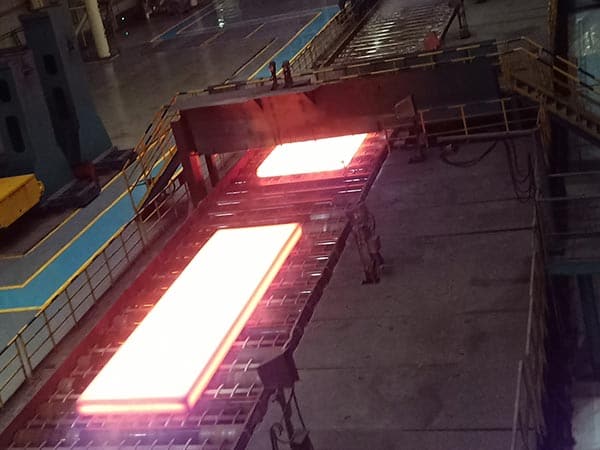
In the pursuit of structural efficiency and environmental sustainability, the global manufacturing sector has shifted its focus toward materials that offer a superior strength-to-weight ratio. S700MC, a high-strength low-alloy (HSLA) steel, stands at the forefront of this evolution. As a thermomechanically rolled structural steel governed by the EN 10149-2 standard, S700MC provides engineers with the ability to design lighter, more robust, and more cost-effective components. Choosing S700MC is not merely a material selection; it is a strategic decision to optimize performance across the entire lifecycle of a product.
Decoding the S700MC Designation and Standards
The nomenclature of S700MC reveals its core characteristics. The 'S' denotes structural steel, while '700' represents the minimum yield strength of 700 MPa. The 'M' indicates that the steel is thermomechanically rolled, and 'C' signifies its suitability for cold forming. Unlike traditional hot-rolled steels that rely on heavy alloying or heat treatment, S700MC achieves its remarkable properties through a precise combination of micro-alloying and controlled rolling temperatures. This process results in a fine-grained microstructure that is exceptionally uniform, providing consistent performance across the entire sheet surface.
| Element | Maximum Content (%) |
|---|---|
| Carbon (C) | 0.12 |
| Manganese (Mn) | 2.10 |
| Silicon (Si) | 0.60 |
| Phosphorus (P) | 0.025 | n
| Sulfur (S) | 0.015 |
| Aluminium (Al) | 0.015 |
| Niobium (Nb) + Titanium (Ti) + Vanadium (V) | 0.22 |
Superior Mechanical Properties: Beyond the 700 MPa Yield Point
The primary driver for selecting S700MC is its immense yield strength. With a minimum yield of 700 MPa, it is nearly double the strength of conventional S355 structural steel. This allows for a significant reduction in wall thickness without compromising structural integrity. However, strength is only part of the story. S700MC maintains excellent ductility and impact toughness, even at low temperatures. This combination ensures that structures can withstand dynamic loads and resist brittle fracture in harsh environments, such as arctic conditions or high-stress industrial zones.
- Yield Strength: Min 700 MPa (for thicknesses ≤ 8mm).
- Tensile Strength: 750 to 950 MPa.
- Elongation: Minimum 10% to 12% depending on thickness, ensuring energy absorption.
- Impact Toughness: Often tested at -20°C or -40°C to ensure reliability in cold climates.
Unmatched Cold Forming and Bending Capabilities
One might assume that such a high-strength material would be brittle or difficult to shape. On the contrary, the 'C' in S700MC highlights its exceptional cold-forming properties. The fine-grained structure allows for tight bending radii that are often impossible with other steels of similar strength levels. This flexibility enables manufacturers to create complex geometries, reducing the need for multiple welded joints and thus enhancing the overall structural stability of the final product. When bending S700MC, it is critical to account for springback, but the consistency of the material makes this predictable and manageable.
Welding Integrity and Heat Affected Zone (HAZ) Management
Welding is a critical process in structural engineering, and S700MC excels here due to its low carbon equivalent (CEV). A low CEV means the steel is less prone to cold cracking and generally does not require preheating for standard thicknesses. This significantly reduces labor costs and speeds up production timelines. However, because S700MC derives its strength from thermomechanical processing, excessive heat input during welding can soften the Heat Affected Zone (HAZ). By using modern welding techniques such as MAG (Metal Active Gas) with optimized parameters and low-heat input, the integrity of the joint can be maintained at nearly the same level as the base metal.
Economic Impact: Weight Reduction and Payload Optimization
The most compelling reason to choose S700MC is the economic advantage gained through weight reduction. In the transportation industry, every kilogram saved in the chassis or body of a vehicle translates directly into increased payload capacity or improved fuel efficiency. For example, replacing S355 with S700MC in a trailer frame can reduce the weight by up to 30-40%. Over the lifespan of a fleet, this leads to massive savings in fuel costs and a significant reduction in CO2 emissions. Furthermore, using thinner sheets means less material is purchased, and less welding filler is required, offsetting the higher per-ton price of the high-strength steel.
Industry-Specific Applications: Where S700MC Excels
The versatility of S700MC makes it a preferred choice across various demanding sectors. Its ability to handle high stress while remaining lightweight is invaluable in the following areas:
- Heavy Transport: Truck chassis, trailer frames, and side panels where weight optimization is critical.
- Lifting Equipment: Telescopic booms for cranes, aerial work platforms, and stabilizer legs.
- Agricultural Machinery: High-load components for plows, harvesters, and trailers that must endure rugged terrain.
- Construction: Support structures, bridge components, and heavy-duty containers.
- Renewable Energy: Components for wind turbine transport and mounting systems.
Environmental Adaptability and Sustainability
Modern engineering must account for the environmental footprint of materials. S700MC contributes to sustainability in two ways. First, the reduction in material volume means fewer raw resources are extracted and processed. Second, the resulting lightweight structures consume less energy during operation. The durability of S700MC also ensures a long service life, reducing the frequency of replacement and recycling. Its clean chemical composition makes it fully recyclable at the end of its life, fitting perfectly into a circular economy model.
Advanced Processing: Laser Cutting and Surface Quality
S700MC is designed for modern manufacturing processes. Its surface is typically clean and free of heavy scale, making it ideal for high-precision laser cutting. The consistency of the material ensures that laser parameters remain stable, resulting in clean edges and minimal dross. This high-quality finish reduces the need for secondary grinding or cleaning operations, further streamlining the production flow. Additionally, the steel's chemistry is optimized for galvanizing and painting, providing excellent corrosion protection for outdoor applications.
| Feature | Benefit for the Manufacturer |
|---|---|
| High Yield Strength | Thinner sections, lower weight, higher strength. |
| Excellent Weldability | No preheating required, faster assembly, lower costs. |
| Fine Grain Structure | Superior toughness and fatigue resistance. |
| Good Cold Formability | Ability to create complex shapes without cracking. |
| Low Carbon Equivalent | Reduced risk of welding defects and cracking. |
The Future of High-Strength Structural Design
As industries continue to push the boundaries of what is possible, materials like S700MC will become the standard rather than the exception. The transition from traditional mild steels to high-strength variants requires a shift in design philosophy—moving away from "heavy is strong" toward "optimized is strong." By leveraging the unique properties of S700MC, designers can create equipment that is not only more capable but also more efficient and environmentally friendly. Whether it is a crane reaching higher or a truck carrying more, S700MC provides the structural foundation for the next generation of engineering excellence.
When selecting S700MC, it is vital to partner with suppliers who understand the nuances of thermomechanically rolled steels. Proper storage, handling, and processing are key to realizing the full potential of this advanced material. By integrating S700MC into your production line, you are investing in a material that offers a competitive edge through technical superiority and long-term economic value.
Leave a message