
What are the main applicable ranges of strenx 700 equivalent
Comprehensive guide on the application ranges, mechanical properties, and processing advantages of Strenx 700 equivalents like S690QL and Q690D in modern engineering.
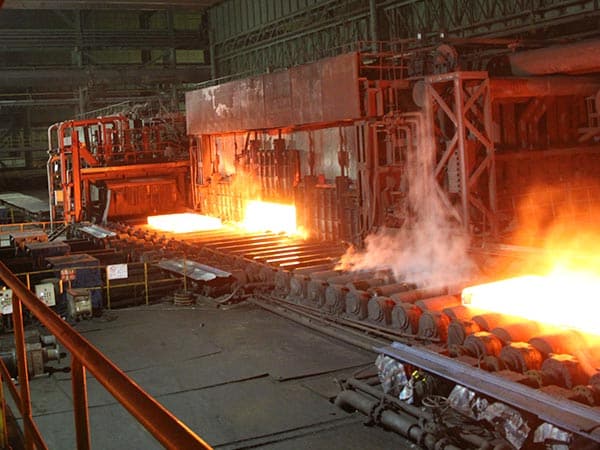
The Evolution of High-Strength Structural Steel: Understanding Strenx 700 Equivalents
In the modern industrial landscape, the pursuit of efficiency often translates to the reduction of dead weight without compromising structural integrity. Strenx 700, a high-strength structural steel produced by SSAB, has long been a benchmark for this balance. However, as global supply chains diversify, engineers and procurement specialists frequently seek Strenx 700 equivalents such as EN 10025-6 S690QL, ASTM A514, or GB/T 1591 Q690D. These materials are characterized by a minimum yield strength of 700 MPa, offering a unique combination of toughness, weldability, and formability.
Choosing an equivalent is not merely about matching yield strength; it involves a deep dive into the chemical composition, grain structure, and the specific demands of the operating environment. These steels are typically quenched and tempered (Q&T) to achieve their superior mechanical properties, making them indispensable in sectors where heavy loads and extreme stress are daily realities.
Core Mechanical Properties and Material Composition
The performance of a Strenx 700 equivalent is rooted in its sophisticated metallurgy. Unlike standard carbon steels, these high-strength low-alloy (HSLA) steels utilize precise micro-alloying elements like Boron, Vanadium, and Niobium to refine grain size. This refinement is critical for maintaining high impact toughness even at sub-zero temperatures.
| Property | Strenx 700 Typical Value | S690QL (Equivalent) Value | Q690D (Equivalent) Value |
|---|---|---|---|
| Yield Strength (MPa) | 700 min | 690 min | 690 min |
| Tensile Strength (MPa) | 780 - 930 | 770 - 940 | 770 - 940 |
| Elongation (%) | 14 min | 14 min | 14 min |
| Impact Energy (Charpy V) | 40J at -40°C | 30J at -40°C (L) / 27J (QL) | 47J at -20°C |
While the numerical values for yield strength are nearly identical across these grades, the impact toughness is often the deciding factor. For instance, S690QL is tested at -40°C, while S690QL1 is tested at -60°C. This makes them highly suitable for equipment operating in arctic conditions or high-altitude environments where standard steel would become brittle and prone to cracking.
Advanced Processing: Welding and Cold Forming
One of the primary reasons engineers specify Strenx 700 or its equivalents is their exceptional processability. Despite their extreme strength, these steels are designed to be worked with standard workshop tools, provided specific guidelines are followed.
- Superior Weldability: Equivalents like S690QL maintain a low Carbon Equivalent Value (CEV). This reduces the risk of cold cracking in the heat-affected zone (HAZ). Using low-hydrogen consumables and controlled heat input allows for high-integrity joints that match the base metal's strength.
- Precision Bending: High-strength steel allows for tighter bending radii compared to traditional grades of similar thickness. This is vital for manufacturing complex boom structures or chassis components where space and weight are at a premium.
- Clean Cutting: Whether using laser, plasma, or oxy-fuel cutting, these materials exhibit minimal thermal distortion, ensuring that the final components meet strict dimensional tolerances.
The consistency of the material's thickness and flatness across the plate is another hallmark of high-quality equivalents. This consistency ensures that automated welding robots and CNC bending machines can operate without constant recalibration, significantly boosting production throughput.
Primary Application Ranges in Heavy Lifting and Transportation
The most prominent application for Strenx 700 equivalent steel is in the lifting industry. Mobile cranes, tower cranes, and truck-mounted loaders rely on the high strength-to-weight ratio to reach greater heights and lift heavier loads while remaining light enough to travel on public roads.
In the transportation sector, the use of S690QL in trailer chassis and bulk carriers allows for a significant increase in payload capacity. By replacing traditional S355 steel with a 700 MPa equivalent, manufacturers can reduce the weight of the steel structure by up to 30-40%. This weight saving directly correlates to lower fuel consumption and reduced CO2 emissions over the vehicle's lifecycle, aligning with global sustainability goals.
Performance in Mining and Earthmoving Equipment
The harsh environments of open-pit mines and construction sites demand materials that can withstand both structural stress and abrasive wear. While Strenx 700 is primarily a structural steel rather than a dedicated wear plate (like Hardox), its high yield strength makes it ideal for the primary frameworks of:
- Excavator Booms and Arms: These components undergo massive cyclic loading. The fatigue resistance of Strenx 700 equivalents ensures a long service life under these grueling conditions.
- Dump Truck Bodies: Using high-strength steel for the sub-frame and side walls reduces the overall weight, allowing the truck to carry more ore per trip.
- Crushing and Screening Plants: The structural supports for heavy vibrating equipment benefit from the vibration-damping properties and fatigue strength of Q&T steels.
By utilizing these equivalents, equipment manufacturers can design thinner sections that provide the same structural safety factor as thicker, heavier mild steel plates. This "down-gauging" is a key strategy in modern mechanical engineering.
Environmental Adaptability and Fatigue Life
Beyond static strength, the fatigue life of Strenx 700 equivalents is a critical attribute. Engineering structures rarely fail due to a single overload; instead, they fail due to repeated stress cycles. The fine-grained structure of these steels inhibits the initiation and propagation of fatigue cracks.
Furthermore, the environmental adaptability of these grades is enhanced by their surface quality. Most equivalents are delivered with a high-quality shot-blasted and primed surface, which provides an excellent base for protective coatings. This is particularly important in offshore applications or coastal infrastructure where salt-spray corrosion is a constant threat. While the steel itself is not "stainless," its structural integrity remains predictable over decades when properly maintained.
Optimizing Costs through Material Selection
While the price per ton of a Strenx 700 equivalent is higher than that of standard structural steel, the total cost of ownership is often lower. The economic benefits are realized through several channels:
First, the reduction in material volume means less steel is purchased. Second, thinner plates require less welding filler material and shorter welding times. Third, the reduced weight of the final product leads to lower shipping costs and increased operational efficiency for the end-user.
When sourcing these materials, it is essential to verify the Mill Test Certificate (MTC) to ensure compliance with international standards like EN 10025 or ASTM. This ensures that the equivalent chosen will perform exactly as expected under the calculated design loads.
Future Trends in High-Strength Steel Utilization
The transition toward even higher grades, such as 900 MPa and 1100 MPa, is already underway in specialized sectors. However, the 700 MPa class remains the "sweet spot" for the majority of heavy industries due to its perfect balance of extreme strength and ease of fabrication. As engineering software becomes more adept at topology optimization, the demand for Strenx 700 equivalents will continue to grow, as these materials allow for the realization of complex, high-performance designs that were previously impossible to manufacture.
Whether it is a wind turbine blade transporter, a high-reach demolition tool, or a lightweight forestry harvester, the application of these high-strength steels is a testament to the progress of metallurgical science. By understanding the specific strengths and processing requirements of these equivalents, manufacturers can push the boundaries of what is possible in mechanical design.
Leave a message