
Where can purchase en 10149-2 equivalent with heavy thickness
Find expert insights on sourcing heavy thickness equivalents for EN 10149-2 steel. Learn about mechanical properties, chemical composition, and global alternatives like ASTM and JIS for thick plate applications.
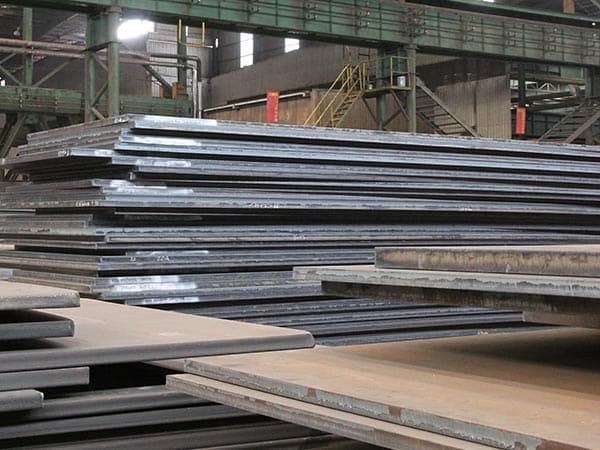
The Technical Paradox of Heavy Thickness in EN 10149-2 Standards
Engineers and procurement specialists often face a significant hurdle when searching for EN 10149-2 equivalents in heavy thicknesses. The EN 10149-2 standard specifically covers hot-rolled flat products made of high yield strength steels for cold forming. By definition, these steels (such as S315MC, S355MC, S460MC, and S700MC) are produced using thermomechanical rolling (TMCP). However, the standard itself typically restricts the thickness range to 1.5mm up to 20mm. When a project demands the high yield properties of an S700MC but requires a thickness of 40mm, 50mm, or even 100mm, the search for an equivalent becomes a matter of metallurgical expertise rather than just reading a chart.
The challenge lies in the grain refinement process. TMCP steel relies on precise temperature control and heavy reduction during rolling to achieve a fine-grained microstructure without excessive alloying. As thickness increases, maintaining a uniform cooling rate from the surface to the core becomes difficult, which is why standard EN 10149-2 products are relatively thin. To bridge this gap, one must look toward standards like EN 10025-6 or specialized proprietary grades from top-tier mills that extend the TMCP technology to heavier gauges.
Identifying Global Equivalents for High-Yield Cold Forming Steels
When sourcing heavy thickness equivalents, it is essential to match not only the yield strength but also the weldability and cold-forming capabilities. Global standards offer several alternatives that can be utilized when the specific EN 10149-2 designation is unavailable in thick plates.
| EN 10149-2 Grade | ASTM Equivalent (USA) | JIS Equivalent (Japan) | GB/T Equivalent (China) | Key Characteristics |
|---|---|---|---|---|
| S355MC | ASTM A1011 HSLAS Gr 50 | JIS G3134 SPFH 540 | Q355MC / Q345D | Excellent weldability, low carbon equivalent. |
| S420MC | ASTM A1018 HSLAS Gr 60 | JIS G3134 SPFH 590 | Q420MC | Balanced strength and ductility for chassis parts. |
| S500MC | ASTM A1011 HSLAS Gr 70 | - | Q500MC | High load-bearing capacity in reduced weight structures. |
| S700MC | ASTM A656 Grade 80 | - | Q700MC / Q690D | Ultra-high strength, requires precise TMCP processing. |
For thicknesses exceeding 20mm, the industry often pivots to EN 10025-6 (S690QL) or ASTM A514. While these are quenched and tempered (Q+T) steels rather than TMCP, they offer the necessary yield strength (approx. 700 MPa) in thicknesses up to 150mm. If cold forming is still a requirement for these heavy plates, the "QL" designation ensures low-temperature toughness, which is a critical safety factor in structural applications.
Mechanical Integrity and Microstructural Excellence
The primary reason for choosing EN 10149-2 or its equivalents is the ratio of high strength to low weight. In heavy thickness applications, the mechanical properties must remain consistent. Yield strength is the headline figure, but for heavy plates, the Charpy V-notch impact energy becomes the true measure of quality. Because thick sections are more prone to brittle fracture, ensuring the equivalent grade meets toughness requirements at -20°C or -40°C is non-negotiable.
The microstructure of these steels is typically a combination of fine-grained ferrite and pearlite, or in higher grades like S700MC, a bainitic or tempered martensitic structure. When purchasing heavy thickness equivalents, verify that the mill uses Vacuum Degassing (VD) and Calcium Treatment for inclusion shape control. This ensures that the steel remains isotropic, meaning its properties are similar in both the longitudinal and transverse directions, which is vital for complex bending and heavy-duty welding.
Fabrication Performance: Welding and Bending Heavy Sections
Purchasing the right material is only half the battle; the other half is ensuring it can be fabricated. Heavy thickness high-strength steel behaves differently under the torch and the press brake. Weldability is a standout feature of TMCP equivalents because they maintain a low Carbon Equivalent (CEV). A lower CEV reduces the risk of cold cracking in the Heat Affected Zone (HAZ), which is a common failure point in thick plate welding.
- Preheating Requirements: Unlike traditional carbon steels, high-strength TMCP equivalents often require minimal preheating even at 40mm+ thickness, saving significant time and energy in the workshop.
- Bending Radii: For heavy plates, the minimum bending radius is typically larger. For an S700MC equivalent at 25mm thickness, a bending radius of 3x to 5x the thickness might be required to prevent surface micro-cracking.
- Cutting Precision: Laser or high-definition plasma cutting is recommended for heavy sections to maintain the integrity of the edges before welding.
Environmental Adaptability and Long-Term Durability
Heavy thickness plates are usually destined for harsh environments—offshore platforms, mining equipment, or heavy lifting cranes. The environmental adaptability of EN 10149-2 equivalents is bolstered by their clean chemistry. The low sulfur and phosphorus content not only improves toughness but also enhances resistance to atmospheric corrosion compared to standard structural steels.
In sub-zero temperatures, the fine-grained structure of TMCP steel prevents crack propagation. This makes these equivalents ideal for equipment operating in arctic conditions or high-altitude mining sites. Furthermore, the fatigue resistance of high-yield equivalents in heavy gauges is superior, allowing for a longer lifecycle of the machinery and reducing the total cost of ownership for the end-user.
Strategic Sourcing: Where to Purchase and What to Verify
Finding a supplier that stocks heavy thickness EN 10149-2 equivalents requires looking beyond standard distributors. You should target specialized steel service centers that focus on high-strength and abrasion-resistant grades. When evaluating a source, the Mill Test Certificate (MTC) to EN 10204 3.1 or 3.2 is your most important document.
Ensure the MTC includes:
- Actual yield and tensile strength (not just the minimums).
- Elongation values and impact test results at specified temperatures.
- The rolling condition (TMCP vs. Q+T).
- Ultrasonic Testing (UT) results to ensure no internal laminations in heavy plates.
Many top-tier mills in Europe, China, and Japan produce proprietary grades that exceed the EN 10149-2 thickness limits while maintaining the "MC" (cold forming) characteristics. These are often marketed under brand names like Strenx, Domex, or RELIA. Sourcing these branded equivalents is often the safest route for critical heavy-thickness applications where failure is not an option.
Expanding Application Horizons for Thick High-Strength Steel
The move toward heavier gauges in high-strength steel is driven by the need for massive infrastructure and larger machinery. We see these materials being integrated into the telescopic booms of 1200-ton mobile cranes, where the weight-to-strength ratio is the limiting factor for lifting height. Similarly, in the renewable energy sector, heavy-thickness high-yield plates are used in the base structures of wind turbines and the chassis of heavy-duty electric mining trucks.
By opting for a high-performance equivalent, manufacturers can reduce the overall weight of the structure by up to 30% compared to traditional S355J2 steel. This weight reduction translates directly into higher payloads, lower fuel consumption, and a smaller carbon footprint during the manufacturing and operational phases of the equipment's life.
Leave a message