
What is B650L steel complete specifications equivalent material in China
Explore B650L steel specifications, including chemical composition, mechanical properties, and its Chinese equivalent Q650L. Learn about its applications in heavy-duty vehicle frames and processing advantages.
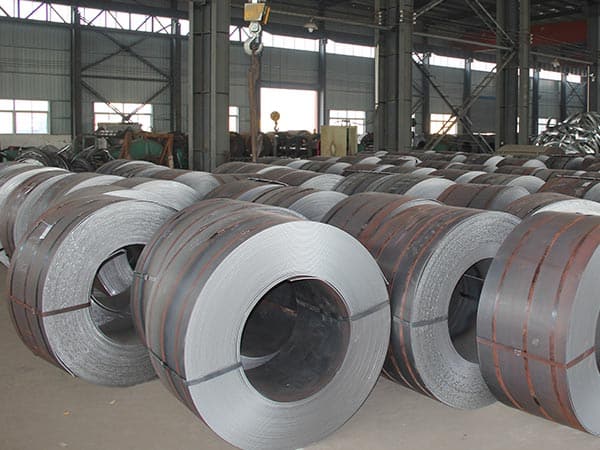
Understanding B650L High-Strength Automotive Structural Steel
B650L is a specialized high-strength low-alloy (HSLA) steel grade primarily governed by the Baosteel enterprise standard (BZJ 311). The "B" signifies its origin from Baosteel, while "650" represents its minimum yield strength of 650 MPa. The suffix "L" specifically denotes its application for longitudinal beams (Längsträger) in vehicle frames. This material is engineered to meet the demanding requirements of the modern transportation industry, where reducing vehicle weight without compromising structural integrity is paramount.
As heavy-duty trucks and specialized vehicles move toward lightweight designs, B650L has become a cornerstone material. It offers a superior strength-to-weight ratio compared to traditional carbon steels like Q235 or lower-grade structural steels like Q510L. By utilizing B650L, manufacturers can significantly reduce the thickness of frame components, leading to lower fuel consumption and increased payload capacity for commercial vehicles.
Chemical Composition and Metallurgical Design
The performance of B650L is rooted in its precise chemical makeup. Unlike standard structural steels, B650L utilizes a micro-alloying strategy to achieve its high strength and excellent toughness. The carbon content is kept low to ensure superior weldability and cold-forming capabilities, while elements like Manganese, Niobium, Titanium, and Vanadium are added in trace amounts.
| Element | Content (%) Max/Range |
|---|---|
| Carbon (C) | ≤ 0.12 |
| Silicon (Si) | ≤ 0.50 |
| Manganese (Mn) | ≤ 2.00 |
| Phosphorus (P) | ≤ 0.025 |
| Sulfur (S) | ≤ 0.015 |
| Niobium (Nb) | ≤ 0.09 |
| Titanium (Ti) | ≤ 0.15 |
| Aluminum (Al) | ≥ 0.015 |
Manganese acts as a solid solution strengthener, while Niobium (Nb) and Titanium (Ti) are crucial for grain refinement. During the rolling process, these micro-alloying elements form stable carbides and nitrides that pin grain boundaries, preventing grain growth and resulting in a fine-grained ferrite-pearlite or bainitic microstructure. This fine grain size is the primary reason B650L maintains high toughness even at sub-zero temperatures.
Mechanical Properties and Performance Metrics
The mechanical properties of B650L are strictly controlled to ensure consistency across different batches. The focus is not only on the peak strength but also on the ductility required for complex forming operations during the manufacturing of truck chassis.
| Property | Value |
|---|---|
| Yield Strength (ReL) | ≥ 650 MPa |
| Tensile Strength (Rm) | 700 - 850 MPa |
| Elongation (A80mm) | ≥ 12% |
| Cold Bending (180°, d=3a) | Qualified (No Cracks) |
The high yield strength of 650 MPa allows engineers to design thinner sections that can withstand the same loads as thicker, lower-strength materials. The elongation of 12% or higher indicates that despite its high strength, the material retains sufficient plasticity to undergo significant deformation before fracture, which is a critical safety feature in the event of a vehicle collision.
Equivalent Materials in the Chinese Market
When sourcing B650L, it is essential to understand its equivalents within the Chinese national standards (GB) and other major mill standards. The most direct equivalent in the Chinese National Standard is Q650L, as specified in GB/T 3273 (Hot-rolled steel sheets and strips for automobile frames).
- GB/T 3273 Q650L: This is the standardized version used across various Chinese mills. It shares nearly identical mechanical requirements and chemical limits with B650L.
- Wisco WL650: Produced by Wuhan Iron and Steel (now part of China Baowu), this grade is essentially the same as B650L, following similar internal enterprise protocols.
- Ansteel AG650L: Anshan Iron and Steel's version of the 650 MPa automotive frame steel, widely used in Northern China's heavy industry sectors.
While these grades are generally interchangeable, it is always recommended to verify the specific mill test certificate (MTC) to ensure that the impact toughness requirements (e.g., Charpy V-notch testing at -20°C or -40°C) meet the specific design criteria of the end application.
Processing, Welding, and Fabrication Characteristics
Successful implementation of B650L requires careful attention to fabrication processes. Because of its high strength, the elastic recovery (springback) during cold forming is more pronounced than in lower-strength steels. Fabricators must adjust their tooling and bending radii accordingly.
Cold Forming: B650L exhibits excellent cold bending properties. For a 180-degree bend, a mandrel diameter of three times the thickness (3a) is typically recommended to avoid surface cracking. Using high-precision CNC press brakes is advisable to compensate for the higher springback forces.
Welding Performance: Thanks to its low carbon equivalent (Cev), B650L offers excellent weldability. It can be welded using standard methods such as MAG (Metal Active Gas), MIG, and submerged arc welding. However, to maintain the strength of the heat-affected zone (HAZ), it is critical to control the heat input. Excessive heat can lead to grain coarsening in the HAZ, locally reducing the yield strength. Recommended filler metals include wires with a tensile strength of 700-800 MPa, such as ER80S-G or equivalent high-strength welding consumables.
Cutting: Laser cutting is the preferred method for B650L to ensure clean edges and minimal thermal distortion. While plasma and flame cutting are possible, they leave a larger heat-affected zone that may require subsequent grinding if the edge is a critical structural interface.
Industry Applications and Strategic Value
The primary use of B650L is in the manufacturing of longitudinal beams and cross members for heavy-duty trucks, trailers, and semi-trailers. These components form the backbone of the vehicle and must endure constant fatigue cycles, vibrations, and heavy payloads.
- Commercial Vehicles: Used in the main frames of tractor units and dump trucks to reduce curb weight and improve fuel efficiency.
- Construction Machinery: Employed in the chassis of mobile cranes and concrete pump trucks where high strength and stability are required.
- Specialized Trailers: Ideal for low-bed trailers and container chassis that require high load-bearing capacity with minimal profile height.
Beyond weight reduction, B650L contributes to the overall durability of the vehicle. Its fine-grained structure provides superior fatigue resistance, which is vital for vehicles operating on uneven terrain or under cyclic loading conditions. This longevity translates to lower maintenance costs and a longer service life for the fleet operator.
Environmental Adaptability and Durability
B650L is often used in environments ranging from humid coastal regions to frigid northern climates. While it is not a "weathering steel" in the sense of Corten, its refined chemistry provides a degree of atmospheric corrosion resistance superior to plain carbon steel. However, for long-term exposure, standard protective coatings such as pickling and oiling, electrophoresis (E-coating), or high-quality paint systems are required.
The material's performance at low temperatures is particularly noteworthy. Many heavy-duty vehicles operate in regions where temperatures drop below -20°C. B650L is designed to maintain its ductility and resist brittle fracture under these conditions, making it a reliable choice for global logistics and infrastructure projects. The inclusion of Niobium and Titanium ensures that the transition temperature remains low, providing a safety buffer for extreme weather operations.
Market Trends and the Future of 650 MPa Grade Steel
The demand for B650L and its equivalent Q650L is steadily increasing as global emissions standards become more stringent. The "Lightweighting" trend is no longer an option but a necessity for manufacturers to meet CO2 reduction targets. We are seeing a shift where 650 MPa steels are replacing the older 510 MPa standards as the baseline for heavy-duty chassis design.
Future developments in this grade focus on improving the surface quality for better coating adhesion and further refining the micro-alloying process to enhance the hole expansion ratio, which is critical for components with punched or flared holes. As steel mills continue to optimize the thermo-mechanical controlled processing (TMCP) routes, the consistency and availability of B650L are expected to reach new heights, further solidifying its position as a vital material in the global automotive and machinery supply chain.
Leave a message