
What is the price of B750L plate zero cut per ton in Nigeria
Explore the latest pricing trends for B750L high-strength steel plates in Nigeria. This guide covers technical specifications, zero-cut processing costs, and market drivers.
Current Market Landscape for B750L Steel in Nigeria
Determining the price of B750L plate zero cut per ton in Nigeria requires a deep dive into both global commodity trends and local logistics. B750L is a high-strength structural steel primarily utilized in the automotive and heavy machinery industries. In the Nigerian market, where infrastructure and heavy transport sectors are expanding, the demand for specialized grades like B750L has seen a steady rise. Unlike standard mild steel, B750L offers a superior strength-to-weight ratio, making it indispensable for modern engineering projects.
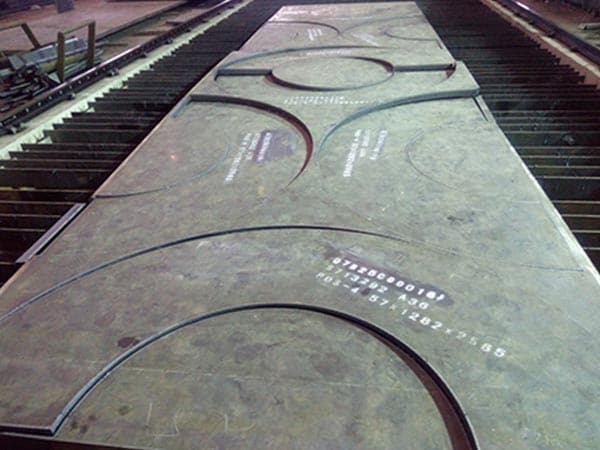
The term "zero cut" refers to the practice of purchasing steel plates cut to specific dimensions rather than buying full-sized mill sheets. This service is particularly valuable for Nigerian fabricators who may lack heavy-duty industrial shearing equipment. While the per-ton price for zero-cut plates is higher than bulk sheets due to labor and scrap loss, it significantly reduces waste for the end-user. Currently, prices in Lagos or Port Harcourt fluctuate based on international iron ore costs, freight rates, and the Naira's exchange rate against the US Dollar.
Technical Specifications and Material Composition of B750L
To understand why B750L commands a premium price, one must look at its metallurgical profile. B750L is categorized under high-strength low-alloy (HSLA) steels, specifically designed for cold forming. Its chemical composition is meticulously balanced to ensure that high yield strength does not come at the expense of weldability or impact toughness.
The "750" in its designation typically refers to its minimum yield strength of 750 MPa. This allows engineers to use thinner plates to achieve the same structural integrity as thicker, standard-grade plates, effectively reducing the overall weight of vehicles or structures. This weight reduction is a critical factor in the Nigerian logistics sector, where fuel efficiency and load capacity are paramount for long-haul transport across the country.
| Element | Carbon (C) Max % | Manganese (Mn) Max % | Silicon (Si) Max % | Phosphorus (P) Max % | Sulfur (S) Max % |
|---|---|---|---|---|---|
| B750L Content | 0.12 | 2.00 | 0.50 | 0.025 | 0.015 |
Mechanical Performance and Processing Advantages
The mechanical properties of B750L are what set it apart in the Nigerian construction and manufacturing landscape. Beyond its high yield strength, the material exhibits excellent elongation properties, which is vital for complex bending and forming operations. When opting for zero-cut services, the integrity of the cut edge is essential. High-precision laser or plasma cutting is recommended for B750L to prevent the formation of heat-affected zones (HAZ) that could compromise the steel's strength.
- Yield Strength: ≥ 750 MPa, providing exceptional resistance to permanent deformation.
- Tensile Strength: Generally ranges between 800 and 950 MPa.
- Elongation: Typically ≥ 12%, allowing for significant cold forming without cracking.
- Impact Energy: Maintains toughness even at lower temperatures, ensuring safety in various climatic conditions.
For Nigerian manufacturers producing truck frames, trailers, and crane booms, B750L provides the necessary durability to withstand the rigorous road conditions found in West Africa. The ability to source this material in "zero cut" dimensions means that small to medium-sized enterprises (SMEs) can compete with larger firms by eliminating the need for massive inventory and expensive cutting machinery.
Environmental Adaptability in the Nigerian Climate
Nigeria’s climate ranges from the humid tropical conditions of the south to the arid regions of the north. Steel structures are often subjected to high levels of humidity and, in coastal areas like Lagos, saline-rich air. B750L, while not a stainless grade, possesses better atmospheric corrosion resistance than standard carbon steels due to its micro-alloying elements like Niobium (Nb) and Titanium (Ti).
When using B750L for outdoor infrastructure or transport equipment, it is standard practice to apply high-quality protective coatings. The fine grain structure of B750L provides an excellent substrate for galvanization or industrial painting, ensuring that the protective layer adheres firmly. This longevity reduces maintenance costs over the lifecycle of the product, which is a major selling point for local contractors and government projects.
Factors Influencing the Price per Ton in Nigeria
Several variables dictate the final invoice price for B750L plate zero cut. Understanding these factors helps procurement managers time their purchases effectively. Currently, the price per ton can range significantly, often quoted in USD for international trade or converted to Naira for local stockists.
- Import Duties and Levies: Nigeria’s trade policies and port clearing charges at Apapa or Onne ports add a layer of cost that varies based on current regulations.
- Energy Costs: Local processing (cutting) requires significant electricity or gas. Fluctuations in diesel prices for generators directly impact the cost of "zero cut" services.
- Global Steel Cycle: Prices are heavily influenced by production levels in China and Europe, as well as the global demand for iron ore and coking coal.
- Precision Requirements: Tight tolerances in zero-cut dimensions require more advanced machinery, which reflects in a higher service premium.
| Service Type | Estimated Premium Over Base Price | Best For |
|---|---|---|
| Full Plate (Mill Run) | 0% (Base) | Large scale manufacturing with in-house cutting. |
| Flame Cutting (Zero Cut) | +8% to 12% | Heavy structural parts where edge finish is less critical. |
| Plasma/Laser (Zero Cut) | +15% to 25% | Precision engineering and automotive components. |
Strategic Sourcing and Application in Key Industries
The application of B750L in Nigeria is diverse. In the oil and gas sector, it is used for support structures and transport skids where high strength is required to move heavy equipment across challenging terrains. In the agricultural sector, B750L is increasingly used for the chassis of heavy-duty trailers and harvesters, providing the robustness needed for rural operations.
When sourcing B750L, it is imperative to request Mill Test Certificates (MTC) to verify the chemical and mechanical properties. In the Nigerian market, where sub-standard materials can sometimes circulate, verifying the authenticity of the B750L grade ensures the safety and longevity of the final build. Working with reputable suppliers who offer zero-cut services allows for better quality control, as the material is often inspected during the cutting process.
Investing in B750L zero-cut plates is a strategic move for businesses looking to optimize their production line. By outsourcing the cutting process, companies can focus on their core competencies—welding, assembly, and finishing—while benefiting from the high-performance characteristics of this specialized steel grade. As the Nigerian industrial sector continues to modernize, the role of high-strength materials like B750L will only become more central to the nation's economic development.
Leave a message