
At what humidity does S315MC hot-rolled pickled strip rust?
Detailed analysis of the humidity levels that cause S315MC hot-rolled pickled strip to rust, covering electrochemical mechanisms, critical RH thresholds, and prevention strategies.
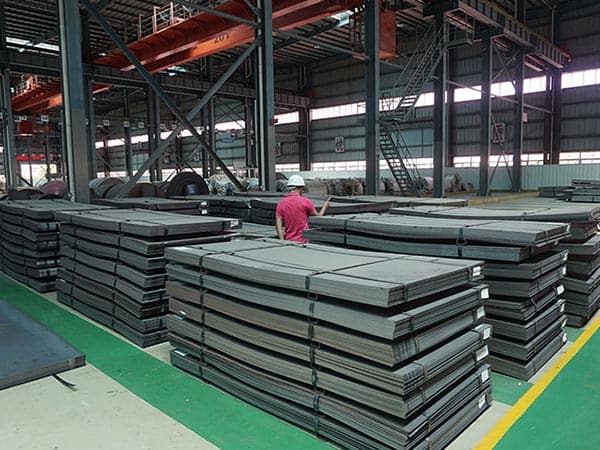
The Electrochemical Vulnerability of S315MC After Pickling
S315MC is a high-strength low-alloy (HSLA) steel grade governed by the EN 10149-2 standard, specifically designed for cold-forming applications. While its mechanical properties are optimized for structural integrity and weight reduction, its surface chemistry undergoes a significant transformation during the pickling process. Pickling involves the immersion of hot-rolled steel in an acid bath—typically hydrochloric acid (HCl)—to remove the protective iron oxide scale (mill scale). This process leaves behind a 'clean' metallic surface that is exceptionally reactive. The absence of the oxide layer means that the iron atoms are in a high-energy state, ready to react with atmospheric oxygen and moisture to form iron oxides, commonly known as rust.
The susceptibility of S315MC to corrosion is not merely a matter of presence or absence of water. It is a complex interaction between the steel's surface morphology, the chemical composition of the alloy, and the ambient atmospheric conditions. For procurement managers and warehouse engineers, understanding the precise humidity thresholds is vital for maintaining the material's surface quality and ensuring its performance in subsequent manufacturing steps like welding or painting.
The Critical Relative Humidity (CRH) Threshold for S315MC
Corrosion of carbon steel like S315MC does not occur at a linear rate relative to humidity. Instead, it follows a threshold model. Scientific research into atmospheric corrosion identifies a 'Critical Relative Humidity' (CRH) level. For most hot-rolled pickled steels, this threshold is approximately 60%. Below 40% relative humidity (RH), the rate of corrosion is almost negligible because there is insufficient moisture to form a continuous electrolyte layer on the steel surface. Between 40% and 60% RH, a thin, invisible film of water—often only a few molecules thick—begins to accumulate through adsorption. While some oxidation occurs, it is generally slow and may not result in visible 'red rust' for several weeks.
Once the ambient humidity exceeds 60%, the situation changes drastically. At this level, the water film becomes thick enough to facilitate the movement of ions, effectively acting as an electrolyte. This triggers the electrochemical corrosion cell where the iron (Fe) acts as the anode, losing electrons to become Fe2+, and the oxygen in the air acts as the cathode. The resulting iron hydroxide eventually dehydrates into Fe2O3·H2O, the familiar reddish-brown rust. If the humidity reaches 80% or higher, especially in the presence of hygroscopic pollutants like salts or dust, the corrosion rate increases exponentially, potentially ruining the surface finish of an S315MC coil within hours.
Impact of Chemical Composition on Oxidation Resistance
The alloying elements in S315MC are primarily intended to refine grain structure and enhance yield strength, but they also play a subtle role in how the material reacts to moisture. S315MC contains controlled amounts of Manganese (Mn), Silicon (Si), and micro-alloying elements like Niobium (Nb) or Titanium (Ti). While these do not provide the 'stainless' properties of Chromium, they do influence the density of the initial oxide layer that forms upon exposure to air.
| Element | Max Content (%) | Influence on Surface Reactivity |
|---|---|---|
| Carbon (C) | 0.12 | Low carbon content reduces the formation of coarse carbides, leading to more uniform but rapid initial oxidation. |
| Manganese (Mn) | 1.30 | Helps in solid solution strengthening; slightly improves the adherence of the primary oxide film. |
| Silicon (Si) | 0.50 | Can form thin silicate layers that marginally delay the onset of rust compared to pure iron. |
| Phosphorus (P) | 0.025 | Kept low to prevent brittleness; high phosphorus can accelerate localized pitting in humid environments. |
| Sulfur (S) | 0.020 | Low sulfur is critical; manganese sulfides (MnS) on the surface can act as initiation sites for corrosion. |
Because S315MC is an HSLA steel, its fine-grained structure provides many grain boundaries. While excellent for toughness, these grain boundaries are high-energy sites where corrosion can initiate more easily if the humidity is not strictly controlled. This makes pickled S315MC more sensitive to 'flash rusting' than standard commercial-grade hot-rolled steels.
The Role of Temperature Fluctuations and Dew Point
Humidity alone is not the only culprit; the relationship between temperature and the dew point is often more critical in a warehouse setting. The dew point is the temperature at which air becomes saturated with water vapor, causing liquid water to condense on surfaces. S315MC coils have a high thermal mass, meaning they change temperature much more slowly than the surrounding air. If a cold coil of S315MC is moved into a warmer, humid environment, or if the warehouse temperature rises quickly during a humid morning, the surface temperature of the steel may remain below the dew point.
When this happens, moisture condenses directly onto the pickled surface. This 'sweating' creates a concentrated electrolyte environment. Even if the overall warehouse RH is 50%, localized condensation can create 100% RH conditions on the steel surface. This is why temperature-controlled storage and the use of dehumidifiers are standard requirements for high-quality S315MC strip. Preventing a temperature delta of more than 5°C between the steel and the ambient air is a recognized industry best practice.
Mechanical Properties and Post-Rust Consequences
Rusting is not just an aesthetic issue for S315MC; it can interfere with the material's functional performance. S315MC is prized for its high yield strength (minimum 315 MPa) and excellent elongation. If rust is allowed to pit the surface, these pits can act as stress concentrators, potentially leading to cracks during severe cold-forming or bending operations. Furthermore, residual rust can contaminate welding pools, leading to porosity and weakened joints.
| Property | Value (Thickness ≤ 16mm) | Impact of Surface Corrosion |
|---|---|---|
| Yield Strength (ReH) | ≥ 315 MPa | Severe pitting can reduce effective cross-sectional area and lower load-bearing capacity. |
| Tensile Strength (Rm) | 390 - 510 MPa | Generally unaffected by light surface rust, but heavily corroded strips show reduced ductility. |
| Elongation (A80mm) | ≥ 20% | Surface roughness from rust increases friction during forming, potentially causing premature tearing. |
Strategic Prevention: Oiling and Packaging
To mitigate the risks posed by humidity, S315MC hot-rolled pickled strip is almost always supplied in one of two states: Oiled or Unoiled. Oiled strip is coated with a thin layer of rust-preventative (RP) oil. This oil acts as a hydrophobic barrier, preventing water molecules from reaching the reactive iron surface. High-quality RP oils can protect the steel even at 90% RH for short periods, provided the oil film remains intact. However, for industries like automotive manufacturing where the steel must be painted, this oil must be easily removable during the pre-treatment phase.
For 'Unoiled' S315MC, which is sometimes requested to avoid cleaning steps, the humidity control must be absolute. Such material is typically wrapped in Volatile Corrosion Inhibitor (VCI) paper or film. VCI products release molecules that form a molecular-thin protective layer on the steel surface, passivating it against the effects of moisture. When using VCI packaging, it is essential that the wrap is airtight; otherwise, the constant influx of humid air will deplete the VCI molecules, leading to localized rusting, often appearing as 'tiger stripes' where the wrap was loose.
Practical Logistics and Storage Protocols
Effective management of S315MC inventory requires a proactive approach to environmental monitoring. Modern warehouses utilize automated hygrometers that trigger HVAC systems or industrial dehumidifiers when the RH approaches 55%. Additionally, the storage layout should allow for adequate airflow around the coils to prevent the formation of stagnant, humid micro-climates. Coils should never be stored directly on concrete floors, as concrete is porous and can wick moisture from the ground; instead, they should be placed on rubber mats or wooden skids.
During transportation, particularly ocean freight, S315MC is at its highest risk. The 'cargo sweat' phenomenon in shipping containers can lead to massive corrosion. Utilizing desiccant bags and ensuring the material is loaded in a dry environment are essential steps. For inland transport, tarping is mandatory to protect against rain and road salts, the latter of which can drastically lower the critical humidity threshold by increasing the conductivity of any moisture that reaches the steel.
Environmental Factors Beyond Humidity
While humidity is the primary driver, atmospheric pollutants significantly exacerbate the rusting of S315MC. Sulfur dioxide (SO2) from industrial exhaust and chlorides from coastal air are particularly aggressive. These chemicals react with moisture to form weak acids or highly conductive salts that break down the thin passive films that naturally form on steel. In an industrial environment with high SO2 levels, S315MC might begin to rust at humidity levels as low as 50%, whereas in a pristine, rural environment, it might remain clean at 65% RH for a longer duration. This synergy between humidity and pollution necessitates a localized strategy for steel preservation.
The transition from a clean, pickled surface to a corroded one is a function of time, humidity, and surface protection. By maintaining an environment below 50% RH and utilizing appropriate oiling or VCI technologies, the integrity of S315MC hot-rolled pickled strip can be preserved, ensuring that its high-strength properties and excellent formability are fully realized in the final product.
Leave a message