
What are the top 10 s355mc auto steel material equivalent hot rolled plates mills in Iran
A comprehensive guide to the top 10 Iranian steel mills producing S355MC equivalent hot rolled plates, detailing mechanical properties, chemical composition, and automotive applications.
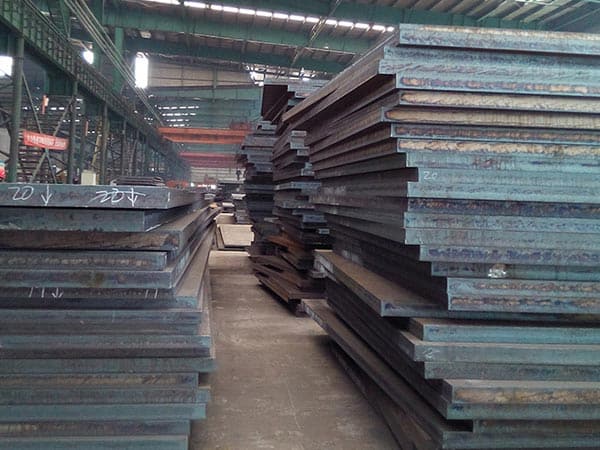
Understanding the S355MC Grade in the Automotive Context
S355MC is a high-yield strength, thermomechanically rolled steel specifically designed for cold forming. According to the EN 10149-2 standard, the 'S' stands for structural steel, '355' indicates a minimum yield strength of 355 MPa, and 'MC' signifies that the material is thermomechanically rolled (M) and suitable for cold forming (C). In the automotive industry, where weight reduction and structural integrity are paramount, S355MC serves as a cornerstone material for chassis, frames, and complex structural components. Its fine-grained microstructure, achieved through precise temperature control during the rolling process, allows for exceptional bendability and weldability compared to traditional structural steels like s355jr.
The Iranian Steel Landscape and S355MC Production
Iran has emerged as a dominant force in the Middle Eastern steel market, consistently ranking among the top 10 global producers. The country's ability to produce high-strength low-alloy (HSLA) steels like S355MC equivalents is driven by its vast iron ore reserves and advanced metallurgical facilities. Iranian mills have modernized their hot strip mills and plate mills to meet the rigorous demands of the domestic automotive giants, such as Iran Khodro (IKCO) and Saipa, as well as international export markets. These mills utilize Thermomechanical Controlled Processing (TMCP) to ensure that the plates maintain high strength without sacrificing ductility.
Top 10 S355MC Equivalent Hot Rolled Plate Mills in Iran
Identifying the leading producers requires looking at both production capacity and the technical ability to meet the EN 10149-2 or equivalent standards like ASTM A1011 HSLAS Grade 50. Below are the top 10 mills in Iran capable of supplying these high-performance materials.
- 1. Mobarakeh Steel Company (MSC): Located in Isfahan, MSC is the largest steel producer in the Middle East and North Africa. Their hot rolling mill is the primary source for automotive-grade HSLA coils and plates in Iran. They produce grades equivalent to S355MC under internal standards that align with European benchmarks, supplying the bulk of the domestic car industry.
- 2. Oxin Steel Khuzestan: Specializing in wide and heavy plates, Oxin Steel operates one of the most advanced plate mills in the region. Their ability to produce plates up to 4.5 meters wide makes them a critical supplier for heavy-duty vehicle frames and large-scale structural engineering projects requiring S355MC properties.
- 3. Kavian Steel: Situated in Ahvaz, Kavian Steel focuses on rolling slabs into high-quality plates. They are known for their flexibility in producing custom thicknesses and grades that match the mechanical requirements of S355MC, particularly for the construction of truck chassis and trailers.
- 4. Saba Steel: A subsidiary of Mobarakeh Steel, Saba Steel utilizes Compact Strip Production (CSP) technology. This allows for the efficient production of thin-gauge hot rolled coils with the fine-grain structure necessary for S355MC equivalent performance in light-duty automotive parts.
- 5. Gilan Steel Complex: As a major private sector player, Gilan Steel operates a significant hot rolling capacity in the north of Iran. They provide hot rolled plates and coils that serve the secondary automotive supply chain, focusing on cost-effective HSLA solutions.
- 6. Ahvaz Rolling and Pipe Mills (ARPCO): While heavily focused on pipe production, their rolling lines are capable of producing high-strength structural plates that meet the yield and tensile requirements of the S355 series, often used in specialized automotive mounting brackets.
- 7. Khorasan Steel Complex: Located in the northeast, this mill is a key producer of structural steels. While more focused on long products, their plate and section capabilities are expanding to include higher-strength grades for the regional manufacturing hub.
- 8. Esfahan Steel Company (ESCO): As the oldest integrated steel plant in Iran, ESCO primarily uses the blast furnace route. While their focus is often on S355JR equivalents, their high-strength plates are utilized in heavy automotive machinery and infrastructure.
- 9. Pasargad Steel Complex: A newer, technologically advanced mill that has rapidly scaled its production of specialized alloys. Their commitment to quality control makes them a rising supplier for precision-grade hot rolled plates.
- 10. Sirjan Iranian Steel (SISCO): Part of the Middle East Mines and Mineral Industries Development Holding Company (MIDHCO), SISCO is part of a vertically integrated chain that produces high-quality slabs and plates suitable for demanding industrial applications, including automotive structural equivalents.
Mechanical and Chemical Properties of S355MC Equivalents
The performance of S355MC is defined by its balance of chemistry and processing. To be considered an equivalent, Iranian-produced plates must adhere to strict limits on carbon and alloying elements. The use of micro-alloying elements such as Niobium (Nb), Vanadium (V), and Titanium (Ti) is essential for grain refinement.
| Property | S355MC (EN 10149-2) | Iranian Equivalent (Typical) |
|---|---|---|
| Yield Strength (MPa) | min. 355 | 360 - 410 |
| Tensile Strength (MPa) | 430 - 550 | 450 - 580 |
| Elongation (%) | min. 19 (t < 3mm) | 20 - 24 |
| Carbon (C) % | max. 0.12 | 0.10 - 0.12 |
| Manganese (Mn) % | max. 1.50 | 1.30 - 1.45 |
| Silicon (Si) % | max. 0.50 | 0.20 - 0.35 |
Advanced Processing Performance
One of the primary reasons automotive engineers select S355MC over standard structural steel is its superior cold forming capability. In the production lines of Iranian car manufacturers, plates must undergo intense bending and stretching without developing micro-cracks. The low carbon content and inclusion shape control (often through calcium treatment) ensure that the steel remains ductile even at high strength levels. Furthermore, the weldability of S355MC is exceptional. Because the Carbon Equivalent Value (CEV) is kept low, these plates can be welded using standard MIG/MAG or spot welding techniques without the need for pre-heating, which is a critical factor in high-speed automated assembly lines.
Environmental Adaptability and Durability
Iranian steel mills produce S355MC equivalents that are tested for performance across diverse climates. From the humid shores of the Caspian Sea to the arid, high-temperature regions of central Iran, automotive components made from this steel must resist atmospheric corrosion and fatigue. The fine-grained structure provides a natural advantage in fatigue resistance, as it inhibits the initiation and propagation of cracks under cyclic loading. For enhanced corrosion resistance, many of these hot rolled plates are supplied in a Pickled and Oiled (P&O) condition, which removes mill scale and provides a clean surface for subsequent coating or painting processes.
Expanding Applications in Modern Industry
Beyond the traditional car chassis, S355MC equivalent plates from Iranian mills are finding their way into new sectors. The push for renewable energy has seen these high-strength plates used in the construction of wind turbine towers and solar tracking frames, where the strength-to-weight ratio is vital. In the logistics sector, the manufacture of lightweight containers and high-capacity trailers relies on S355MC to increase payload capacity by reducing the dead weight of the vehicle structure. The versatility of the material, combined with the increasing technical sophistication of mills like Mobarakeh and Oxin, ensures that S355MC remains a vital commodity in the regional industrial ecosystem.
Technical Considerations for Sourcing and Fabrication
When sourcing S355MC equivalents from Iranian mills, engineers must specify the required impact testing and bending radius. While the standard S355MC does not always require low-temperature impact testing (unlike S355J2), many Iranian producers can provide 'L' or 'K' variants if the vehicle is intended for cold-weather environments. Fabricators should also note that the springback effect during bending is more pronounced in S355MC than in lower-strength grades, requiring precise calibration of CNC press brakes. By leveraging the high-quality output of Iran's top 10 mills, manufacturers can achieve a perfect balance of safety, performance, and cost-efficiency in their automotive and structural designs.
Leave a message