
What are the common defects in welding area of S960MC with EN10204-3.1 certificate welding parts
Comprehensive analysis of common welding defects in S960MC high-strength steel, focusing on HAZ softening, cold cracking, and technical mitigation strategies for EN10204-3.1 certified components.
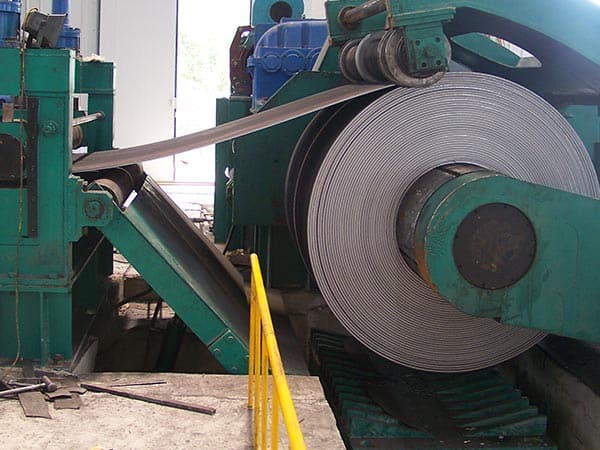
Technical Profile of S960MC High-Strength Steel
S960MC is a high-strength, thermomechanically rolled structural steel with a minimum yield strength of 960 MPa. Governed by the EN 10149-2 standard, this material is engineered for weight-sensitive applications where extreme load-bearing capacity is required. When dealing with components accompanied by an EN10204-3.1 certificate, the integrity of the material is verified by the manufacturer, ensuring that the chemical composition and mechanical properties meet strict thresholds. However, the very microstructural refinements that give S960MC its strength—primarily a fine-grained tempered martensite or bainite structure—make it highly sensitive to the thermal cycles of welding.
The Phenomenon of Softening in the Heat Affected Zone (HAZ)
The most prevalent "defect" in S960MC welding is not always a visible crack, but a localized loss of mechanical strength known as HAZ softening. Because S960MC achieves its strength through thermomechanical rolling and micro-alloying (using elements like Vanadium, Niobium, and Titanium), the heat input from welding acts as a localized tempering process. This leads to grain growth and the decomposition of the fine-grained structure into coarser, softer phases.
In the subcritical and intercritical regions of the HAZ, the hardness can drop significantly below the base metal's specifications. This reduction in hardness directly correlates to a drop in tensile strength. If the heat input is too high (slow cooling time, $t_{8/5}$), the joint may fail at the weld interface even if the filler metal is over-matched. Engineers must balance the cooling rate to ensure it is fast enough to maintain strength but slow enough to prevent embrittlement.
Hydrogen-Induced Cold Cracking (HIC)
Cold cracking is a critical risk for S960MC due to its high yield strength and the potential for martensite formation in the weld pool. For a cold crack to occur, three factors must coexist: a susceptible microstructure, a sufficient level of diffusible hydrogen, and high residual tensile stress. Since S960MC is often used in thick sections or complex geometries, the restraint stresses are naturally high.
Common causes of HIC in S960MC include:
- Using non-low-hydrogen welding consumables.
- Inadequate preheating or interpass temperature control.
- Contamination of the weld prep area with oil, moisture, or rust.
- Excessive restraint in the jigging or assembly process.
Geometrical and Surface Defects
Beyond metallurgical issues, the high-strength nature of S960MC affects the fluid dynamics of the weld pool. High-strength steels often require specific filler metals that may have different wetting characteristics compared to standard S355 steel. This can lead to several surface-level defects:
| Defect Type | Description | Impact on S960MC Performance |
|---|---|---|
| Undercut | A groove melted into the base metal adjacent to the weld toe. | Acts as a severe stress concentrator, leading to premature fatigue failure. |
| Lack of Fusion | Failure of the weld metal to fuse with the base metal or previous beads. | Significantly reduces the effective cross-sectional area and load capacity. |
| Porosity | Gas bubbles trapped in the solidifying weld metal. | Indicates contamination or shielding gas turbulence; reduces toughness. |
| Solidification Cracking | Cracks forming during the cooling of the weld bead. | Often caused by excessive heat input or unfavorable weld bead shape (depth-to-width ratio). |
The Critical Role of EN10204-3.1 Certification in Defect Prevention
The EN10204-3.1 certificate is not just a piece of paper; it is a roadmap for the welding engineer. It provides the exact chemical analysis (Carbon, Manganese, Silicon, Phosphorus, Sulfur, and micro-alloys) of the specific heat of steel being used. By calculating the Carbon Equivalent (CEV) or the CET value from the 3.1 certificate, the fabricator can precisely determine the necessary preheat temperature to avoid cold cracking.
Furthermore, the 3.1 certificate lists the actual yield and tensile strengths. If the base metal is at the upper limit of the S960MC strength range, the mismatch between the base metal and the filler metal becomes more pronounced, requiring tighter control over the welding parameters to ensure a homogenous stress distribution across the joint.
Optimization of Welding Parameters to Mitigate Defects
To ensure the integrity of S960MC welding parts, the cooling time between 800°C and 500°C (known as $t_{8/5}$) must be strictly monitored. For S960MC, the ideal $t_{8/5}$ range is typically between 5 and 15 seconds. If the cooling is too fast ($t_{8/5} < 5s$), the risk of martensitic hardening and cold cracking increases. If the cooling is too slow ($t_{8/5} > 20s$), the HAZ softening becomes excessive, and the impact toughness of the joint drops significantly.
Advanced Mitigation Strategies:
- Stringer Bead Technique: Avoid wide weaving to keep heat input localized and minimize the width of the HAZ.
- Multi-pass Welding: Use multiple thin passes to allow for grain refinement of the previous layers through the heat of subsequent passes.
- Filler Metal Selection: Use high-strength consumables (e.g., AWS A5.28 ER110S-G or ER120S-G) that match the yield strength of S960MC while providing adequate low-temperature toughness.
- Laser-Hybrid Welding: For high-precision components, laser-hybrid processes can significantly reduce the total heat input compared to traditional GMAW.
Industry Applications and Performance Requirements
S960MC is predominantly utilized in the manufacturing of mobile cranes, heavy-duty truck chassis, and lifting equipment. In these applications, the welding defects mentioned above are not merely cosmetic; they are potential points of catastrophic structural failure. For instance, a crane boom made of S960MC must withstand massive dynamic loads. Any undercut or HAZ softening could lead to a sudden buckling or fracture under load.
Environmental factors also play a role. S960MC is often used in cold climates (down to -40°C). If the welding process results in coarse-grained structures or hydrogen embrittlement, the Charpy V-notch impact energy will plummet, making the structure susceptible to brittle fracture at low temperatures. The EN10204-3.1 certificate typically includes impact test results at specific temperatures, which serves as the baseline for ensuring the welded joint performs as well as the parent material.
Non-Destructive Testing (NDT) for S960MC Welds
Given the sensitivity of S960MC, standard visual inspection is insufficient. High-strength steel welds should undergo rigorous NDT protocols. Magnetic Particle Inspection (MPI) is highly effective for detecting surface-breaking cold cracks that might be invisible to the naked eye. Ultrasonic Testing (UT) or Phased Array Ultrasonic Testing (PAUT) is essential for identifying internal defects like lack of side-wall fusion or micro-porosity. For EN10204-3.1 certified parts, maintaining a digital record of NDT results linked to the material's heat number is a best practice for long-term traceability and safety compliance.
Leave a message