
What are the chemical compoments of B750L structure steel for cold forming
A comprehensive technical analysis of B750L structural steel, focusing on its chemical components, mechanical properties, and cold-forming performance for high-strength engineering applications.
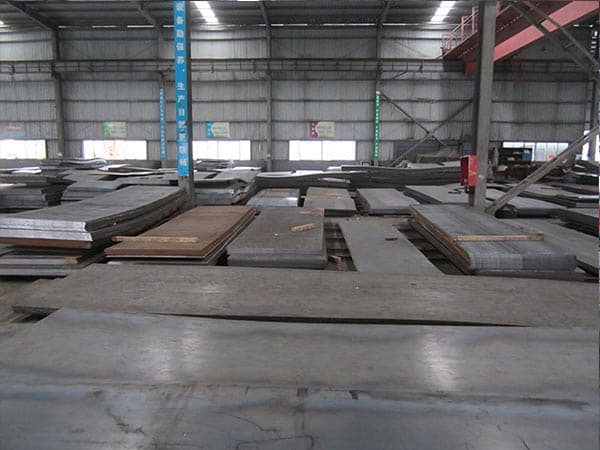
Metallurgical Foundation of B750L High-Strength Steel
B750L is a high-strength low-alloy (HSLA) structural steel specifically engineered for cold forming applications. The 'B' typically denotes its origin from major steel mills like Baosteel, while '750' represents its minimum yield strength in Megapascals (MPa), and 'L' signifies its suitability for cold forming (low-alloy). This material represents a pinnacle of metallurgical engineering, balancing extreme load-bearing capacity with the ductility required for complex shaping processes. Unlike traditional carbon steels, B750L achieves its properties through a precise combination of micro-alloying and Thermo-Mechanical Controlled Processing (TMCP).
The demand for B750L has surged in industries where weight reduction and structural integrity are paramount. By utilizing a steel with 750 MPa yield strength, engineers can reduce the thickness of structural components without compromising safety, leading to lighter vehicles and more efficient heavy machinery. Understanding the chemical components is the first step in mastering how this material behaves under the stress of a hydraulic press or the heat of a welding torch.
Detailed Chemical Composition and Elemental Synergy
The chemical makeup of B750L is governed by strict enterprise and international standards to ensure consistency. The focus is on maintaining a low carbon equivalent (Ceq) to enhance weldability while using micro-alloying elements to boost strength. The following table outlines the typical chemical composition limits for B750L structural steel:
| Element | Mass Fraction (Max %) | Primary Function in B750L |
|---|---|---|
| Carbon (C) | 0.12 | Ensures basic strength while maintaining excellent weldability and preventing brittleness. |
| Silicon (Si) | 0.50 | Acts as a deoxidizer and provides solid solution strengthening to the ferrite matrix. |
| Manganese (Mn) | 2.00 | Increases hardenability and strength; combines with sulfur to prevent hot shortness. |
| Phosphorus (P) | 0.025 | Controlled to low levels to maintain impact toughness and prevent cold shortness. |
| Sulfur (S) | 0.015 | Strictly limited to minimize non-metallic inclusions, improving lamellar tearing resistance. |
| Aluminum (Al) | 0.015 (Min) | Used for grain refinement and nitrogen binding. |
| Nb + Ti + V | 0.22 | Micro-alloying elements that provide precipitation hardening and grain size control. |
Carbon (C): In B750L, carbon is kept intentionally low, usually below 0.12%. This is critical for cold-forming steel because high carbon content increases hardness but significantly reduces ductility and weldability. By keeping carbon low, the steel remains 'soft' enough to be bent and shaped without cracking, while the strength is derived from other mechanisms.
Manganese (Mn): As a primary alloying element, Manganese plays a dual role. It strengthens the ferrite and lowers the transformation temperature, which helps in achieving a finer grain structure during the rolling process. At levels up to 2.00%, it provides the necessary backbone for the 750 MPa yield strength.
Micro-alloying Elements (Nb, V, Ti): The inclusion of Niobium, Vanadium, and Titanium is what separates B750L from standard structural steels. These elements form fine carbides and nitrides that pin grain boundaries during the hot rolling process. This 'grain refinement' is the only strengthening mechanism that simultaneously improves both strength and toughness. Titanium also serves to stabilize nitrogen, preventing strain aging which could lead to brittle failure during cold forming.
Mechanical Properties and Cold Forming Performance
The chemical composition directly dictates the mechanical performance of B750L. For a material to be classified as B750L, it must meet rigorous tensile and elongation benchmarks. The high yield-to-tensile ratio is a hallmark of this grade, providing a narrow but stable window for plastic deformation.
- Yield Strength: Minimum 750 MPa, providing the necessary resistance against permanent deformation under high loads.
- Tensile Strength: Typically ranges between 820 and 980 MPa, ensuring the material can withstand significant ultimate stress.
- Elongation: Generally maintains a minimum of 10-12% (depending on thickness), which is remarkable for a steel of this strength level.
- Bendability: B750L is designed to be bent 180 degrees over a specific mandrel radius (usually 3 to 5 times the thickness) without surface cracking.
The cold forming performance of B750L is influenced by its clean chemistry. Low sulfur levels mean fewer manganese sulfide inclusions, which are often the initiation points for cracks during tight-radius bending. This 'cleanliness' allows manufacturers to use B750L for complex chassis components that require deep drawing or sharp bends.
Environmental Adaptability and Corrosion Resistance
While B750L is not a dedicated weathering steel like Corten, its chemical composition offers moderate resistance to atmospheric corrosion compared to plain carbon steels. The presence of Silicon and Manganese helps form a more adherent oxide scale. However, in automotive or outdoor structural applications, B750L is typically paired with protective coatings such as zinc galvanizing or E-coating.
In terms of temperature adaptability, the micro-alloyed grain refinement ensures that B750L maintains its toughness even in sub-zero conditions. This makes it an ideal choice for heavy machinery operating in arctic environments or high-altitude construction, where standard steels might suffer from brittle fracture.
Advanced Processing: Welding and Cutting
The low carbon equivalent of B750L makes it exceptionally friendly to modern welding processes, including MAG (Metal Active Gas), laser welding, and resistance spot welding. Because the alloying elements are kept in precise balance, the Heat Affected Zone (HAZ) does not suffer from excessive softening or hardening, which is a common issue with high-strength steels. This ensures that the welded joint remains as strong as the parent metal.
When it comes to cutting, B750L can be processed using laser, plasma, or waterjet methods. Laser cutting is particularly effective due to the material's consistent chemical composition and flat surface finish, allowing for high-speed processing with minimal thermal distortion.
Industry Applications and Strategic Value
The unique chemical profile of B750L has made it a staple in several high-stakes industries. In the automotive sector, it is used for truck frames, cross members, and bumper reinforcements. By switching from a 500 MPa steel to B750L, manufacturers can reduce component weight by up to 30%, directly contributing to fuel efficiency and increased payload capacity.
In the construction and lifting industry, B750L is utilized for crane booms and telescopic arms. The high strength-to-weight ratio allows for longer reaches and higher lifting capacities without increasing the overall footprint of the machine. Furthermore, its reliability in cold forming allows for the creation of U-shaped or hexagonal boom profiles that maximize geometric stiffness.
From a strategic procurement perspective, B750L offers a cost-effective alternative to even higher grades like 900L or 1100L, which may be overkill for many structural applications and significantly harder to form. B750L sits at the 'sweet spot' of high performance and manufacturing feasibility.
Leave a message