
What is the price of S460MC hot rolled flat per ton in Nigeria
Discover the latest pricing factors and technical specifications for S460MC hot rolled flat steel in Nigeria. This guide covers mechanical properties, industrial applications, and market dynamics.
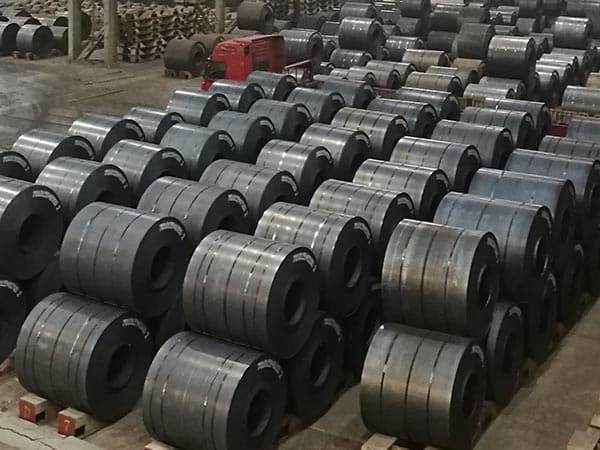
Understanding the Market Value of S460MC Hot Rolled Flat Steel in Nigeria
Navigating the steel market in Nigeria requires a deep understanding of both global commodity trends and local economic factors. S460MC, a high-yield strength steel grade governed by the EN 10149-2 standard, has become increasingly vital for Nigeria's expanding infrastructure and manufacturing sectors. This thermomechanically rolled steel is specifically designed for cold forming, offering a unique balance of high strength and excellent formability. When asking about the price per ton, one must consider that S460MC is not a standard commodity steel like S235 or S355; it is a specialized engineering material that brings significant weight-saving advantages to structural projects.
The current price of S460MC hot rolled flat steel in Nigeria typically fluctuates between $850 and $1,150 per metric ton on a C&F (Cost and Freight) basis to Lagos or Port Harcourt. However, once cleared through customs and distributed locally, the price in Nigerian Naira (NGN) can vary significantly due to the volatility of the exchange rate and local logistics costs. For procurement managers and structural engineers, the value of S460MC lies not just in its sticker price, but in its ability to reduce the overall tonnage required for a project without compromising safety or integrity.
Technical Specifications and Material Properties of S460MC
To justify the premium price of S460MC over standard mild steel, it is essential to analyze its technical attributes. S460MC is a High-Strength Low-Alloy (HSLA) steel. The "S" denotes structural steel, "460" refers to the minimum yield strength of 460 MPa, "M" indicates it is thermomechanically rolled, and "C" signifies its suitability for cold forming.
| Mechanical Property | Value Range |
|---|---|
| Yield Strength (Reh MPa) | Min 460 MPa |
| Tensile Strength (Rm MPa) | 520 - 670 MPa |
| Elongation (A50mm %) | Min 14% (depending on thickness) |
| Bending Radius (180°) | 0.8t to 1.6t (depending on thickness) |
The chemical composition of S460MC is strictly controlled to ensure superior weldability and toughness. Unlike traditional high-carbon steels, S460MC achieves its strength through a fine-grained microstructure created during the thermomechanical rolling process. This involves precise temperature control during the rolling stages, which refines the grain size and allows for a lower carbon equivalent (CEV). A lower CEV is critical for Nigerian fabricators because it minimizes the risk of cold cracking during welding, even in humid tropical environments.
- Carbon (C): Max 0.12%
- Manganese (Mn): Max 1.60%
- Silicon (Si): Max 0.50%
- Phosphorus (P): Max 0.025%
- Sulfur (S): Max 0.015%
- Niobium (Nb) / Vanadium (V) / Titanium (Ti): Trace amounts for grain refinement
Economic Drivers Affecting Steel Prices in Nigeria
The price of S460MC in Nigeria is influenced by a complex interplay of international and domestic factors. Understanding these can help businesses time their purchases more effectively. Internationally, the cost of iron ore and coking coal, primarily driven by demand from China and Europe, sets the baseline. Since S460MC requires more sophisticated processing than standard grades, its production is concentrated in high-end mills in Europe and Asia, making shipping costs a significant component of the final price in West Africa.
In Nigeria, the Naira to US Dollar exchange rate is the most volatile variable. Since most high-grade steel is imported, any depreciation of the Naira immediately inflates the local price. Furthermore, port congestion at Apapa and Tin Can Island can lead to demurrage charges, which importers often pass on to the end consumer. For large-scale projects in the Niger Delta or the Federal Capital Territory (FCT), inland transportation costs on heavy-duty flatbed trucks also add a layer of expense that must be factored into the per-ton price.
Advantages of Using S460MC in Nigerian Construction and Logistics
Why choose S460MC when cheaper alternatives exist? The answer lies in weight optimization. In the logistics sector, Nigerian transport companies are increasingly adopting S460MC for truck chassis and trailer frames. By using S460MC instead of S355, a manufacturer can reduce the weight of the steel structure by up to 20-30% while maintaining the same load-bearing capacity. This weight reduction translates directly into higher payloads and lower fuel consumption, providing a long-term economic benefit that far outweighs the initial material cost.
In the construction of high-rise buildings and industrial warehouses in Lagos or Abuja, S460MC allows for thinner sections and longer spans. This not only reduces the total volume of steel required—lowering shipping and handling costs—but also creates more usable interior space. The environmental adaptability of S460MC is also noteworthy; its fine-grained structure provides better resistance to atmospheric corrosion compared to lower-grade steels, a vital feature for coastal projects where salt-laden air is a constant challenge.
Fabrication and Processing Performance
For Nigerian workshops, the "C" designation in S460MC is a major advantage. It indicates that the steel is optimized for cold forming, meaning it can be bent and shaped without cracking. This is particularly useful for creating complex profiles used in the automotive and machinery sectors. When welding S460MC, the low carbon content ensures that standard welding techniques (such as MIG/MAG or MMA) can be used without extensive pre-heating, saving time and energy costs on the shop floor.
However, it is crucial to follow the manufacturer's guidelines regarding the minimum bending radius. Because S460MC is significantly harder than mild steel, it requires more force to bend. Fabricators must ensure their hydraulic press brakes have the necessary tonnage to handle high-yield materials. Using the wrong tools or exceeding the bending limits can lead to spring-back issues or micro-fractures, which could compromise the structural integrity of the finished product.
Comparative Analysis: S460MC vs. s355jr
Many Nigerian contractors are accustomed to using S355JR. While S355JR is a versatile and widely available grade, S460MC offers a distinct technological leap. The primary difference is the yield strength: 355 MPa vs. 460 MPa. This 30% increase in strength allows for a significant reduction in plate thickness. For instance, a structural component designed with 10mm S355JR could potentially be replaced by 7mm or 8mm S460MC, depending on the load requirements and safety factors.
| Feature | S355JR | S460MC |
|---|---|---|
| Yield Strength | 355 MPa | 460 MPa |
| Formability | Moderate | Excellent (Cold Forming) |
| Weight Saving | Baseline | Up to 25% Reduction |
| Weldability | Good | Superior (Lower CEV) |
While the price per ton of S460MC is higher, the price per project is often lower because less steel is used. This "less is more" philosophy is becoming the standard in modern engineering, particularly in regions like Nigeria where logistics and material handling represent a large portion of the project budget.
Future Outlook for High-Strength Steel in Nigeria
As Nigeria continues to invest in its railway networks, oil and gas infrastructure, and renewable energy projects (such as solar mounting structures), the demand for S460MC is expected to rise. The shift toward sustainable building practices also favors high-strength steel, as it reduces the carbon footprint associated with steel production and transportation. For local distributors, maintaining a consistent stock of S460MC in various thicknesses—typically from 3mm to 12mm for flat products—will be key to capturing this growing market.
Procuring S460MC in Nigeria should always involve a request for Mill Test Certificates (MTC) to verify the chemical and mechanical properties. Given the specialized nature of the steel, ensuring that the material meets EN 10149-2 standards is the only way to guarantee the performance levels required for critical structural applications. Buyers should look for reputable suppliers who can provide traceability from the original mill to the final delivery point in Nigeria.
The price of S460MC hot rolled flat steel in Nigeria is a reflection of its high-tech manufacturing process and its superior performance in the field. While market volatility remains a challenge, the strategic use of this material offers a pathway to more efficient, durable, and cost-effective engineering solutions across the country's diverse industrial landscape.
Leave a message