
What is the price of S900MC automotive steel supplier per ton in Shanghai, China
Explore the comprehensive pricing guide and technical specifications of S900MC automotive steel in Shanghai. Learn about its mechanical properties, processing advantages, and market trends for 2024.
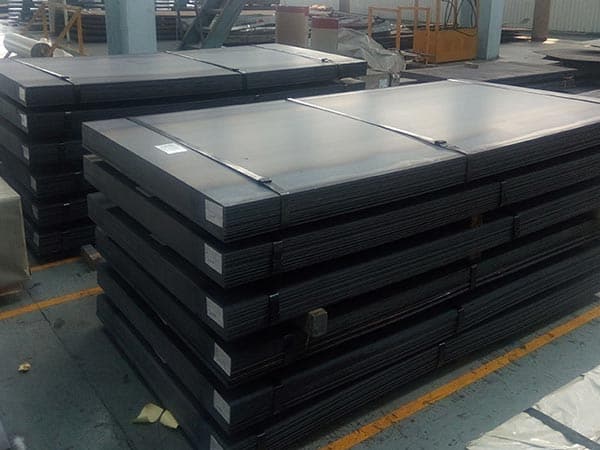
The Strategic Importance of S900MC in Modern Automotive Engineering
Navigating the complex landscape of high-performance materials, S900MC stands out as a pinnacle of Thermomechanically Rolled (TMCP) high-yield strength steel. For procurement managers and structural engineers looking for the price of S900MC automotive steel per ton in Shanghai, understanding the material's intrinsic value goes far beyond the daily ticker on the steel exchange. Shanghai, serving as China's premier logistics and metallurgical hub, offers a unique pricing ecosystem influenced by proximity to major mills like Baosteel and the logistical advantages of the Port of Shanghai.
S900MC is governed by the EN 10149-2 standard, specifically designed for cold-forming applications where weight reduction is paramount without compromising structural integrity. The 'S' denotes structural steel, '900' represents the minimum yield strength of 900 MPa, and 'MC' indicates the thermomechanically rolled delivery condition. This material is the backbone of lightweighting strategies in the commercial vehicle sector, particularly for chassis components, crane booms, and high-stress structural frames.
Technical Specifications and Chemical Synergy
The pricing of S900MC is inherently tied to its sophisticated alloying profile. Unlike standard carbon steels, S900MC utilizes micro-alloying elements such as Niobium (Nb), Vanadium (V), and Titanium (Ti) to achieve grain refinement. This meticulous balance allows the steel to maintain high strength while offering remarkable ductility.
| Element | C (max) | Mn (max) | Si (max) | P (max) | S (max) | Al (min) | Nb+V+Ti (max) |
|---|---|---|---|---|---|---|---|
| Composition (%) | 0.20 | 2.20 | 0.60 | 0.025 | 0.015 | 0.015 | 0.22 |
The low carbon equivalent ensures that S900MC remains highly weldable, a critical factor for automotive assembly lines. The inclusion of Manganese enhances hardenability, while the micro-alloys prevent grain growth during the rolling process, resulting in a fine-grained microstructure that resists crack propagation.
Mechanical Properties: The Foundation of Value
When evaluating the price per ton in Shanghai, buyers must consider the performance-to-weight ratio. S900MC allows for a significant reduction in plate thickness compared to S355 or even S700MC, which translates to lower overall vehicle weight and improved fuel efficiency or battery range for electric vehicles.
| Property | Yield Strength (MPa) | Tensile Strength (MPa) | Elongation A5 (%) | Min. Bending Radius (90°) |
|---|---|---|---|---|
| Typical Values | ≥ 900 | 930 - 1200 | ≥ 7 | 2.5 x t (thickness) |
The ultra-high yield strength of 900 MPa provides a safety margin for heavy-duty applications. However, the elongation property (min 7%) indicates that despite its hardness, the material retains enough plasticity for complex cold-forming operations. This duality is what justifies the premium price of S900MC over lower grades.
Processing Performance: Welding, Bending, and Cutting
A supplier's value in Shanghai is often measured by their ability to provide technical support for processing S900MC. High-strength steel requires specific handling to maintain its properties. Cold forming S900MC requires higher press forces and accounts for greater springback compared to conventional steels. Engineers must calculate the over-bending angle accurately to achieve the desired geometry.
Welding S900MC is highly efficient due to its low carbon content. It can be welded using standard processes like MAG (Metal Active Gas) or laser welding. However, to prevent softening in the Heat Affected Zone (HAZ), it is vital to control the heat input (cooling time t8/5). Suppliers in the Shanghai region often provide specific welding consumables that match the strength of the base metal, ensuring the entire structure meets the 900 MPa requirement.
Laser cutting is the preferred method for S900MC due to its precision. The clean edges produced by high-power fiber lasers reduce the need for secondary finishing, further offsetting the initial material cost per ton. In the Shanghai industrial zones, specialized service centers offer decoiling and precision laser cutting of S900MC coils into customized blanks.
Why Shanghai is the Hub for S900MC Sourcing
The price of S900MC in Shanghai is a benchmark for the Asian market for several reasons. First, the presence of Baosteel (Baoshan Iron & Steel) ensures a steady supply of high-quality domestic material that rivals European imports like Strenx or Domex. Second, the Shanghai steel market is highly transparent, with prices fluctuating based on iron ore futures and domestic demand cycles.
Suppliers in Shanghai often maintain large inventories of various thicknesses, typically ranging from 3.0mm to 10.0mm. This availability reduces lead times for automotive OEMs (Original Equipment Manufacturers) who operate on Just-In-Time (JIT) production schedules. Furthermore, the geographical advantage of Shanghai allows for cost-effective shipping to other major automotive hubs like Ningbo, Suzhou, and international markets via the Yangshan Deepwater Port.
Factors Influencing the Price Per Ton of S900MC
Understanding the price volatility of S900MC requires looking at several macroeconomic and microeconomic factors. As of 2024, the price is influenced by:
- Raw Material Costs: The price of ferro-alloys (Niobium and Titanium) significantly impacts the surcharge for S900MC compared to standard carbon steel.
- Energy Costs: Thermomechanical rolling is an energy-intensive process. Fluctuations in electricity and natural gas prices in the Yangtze River Delta directly affect mill margins.
- Supply and Demand: The push for lightweighting in the New Energy Vehicle (NEV) sector has increased demand for ultra-high strength steels, often leading to supply tightness for specific gauges.
- Surface Treatment: S900MC is often supplied in a pickled and oiled (S900MC+P) condition. The pickling process adds a cost premium but is essential for preventing tool wear during stamping and ensuring paint adhesion.
Typically, S900MC commands a price premium of 30% to 50% over S700MC, reflecting the increased difficulty in rolling and the higher alloy content. In the Shanghai market, prices are quoted either as 'ex-works' from the mill or 'warehouse price' which includes storage and local handling fees.
Industry Expansion: Beyond the Automotive Sector
While the automotive industry is the primary consumer of S900MC, its application is expanding into other sectors where strength-to-weight ratios are critical. In heavy machinery, S900MC is used for the telescopic sections of mobile cranes, allowing for higher lifting capacities at greater heights. The agricultural sector utilizes this steel for plow frames and trailers that must withstand extreme mechanical stress while remaining light enough to minimize soil compaction.
Environmental adaptability is another strong suit. S900MC exhibits excellent low-temperature toughness, making it suitable for equipment operating in frigid climates, such as mining machinery in Northern China or Russia. This versatility ensures that the demand for S900MC remains robust, supporting its position as a premium structural material.
Strategic Procurement in the Shanghai Market
For businesses looking to secure S900MC at competitive rates, partnering with a reputable Shanghai supplier is essential. It is not merely about the lowest price per ton; it is about the reliability of the mechanical properties across different batches. Leading suppliers provide MTC (Mill Test Certificates) according to EN 10204 3.1, detailing the exact chemical analysis and mechanical test results for every coil.
Future-proofing structural designs involves moving toward materials like S900MC. As global carbon emission standards tighten, the ability to use less steel to achieve the same structural performance becomes a significant competitive advantage. By sourcing from the Shanghai market, companies gain access to the latest metallurgical advancements and a logistics network that can support global distribution. The investment in S900MC is an investment in efficiency, safety, and sustainability.
Leave a message