
Growth of s500 steel equivalent exported to the Middle East
Explore the growing demand for S500 steel equivalents in the Middle East. This technical guide analyzes mechanical properties, weldability, and environmental resilience for large-scale infrastructure and energy projects.
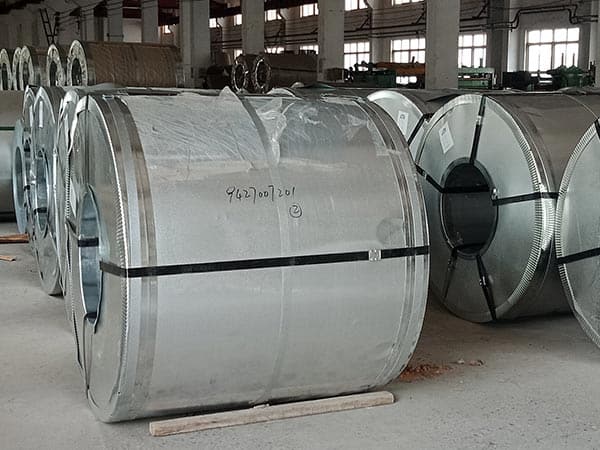
The Strategic Shift Toward High-Strength S500 steel Equivalents
The Middle Eastern construction and energy landscape is witnessing a significant transition from traditional mild steels to high-strength low-alloy (HSLA) variants. Among these, S500 steel equivalents have emerged as a cornerstone for modern engineering. This shift is driven by the need for structural efficiency, weight reduction, and the ability to withstand the unique geographical challenges of the Gulf region. S500 steel, defined primarily by its minimum yield strength of 500 MPa, offers a superior strength-to-weight ratio compared to the ubiquitous S355 grade, making it an ideal candidate for the ambitious 'Giga-projects' currently under development.
Exporting S500 steel to the Middle East requires a deep understanding of international standards and their equivalents. Whether it is the European EN 10025-6 (S500Q/QL), the thermomechanically rolled EN 10149-2 (S500MC), or the Chinese GB/T 1591 (Q500), each variant brings specific advantages to the table. The growth in export volume reflects a maturing market that prioritizes long-term structural integrity and cost-optimization through material science.
Mechanical Performance: The Core of S500 Engineering
The primary appeal of S500 steel equivalents lies in their exceptional mechanical properties. By providing a yield strength of 500 MPa, these steels allow engineers to design thinner sections that can carry the same loads as thicker, lower-grade plates. This reduction in thickness directly translates to lower transport costs—a critical factor for international trade—and reduced welding volumes on-site.
Tensile strength for S500 grades typically ranges between 550 and 770 MPa, depending on the specific standard and heat treatment process. For instance, the Quenched and Tempered (Q&T) versions like S500Q provide excellent toughness at sub-zero temperatures, which is vital for pressurized storage tanks and offshore structures. In contrast, the S500MC grade, produced via thermomechanical rolling, offers superior ductility and cold-forming characteristics, making it perfect for complex structural components in the automotive and heavy machinery sectors.
| Steel Grade | Standard | Yield Strength (min MPa) | Tensile Strength (MPa) | Elongation (min %) |
|---|---|---|---|---|
| S500MC | EN 10149-2 | 500 | 550-700 | 12-14 |
| S500Q | EN 10025-6 | 500 | 590-770 | 14 |
| Q500D | GB/T 1591 | 500 | 610-770 | 17 |
| ASTM A514 Gr. B | ASTM | ~690 (Ref) | 760-895 | 18 |
Chemical Composition and Weldability Excellence
The chemical architecture of S500 steel is meticulously balanced to ensure that high strength does not come at the cost of fabricability. Unlike older generations of high-strength steel, modern S500 equivalents utilize a low carbon equivalent (CEV) design. By incorporating micro-alloying elements such as Niobium (Nb), Vanadium (V), and Titanium (Ti), manufacturers achieve grain refinement that enhances both strength and toughness simultaneously.
For Middle Eastern projects, where rapid assembly is often required, weldability is paramount. A low CEV value (typically below 0.45 for S500MC) ensures that the steel can be welded using standard processes like MIG, TIG, or submerged arc welding (SAW) without a high risk of cold cracking. This eliminates the need for extensive pre-heating in many applications, significantly accelerating construction timelines in desert environments where labor efficiency is key.
- Carbon (C): Kept low to improve weldability and prevent brittleness.
- Manganese (Mn): Enhances hardenability and solid solution strengthening.
- Silicon (Si): Acts as a deoxidizer and contributes to strength.
- Micro-alloys: Form carbides and nitrides to refine the microstructure.
Environmental Adaptation: Thriving in Arid and Saline Conditions
The Middle East presents a unique set of environmental stressors, including extreme thermal cycling, high UV exposure, and intense atmospheric corrosion in coastal areas like Dubai, Doha, and Dammam. S500 steel equivalents exported to this region are often specified with enhanced surface protection or specific alloying tweaks to handle these conditions.
Thermal expansion is a critical consideration. With daytime temperatures often exceeding 50°C and dropping significantly at night, the structural stability provided by S500’s high yield point ensures that components remain within elastic limits during expansion and contraction. Furthermore, when used in conjunction with advanced coating systems, the fine-grained surface of S500 provides an excellent substrate for epoxy and polyurethane paints, ensuring long-term resistance to the corrosive saline air prevalent near the Persian Gulf and the Red Sea.
Expanding Industry Applications Across the Middle East
The growth of S500 steel exports is closely tied to the diversification of Middle Eastern economies. While the oil and gas sector remains a primary consumer, other industries are rapidly adopting high-strength materials.
Infrastructure and High-Rise Construction: In cities like Riyadh and Neom, S500 is used in the primary skeletons of skyscrapers and long-span bridges. The ability to use thinner plates reduces the dead load of the structure, allowing for more creative architectural designs and deeper foundations.
Energy and Petrochemicals: For the fabrication of pressure vessels, heat exchangers, and storage tanks, S500Q offers the necessary safety margins and pressure-bearing capacity. Its toughness ensures that even under high internal pressures, the risk of catastrophic brittle failure is minimized.
Heavy Lifting and Transport: The Middle East is a hub for logistics and heavy industry. Crane booms, trailers, and earth-moving equipment manufactured with S500MC benefit from a lighter tare weight, which increases payload capacity and fuel efficiency—a major selling point for regional logistics firms.
Technical Challenges and Quality Control in Export
Exporting S500 steel is not merely about shipping plates; it involves rigorous quality assurance to meet local regulations such as SASO (Saudi Standards, Metrology and Quality Organization). Manufacturers must provide comprehensive Mill Test Certificates (MTC) that detail the chemical analysis, mechanical tests, and ultrasonic testing results to ensure no internal defects exist.
One of the technical nuances often discussed is the Bauschinger effect during the cold forming of S500MC. Since this grade is often used for bent or shaped profiles, understanding how the material reacts to stress reversal is crucial for maintaining dimensional accuracy. Expert suppliers provide guidance on minimum bending radii to prevent micro-cracking at the outer fibers of the bend, ensuring the longevity of the fabricated part.
The logistical aspect also involves protecting the steel from "white rust" or surface oxidation during sea transit. Proper packaging, including VCI (Volatile Corrosion Inhibitor) paper and waterproof wrapping, ensures that the S500 steel arrives at the port of Jebel Ali or King Abdullah Port in pristine condition, ready for immediate processing.
Economic Impact of High-Strength Steel Integration
Utilizing S500 steel equivalents offers a clear economic advantage that outweighs the higher initial price per ton compared to S355. By reducing the total tonnage of steel required for a project, companies save on raw material costs, shipping fees, and welding consumables. Furthermore, the faster fabrication times lead to earlier project completion, providing a faster return on investment for developers.
As the Middle East continues to push the boundaries of engineering, the demand for S500 and even higher grades like S700 or S960 is expected to climb. The current growth in S500 export volumes is a testament to the region's commitment to building sustainable, efficient, and world-class infrastructure. By selecting the right equivalent grade and understanding its multifaceted properties, engineers can ensure that their projects stand the test of time in one of the world's most demanding environments.
Leave a message