
How to calculate s500 steel datasheet weight
Master the precise methods for calculating S500 steel weight across different profiles. This technical guide explores S500MC mechanical properties, chemical composition, and industrial applications to optimize your engineering projects.
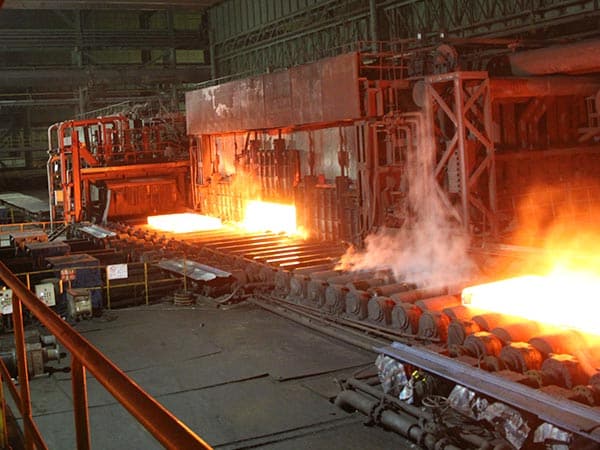
Precision in Calculation: The Core of S500 steel Engineering
Determining the exact mass of S500 steel is a fundamental requirement for structural integrity, logistical planning, and cost estimation. S500, primarily recognized as a high-strength low-alloy (HSLA) steel, is engineered for applications where weight reduction and high load-bearing capacity are non-negotiable. Whether you are dealing with S500MC (thermomechanically rolled for cold forming) or structural S500 grades, the calculation relies on the material's density and its geometric volume.
The standard density for S500 steel used in global engineering is 7,850 kg/m³ (or 7.85 g/cm³). While minor alloying elements like niobium, vanadium, or titanium are added to achieve its 500 MPa yield strength, these additions do not significantly alter the base density of the iron matrix. Therefore, the theoretical weight is derived from the product of volume and this constant density value.
The Mathematical Formulas for Different S500 Profiles
To calculate the weight from an S500 datasheet, you must first identify the shape of the product. The datasheet typically provides the nominal thickness, width, and length. Using the density factor of 7.85, the formulas are as follows:
- S500 Steel Plates/Sheets: Weight (kg) = Thickness (mm) × Width (m) × Length (m) × 7.85
- S500 Round Bars: Weight (kg/m) = Diameter (mm) × Diameter (mm) × 0.00617
- S500 Square Tubes: Weight (kg/m) = (Perimeter / 3.14 - Wall Thickness) × Wall Thickness × 0.02466
- S500 Seamless Pipes: Weight (kg/m) = (Outer Diameter - Wall Thickness) × Wall Thickness × 0.02466
For example, if an S500MC datasheet specifies a plate with a thickness of 8mm, a width of 1500mm, and a length of 6000mm, the calculation would be: 8 × 1.5 × 6 × 7.85 = 565.2 kg. Precision in these calculations prevents over-engineering and ensures that lifting equipment and transport frames are rated correctly for the load.
Mechanical Properties and Datasheet Interpretation
When reviewing an S500 datasheet, the weight is only one part of the story. The "500" designation signifies a minimum yield strength of 500 MPa. Understanding the relationship between weight and strength is critical for "lightweighting" strategies in modern manufacturing.
| Property | Typical Value (S500MC) | Unit |
|---|---|---|
| Yield Strength (ReH) | min. 500 | MPa |
| Tensile Strength (Rm) | 550 - 700 | MPa |
| Elongation (A80mm) | min. 12 - 14 | % |
| Density | 7.85 | g/cm³ |
| Impact Energy (at -20°C) | min. 40 | J |
The high yield-to-tensile ratio of S500 steel allows engineers to use thinner sections compared to standard S235 or S355 steels without sacrificing safety. By reducing the thickness (and thus the calculated weight), the overall mass of a vehicle chassis or a crane arm can be reduced by up to 30%, leading to significant fuel savings and increased payload capacity.
Chemical Composition and Its Influence on Density
The chemical makeup of S500 steel is strictly controlled to ensure weldability and formability. Although the datasheet lists various elements, their concentration is low enough that the standard density of 7.85 remains the reliable benchmark for weight calculations. Carbon (C) is kept low (usually below 0.12%) to enhance welding, while Manganese (Mn) is used for solid solution strengthening.
Micro-alloying elements such as Niobium (Nb) and Titanium (Ti) are the secret to S500's strength. These elements form fine precipitates that pin grain boundaries during the rolling process, resulting in a fine-grained microstructure. This refined structure provides the 500 MPa strength while maintaining excellent low-temperature toughness, which is vital for equipment operating in Arctic or offshore environments.
Processing Performance: Beyond the Weight
Knowing the weight of an S500 component is essential for the fabrication shop. S500MC, in particular, is designed for cold forming. When calculating the weight of a bent component, one must account for the developed length of the material. Because S500 has high springback characteristics due to its strength, the tooling must be adjusted accordingly.
Weldability: S500 steel features a low carbon equivalent (CEV). This means that despite its high strength, it can be welded using standard methods like MIG/MAG or submerged arc welding without the extensive preheating required by older high-strength grades. This ease of processing reduces labor time and indirect costs, making the "theoretical weight" even more cost-effective in a production environment.
Surface Quality: Most S500MC datasheets specify a pickled and oiled surface or a controlled oxide layer. When calculating weight for high-precision applications, the weight of the coating is negligible, but the surface condition affects the friction coefficient during forming and the adhesion of protective paints.
Strategic Applications: Why S500 Weight Matters
The demand for S500 steel is driven by the need for efficiency. In the heavy lifting industry, every kilogram saved on the boom of a crane translates directly into more lifting capacity at a greater radius. By using S500 instead of S355, a manufacturer can specify a thinner plate, calculate a lower weight, and produce a more competitive product.
In automotive and commercial vehicle manufacturing, S500 is used for cross-members, longitudinal beams, and chassis components. The ability to calculate the weight accurately allows designers to perform precise Finite Element Analysis (FEA) to predict how the vehicle will handle under load. The high fatigue strength of S500 ensures that these lightweight structures can withstand the cyclic loading of transport over long distances.
Agricultural Machinery: Modern plows, harvesters, and trailers utilize S500 to resist the abrasive forces of soil while remaining light enough to prevent soil compaction. The datasheet weight calculation helps in balancing the machine for optimal traction and stability.
Environmental Adaptability and Lifecycle Benefits
S500 steel exhibits excellent environmental adaptability. Its fine-grained structure provides better resistance to atmospheric corrosion compared to coarse-grained steels. Furthermore, the reduction in material weight (achieved through higher strength) means that less raw material is extracted, less energy is consumed in melting, and fewer emissions are produced during transport.
The sustainability of S500 is found in its longevity. Even though the calculated weight might be lower, the durability is higher. It resists denting and structural deformation better than lower-grade steels, extending the service life of machinery and reducing the frequency of replacement. When the product eventually reaches the end of its life, S500 is 100% recyclable, fitting perfectly into the circular economy of the modern steel industry.
Factors Affecting Real-World Weight vs. Datasheet Weight
It is important to note that the "datasheet weight" is a theoretical value. In practice, several factors can cause slight deviations:
- Thickness Tolerances: Standards like EN 10051 allow for specific deviations in thickness. A plate that is slightly on the "plus side" of the tolerance will weigh more than the theoretical calculation.
- Scale and Oxidation: For hot-rolled S500 that hasn't been pickled, the surface scale adds a minute amount of weight, though usually ignored in engineering.
- Galvanization: If the S500 component is hot-dip galvanized after fabrication, the weight will increase by approximately 3% to 5% depending on the coating thickness.
To ensure the highest accuracy, engineers should refer to the Mill Test Certificate (MTC), which provides the actual measured dimensions and the specific heat's chemical properties, rather than relying solely on the general datasheet values.
Leave a message