
S 355 MC for general structural purpose
Deep dive into S355MC steel (EN 10149-2). Explore its chemical composition, mechanical properties, cold forming advantages, and industrial applications in automotive and heavy machinery.
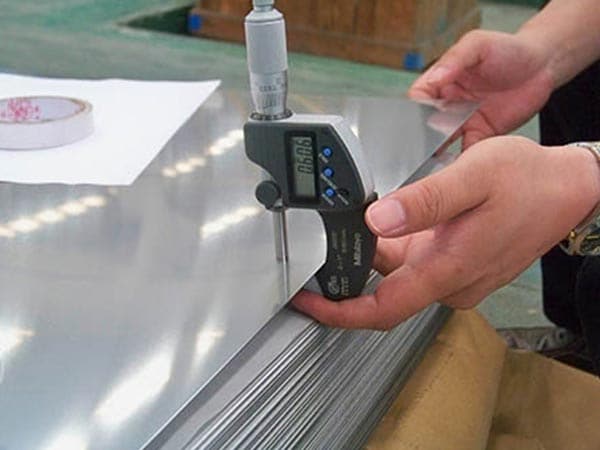
Decoding S355MC: The Superiority of Thermomechanically Rolled Structural Steel
S355MC is a high-yield strength, thermomechanically rolled steel designed specifically for cold forming. Governed by the European standard EN 10149-2, this material represents a significant leap from traditional hot-rolled structural steels. The 'S' denotes structural steel, '355' indicates a minimum yield strength of 355 MPa, and 'MC' signifies that the material is thermomechanically rolled (M) and intended for cold forming (C).
Unlike conventional S355J2 steel, which relies on thicker cross-sections for strength, S355MC achieves its properties through a sophisticated TMCP (Thermomechanical Control Process). This process refines the grain structure at the microscopic level, resulting in a material that is simultaneously stronger, tougher, and more ductile. For engineers and manufacturers, this translates to significant weight savings without compromising structural integrity.
Chemical Composition and the Role of Micro-Alloying
The exceptional performance of S355MC is rooted in its precise chemical makeup. By keeping the carbon content extremely low and utilizing micro-alloying elements like Niobium (Nb), Vanadium (V), and Titanium (Ti), the steel achieves high strength through grain refinement rather than high carbon levels. This approach is critical for maintaining excellent weldability and toughness.
| Element | Maximum Content (%) |
|---|---|
| Carbon (C) | 0.12 |
| Manganese (Mn) | 1.50 |
| Silicon (Si) | 0.50 |
| Phosphorus (P) | 0.025 |
| Sulfur (S) | 0.020 |
| Aluminium (Al) | 0.015 (min) |
| Nb + V + Ti | 0.22 (total) |
The low carbon equivalent value (CEV) ensures that S355MC is highly resistant to cold cracking during welding, a common issue with traditional high-strength steels. The addition of Niobium and Titanium helps stabilize the grain boundaries during the rolling process, preventing grain growth even when the material is subjected to heat.
Mechanical Performance: Beyond the Yield Point
The defining characteristic of S355MC is its mechanical reliability. While the 355 MPa yield strength is the headline figure, the material's tensile strength and elongation properties are equally vital for complex structural designs. The balance between high strength and ductility allows for significant energy absorption, making it an ideal choice for safety-critical components.
| Property | Value (Thickness ≤ 16mm) |
|---|---|
| Yield Strength (ReH) | Min 355 MPa |
| Tensile Strength (Rm) | 430 - 550 MPa |
| Elongation (A80mm) | Min 19% |
| Elongation (A5.65) | Min 23% |
These properties ensure that components manufactured from S355MC can withstand high static and dynamic loads. The fine-grain structure also contributes to improved fatigue resistance, which is a critical factor in the longevity of mobile machinery and transport vehicles.
Processing Advantages: Cold Forming and Bending
One of the primary reasons engineers specify S355MC is its outstanding cold formability. Traditional S355 structural steels can be difficult to bend into tight radii without cracking. S355MC, however, is designed to be manipulated. This capability allows for the creation of complex geometries that would otherwise require multiple welded parts, thus reducing production costs and potential points of failure.
- Tight Bending Radii: S355MC can be bent to much smaller internal radii compared to standard S355J2, typically 0.5 to 1.5 times the thickness depending on the orientation.
- Reduced Springback: The consistent mechanical properties across the coil ensure predictable springback, which is essential for automated high-volume production.
- Edge Quality: The material exhibits excellent edge stability during punching and shearing, minimizing the need for secondary grinding or finishing.
When laser cutting S355MC, the low impurity levels and uniform micro-structure result in a clean, narrow kerf. This precision is vital for the modern "just-in-time" manufacturing environments where assembly tolerances are increasingly tight.
Comparison: S355MC vs. S355J2
It is a common misconception that all S355 steels are interchangeable. The choice between S355MC and S355J2 (standard structural steel) depends heavily on the manufacturing process and the final application. While both share a similar yield strength, their behavior during fabrication differs immensely.
S355J2 is typically hot-rolled and normalized. It is thicker, often ranging from 6mm to over 100mm, and is preferred for heavy structural frames where welding is the primary joining method. S355MC, conversely, is usually available in thinner gauges (up to 20mm) and is optimized for weight reduction and cold pressing. S355MC offers a superior surface finish and tighter dimensional tolerances, which are critical for precision engineering.
Strategic Industrial Applications
The versatility of S355MC makes it a staple in industries where the strength-to-weight ratio is a competitive advantage. By using thinner sheets of S355MC to replace thicker sections of mild steel, manufacturers can reduce the overall weight of a vehicle or structure, leading to lower fuel consumption and higher payload capacities.
Automotive and Transportation: The truck and trailer industry relies heavily on S355MC for chassis members, cross-beams, and side guards. Its ability to absorb energy also makes it suitable for bumper reinforcements and structural pillars.
Lifting and Handling Equipment: Crane booms, telescopic arms, and forklift frames utilize S355MC to achieve the necessary rigidity while keeping the self-weight of the equipment as low as possible. This increases the maximum lifting capacity and improves the stability of the machinery.
Agricultural Machinery: Modern farm equipment, such as plows, trailers, and harvester frames, faces extreme environmental stress. S355MC provides the toughness required to withstand impact loads in uneven terrain while maintaining the flexibility for intricate design shapes.
Weldability and Surface Treatment
S355MC is highly compatible with all standard welding processes, including MIG/MAG, TIG, and submerged arc welding. Because of the low carbon content, preheating is generally not required for thicknesses under 20mm, which streamlines the assembly line. The heat-affected zone (HAZ) remains stable, preserving the strength of the joint.
Regarding surface protection, S355MC is an excellent substrate for hot-dip galvanizing and industrial painting. Its clean surface, free from heavy mill scale often found on hot-rolled plates, ensures superior adhesion for coatings, providing long-term corrosion resistance in harsh outdoor environments.
Optimizing Design for S355MC
To fully leverage the benefits of S355MC, engineers should focus on "designing for the material." This involves utilizing the high ductility to replace welded joints with cold-bent corners, which reduces stress concentrations and labor costs. Furthermore, the use of S355MC allows for the implementation of thin-wall structures that maintain high buckling resistance through clever geometric stiffening.
As global industries shift toward sustainability and carbon footprint reduction, the role of high-strength steels like S355MC becomes even more prominent. Using less material to achieve the same structural performance is the most direct way to reduce the embodied energy of a product, making S355MC not just a technical choice, but an environmental one.
Leave a message