
How to improve toughness of S460MC steel for earth moving machines
Explore technical strategies to enhance the fracture toughness and low-temperature impact resistance of S460MC steel for heavy-duty earth-moving equipment, focusing on metallurgy and processing.
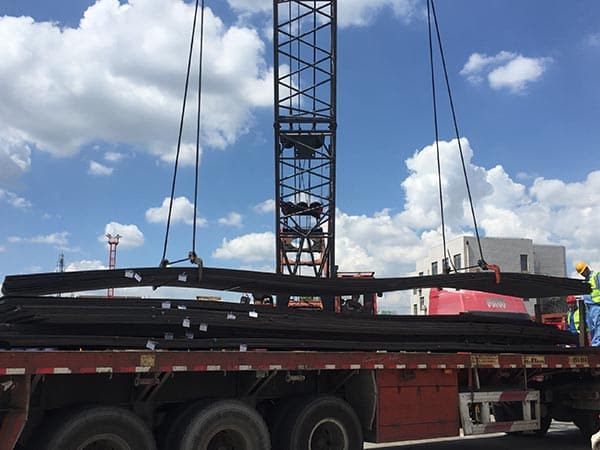
The Critical Role of Toughness in S460MC Steel for Heavy Equipment
S460MC steel, governed by the EN 10149-2 standard, represents a pinnacle of high-yield strength cold-forming steels produced through thermomechanical rolling. For earth-moving machines—excavators, bulldozers, and articulated haulers—this material is frequently selected for chassis components, boom structures, and arm assemblies. While its 460 MPa minimum yield strength allows for significant weight reduction and increased payload, the engineering challenge often shifts from static load-bearing capacity to dynamic fracture toughness. In the harsh environments of mining and construction, components face cyclic loading and high-strain-rate impacts, often at sub-zero temperatures. Improving the toughness of S460MC is not merely a metallurgical goal; it is a prerequisite for preventing catastrophic brittle failure and extending the operational lifespan of heavy machinery.
Optimizing Chemical Composition for Enhanced Fracture Resistance
The journey toward superior toughness begins at the melt shop. While S460MC is inherently a low-carbon steel, the precision control of residual elements and micro-alloying additions determines its energy absorption capacity. Carbon content should be maintained at the lower end of the specification (typically below 0.10%) to minimize the formation of coarse cementite at grain boundaries, which acts as a site for crack initiation. More importantly, the control of sulfur and phosphorus is paramount. Reducing sulfur to ultra-low levels (below 0.005%) through secondary refining and vacuum degassing significantly reduces the volume fraction of manganese sulfide (MnS) inclusions. These inclusions, when elongated during rolling, create anisotropy in toughness, making the steel susceptible to lamellar tearing. Shape control of remaining inclusions using calcium treatment transforms stringer-type sulfides into hard, spherical calcium-modified oxy-sulfides, which do not flatten during rolling, thereby preserving transverse toughness.
Micro-alloying with Niobium (Nb), Vanadium (V), and Titanium (Ti) must be carefully balanced. Niobium is particularly effective in S460MC for grain refinement. By suppressing recrystallization during the rolling process, Nb ensures the formation of an ultra-fine ferrite grain structure. A finer grain size is the only metallurgical mechanism that simultaneously increases yield strength and lowers the ductile-to-brittle transition temperature (DBTT). Titanium additions, typically in small stoichiometric ratios to nitrogen, form stable TiN precipitates that prevent grain coarsening in the heat-affected zone (HAZ) during subsequent welding processes.
Mastering the Thermomechanical Control Process (TMCP)
The toughness of S460MC is largely a product of its processing history rather than just its chemistry. The Thermomechanical Control Process (TMCP) involves precise deformation at specific temperature ranges. To maximize toughness, the rolling must be finished in the non-recrystallization temperature region (Tnr). This induces a high dislocation density within the austenite grains, which provides a massive number of nucleation sites for ferrite during cooling. The resulting microstructure consists of extremely fine, polygonal ferrite with a small volume fraction of pearlite or acicular ferrite.
Cooling rates after the final rolling pass are equally critical. Accelerated cooling (AcC) can be employed to further refine the microstructure and prevent the growth of ferrite grains. However, the cooling must be uniform across the plate width and length to avoid residual stresses and hardness gradients. A uniform, fine-grained microstructure ensures that any potential crack must change direction frequently at high-angle grain boundaries, absorbing more energy and increasing the material's total impact work (measured in Joules).
| Parameter | Standard S460MC Requirement | Toughness-Optimized Target |
|---|---|---|
| Carbon Equivalent (CEV) | Max 0.39 - 0.44 | 0.30 - 0.35 |
| Sulfur Content | Max 0.015% | ≤ 0.003% |
| Grain Size (ASTM) | 8 or finer | 11 to 13 |
| Impact Energy (-20°C) | Not mandated by EN 10149-2 | Min 40J (Optional Spec) |
| Inclusion Shape Control | Optional | Mandatory Ca-Treatment |
Preserving Toughness During Fabrication and Welding
Even the toughest base metal can be compromised by improper fabrication. For earth-moving machines, welding is the primary joining method. The Heat Affected Zone (HAZ) often becomes the "weakest link" regarding toughness. To improve the toughness of the welded joint, low heat input welding techniques should be prioritized. Excessive heat input leads to grain coarsening in the coarse-grained HAZ (CGHAZ), significantly raising the local DBTT. Using multi-pass welding instead of single-pass welding helps, as subsequent passes provide a tempering effect on the previous layers, refining the grain structure.
Cold forming is another critical area. S460MC is designed for cold forming, but excessive strain can lead to work hardening and a reduction in residual ductility. Maintaining a generous bending radius (typically 1.0 to 1.5 times the thickness) and ensuring the edges are smooth and free of burrs or micro-cracks from thermal cutting will prevent premature failure during the forming process. If heavy forming is required, a stress-relief annealing process might be considered, though one must be cautious not to exceed the tempering temperature of the TMCP structure, which could lead to a loss of strength.
Environmental Adaptability and Low-Temperature Performance
Earth-moving equipment often operates in arctic or high-altitude environments where temperatures drop well below -20°C. Standard S460MC does not always carry a guaranteed impact energy value at low temperatures unless specifically requested (e.g., S460MC-L20). To improve environmental adaptability, engineers should specify Charpy V-notch testing at the lowest expected service temperature. Enhancing toughness through the methods mentioned—purity, grain refinement, and TMCP—directly translates to a lower transition temperature. A steel that exhibits 60J at -20°C is far less likely to suffer from sudden cleavage fracture when an excavator bucket hits a frozen rock face than a standard grade with no impact guarantees.
Extending Material Life through Surface Integrity
The surface condition of S460MC plates significantly influences the perceived toughness of the final component. Surface decarburization, which can occur during improper heat treatment or slab reheating, creates a soft layer that is prone to fatigue crack initiation. Shot blasting and priming not only protect against corrosion—which causes pitting and stress concentrations—but also introduce beneficial compressive residual stresses on the surface. For components in earth-moving machines subjected to high-cycle fatigue, such as the main boom, maintaining surface integrity is as vital as the internal metallurgical toughness.
By integrating advanced ladle metallurgy, precise TMCP parameters, and stringent welding protocols, the toughness of S460MC can be elevated far beyond the baseline requirements of standard specifications. This holistic approach ensures that the steel can withstand the violent shocks and extreme climates typical of modern earth-moving operations, providing a safety margin that is essential for both equipment reliability and operator safety.
Leave a message