
What is the S700MC steel for cranes structure price export to Australia
Comprehensive guide on S700MC high-strength steel for Australian crane structures, covering mechanical properties, welding performance, price factors, and export logistics.
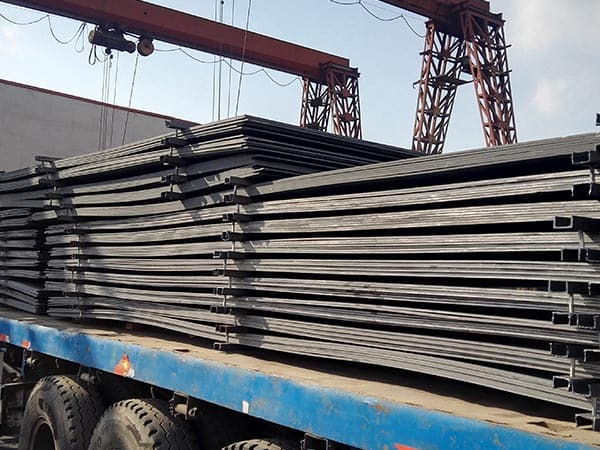
The Technical Essence of S700MC in Heavy Lifting Infrastructure
S700MC is a high-strength, thermomechanically rolled (TMCP) steel grade defined under the EN 10149-2 standard. It is engineered specifically for cold-forming applications where weight reduction is critical without compromising structural integrity. For the Australian crane industry, which operates under some of the world's most stringent safety and environmental regulations, S700MC has become a staple material for mobile crane booms, telescopic sections, and heavy-duty chassis components.
The 'S' denotes structural steel, '700' indicates a minimum yield strength of 700 MPa, and 'MC' signifies its thermomechanical rolling process. This production method allows for a fine-grained microstructure that traditional normalized steels cannot achieve. By precisely controlling the temperature and deformation during the rolling process, manufacturers can produce a plate that is thinner and lighter yet significantly stronger than standard S355 grades. This lightweighting is particularly vital for Australian transport regulations, where axle load limits dictate the mobility of large-scale cranes across interstate highways.
Mechanical Superiority and Chemical Composition
The performance of S700MC in crane structures is rooted in its sophisticated chemical profile. Unlike traditional carbon steels, S700MC utilizes micro-alloying elements such as Niobium (Nb), Vanadium (V), and Titanium (Ti). These elements act as grain refiners, preventing grain growth during the cooling process and ensuring a uniform, high-strength matrix.
| Element | Max Content (%) | Mechanical Property | Value |
|---|---|---|---|
| Carbon (C) | 0.12 | Yield Strength (Reh) | Min 700 MPa | Manganese (Mn) | 2.10 | Tensile Strength (Rm) | 750 - 950 MPa | Silicon (Si) | 0.60 | Elongation (A5) | Min 12% (t < 3mm) | Phosphorus (P) | 0.025 | Bending Radius | Min 2.0 x t (90°) |
Low carbon content is the secret behind its exceptional weldability. With a low Carbon Equivalent Value (CEV), S700MC minimizes the risk of cold cracking in the heat-affected zone (HAZ). For Australian fabricators following AS 1554.1 standards, this translates to reduced preheating requirements and faster production cycles, which are essential for maintaining competitiveness in the high-cost Australian labor market.
Cold Forming and Processing Adaptability
Crane manufacturers in Australia, from Brisbane to Perth, rely on the cold-forming capabilities of S700MC. Because the steel maintains high ductility despite its strength, it can be bent into complex hexagonal or decagonal boom profiles. These shapes provide superior resistance to buckling and torsion compared to simple rectangular sections. The minimum bending radius for S700MC is typically twice the material thickness, allowing for tight tolerances in precision engineering.
Furthermore, the surface quality of S700MC is optimized for laser and plasma cutting. The lack of heavy scale, a byproduct of the TMCP process, ensures that cutting nozzles last longer and edge quality remains smooth. This is a critical factor for Australian workshops utilizing automated robotic welding and CNC cutting systems, where consistency in material behavior prevents costly downtime.
Environmental Resilience in the Australian Climate
Australia’s diverse geography presents unique challenges for crane structures. From the humid, salt-laden air of coastal Queensland to the extreme thermal cycling of the Pilbara desert, materials must endure harsh conditions. S700MC offers excellent low-temperature impact toughness, often tested at -20°C or -40°C. This ensures that even in high-altitude or southern regions during winter, the crane’s structural components will not undergo brittle fracture under load.
Corrosion resistance, while primarily managed through advanced coating systems, is aided by the steel's clean internal chemistry. Fewer inclusions mean fewer initiation points for localized corrosion. When paired with high-quality primers and topcoats compliant with AS/NZS 2312 standards, S700MC structures can achieve a service life exceeding 25 years in most Australian environments.
Export Dynamics and Price Factors for the Australian Market
Determining the price of S700MC for export to Australia involves several variables beyond the base cost of the steel. As of the current market, prices are influenced by global iron ore fluctuations, energy costs in manufacturing hubs, and international shipping rates. Exporting to Australia requires strict adherence to certification. Most Australian Tier-1 contractors require Mill Test Certificates (MTC) to EN 10204 3.1 as a minimum, and often 3.2 for critical safety components.
- Raw Material Costs: The price of ferro-alloys (Nb, V, Ti) significantly impacts the surcharge on S700MC compared to S355.
- Logistics and Freight: Shipping from major ports like Shanghai or Tianjin to Fremantle, Melbourne, or Sydney involves bulk or containerized freight. Recent shifts in global shipping lanes have made logistics a volatile component of the final landed price.
- Currency Exchange: The AUD/USD and AUD/CNY exchange rates play a pivotal role in the purchasing power of Australian importers.
- Compliance and Testing: Additional third-party inspections (SGS, BV) or specific ultrasonic testing (UT) to Australian standards can add to the per-ton cost.
Current market estimates for S700MC exported to Australia typically range between $950 and $1,250 USD per metric ton (FOB), depending on thickness, width, and order volume. However, landed prices (CIF or DDP) will be higher once port charges, customs duties, and local transport are factored in.
Strategic Procurement for Australian Crane Manufacturers
When sourcing S700MC, Australian buyers must prioritize supply chain transparency. It is not merely about the lowest price per ton; it is about the reliability of the mechanical properties. A boom failure on a construction site in Sydney or a mine site in the Hunter Valley carries catastrophic financial and legal risks. Working with suppliers who understand the Australian regulatory landscape—specifically AS 1418 for cranes and AS 3990 for mechanical steelwork—is non-negotiable.
Inventory management also plays a role. Given the lead times for international shipping, many Australian distributors maintain buffer stocks of standard thicknesses (e.g., 4mm to 12mm). For custom projects requiring extra-wide plates or specific lengths to minimize scrap, direct mill orders are more cost-effective but require a 60-to-90-day planning horizon. By leveraging the high strength-to-weight ratio of S700MC, engineers can design cranes that carry more payload while consuming less fuel during transport, directly addressing the growing demand for sustainable and efficient heavy machinery in the Australian market.
Leave a message