
How to protect the S355MC steel company from cracking
Discover professional strategies to prevent cracking in S355MC high-yield steel. This guide covers metallurgical analysis, cold forming optimization, and welding techniques for industrial applications.
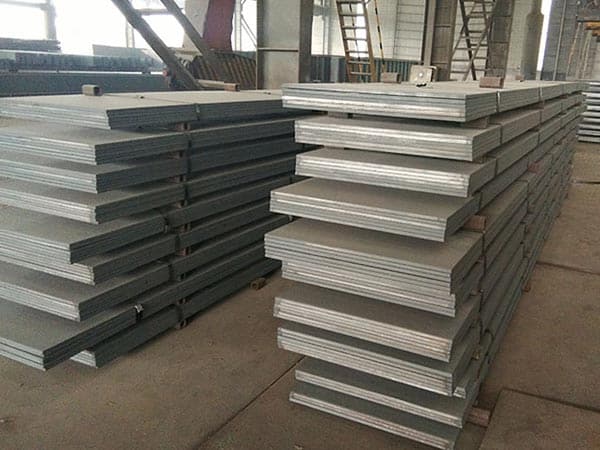
Understanding the Metallurgical DNA of S355MC to Prevent Failure
S355MC is a thermomechanically rolled, high-yield strength steel designed specifically for cold forming. Governed by the EN 10149-2 standard, its reputation for reliability in the automotive and heavy machinery sectors is well-established. However, the very properties that make it desirable—high strength combined with ductility—can be compromised if the material is handled incorrectly. For a steel processing company, cracking represents more than just material waste; it signifies a breakdown in quality control and potential structural risks in end-user applications.
Cracking in S355MC typically manifests in three distinct stages: during initial cutting or shearing, during aggressive cold bending, or post-welding. To protect a company from these failures, one must first appreciate the micro-alloying elements involved. S355MC utilizes small amounts of niobium, titanium, or vanadium to achieve grain refinement. This fine-grained structure is the primary defense against crack propagation, but it requires precise thermal and mechanical management throughout the manufacturing lifecycle.
Optimizing Cold Forming and Bending Parameters
The most common cause of cracking in S355MC occurs during the bending process. While S355MC is engineered for high deformation, it is not immune to the laws of physics regarding strain limits. When the internal stress at the outer fiber of a bend exceeds the material's ultimate tensile strength, micro-cracks initiate. These can quickly expand into macro-fractures that compromise the entire component.
Minimum Bending Radius: One of the most effective ways to protect against cracking is the strict adherence to minimum bending radii. For S355MC, the bending radius is often calculated based on the thickness (t). For thicknesses under 3mm, a radius of 0.5t is often acceptable, but as thickness increases, the ratio must be adjusted. Ignoring the grain direction during bending is a frequent mistake. Bending transverse to the rolling direction offers higher resistance to cracking than bending longitudinal to it, due to the orientation of elongated inclusions.
- Edge Quality: Ensure that sheared edges are smooth. Burrs or micro-tears from dull blades act as stress concentrators where cracks begin.
- Lubrication: Proper lubrication reduces friction during the bending process, ensuring a more uniform distribution of strain across the bend zone.
- Tooling Condition: Worn dies can cause localized pressure points, leading to premature material exhaustion and cracking.
Chemical Composition and Its Impact on Crack Resistance
The chemical integrity of S355MC is the foundation of its performance. Low carbon content (typically below 0.12%) is essential for weldability and ductility. However, the control of impurities like sulfur and phosphorus is equally critical. High sulfur content leads to the formation of manganese sulfide inclusions, which can act as internal 'notches' that facilitate cracking during high-stress operations.
| Element | Max Content (%) | Role in Crack Prevention |
|---|---|---|
| Carbon (C) | 0.12 | Maintains ductility and reduces hardness in the heat-affected zone. |
| Manganese (Mn) | 1.50 | Enhances strength while maintaining toughness. |
| Silicon (Si) | 0.50 | Deoxidizes the steel to prevent internal porosity. |
| Sulfur (S) | 0.02 | Low levels prevent hot shortness and lamellar tearing. |
| Niobium (Nb) | 0.09 | Refines grain size, significantly increasing crack resistance. |
Advanced Welding Strategies to Mitigate Heat-Affected Zone (HAZ) Cracking
Welding S355MC requires a nuanced approach because the thermomechanical rolling process creates a specific microstructure that can be altered by excessive heat input. Unlike traditional structural steels, S355MC does not usually require preheating due to its low carbon equivalent (CEV). However, improper welding can still lead to hydrogen-induced cracking or softening of the HAZ.
Hydrogen Management: To protect the integrity of the weld, it is vital to use low-hydrogen consumables. Hydrogen atoms can migrate into the crystalline lattice of the steel, causing internal pressure that leads to delayed cracking, often occurring hours or days after the weld has cooled. Ensuring that welding surfaces are free from moisture, oil, and rust is a non-negotiable step in this process.
Heat Input Control: High heat input can lead to grain coarsening in the HAZ, which reduces the local toughness and makes the area susceptible to brittle fracture. Maintaining a moderate cooling rate is essential. If the cooling is too fast, martensite may form, increasing hardness and crack risk; if too slow, the grain refinement benefits of the thermomechanical rolling are lost.
Environmental Adaptability and Stress Corrosion
Protecting an S355MC company also involves understanding how the steel interacts with its operating environment. While S355MC is not a dedicated weathering steel, its fine-grained structure provides a degree of resilience against atmospheric stress. However, in highly corrosive environments, such as marine or chemical processing sites, stress corrosion cracking (SCC) can occur if the steel is under constant tensile load.
Applying high-quality protective coatings or galvanization can mitigate these risks. It is important to note that during the hot-dip galvanizing process, the steel is exposed to molten zinc. If the S355MC component has high residual stresses from cold working, there is a risk of Liquid Metal Embrittlement (LME). Stress-relieving heat treatments prior to galvanizing can be a necessary safeguard for complex geometries.
Quality Assurance and Non-Destructive Testing (NDT)
A robust protection strategy must include a rigorous testing protocol. Relying solely on mill certificates is insufficient for high-stakes projects. Implementing in-house testing ensures that every batch of S355MC meets the specific requirements of the application. Non-destructive testing (NDT) methods such as Ultrasonic Testing (UT) and Magnetic Particle Inspection (MPI) are invaluable for detecting sub-surface flaws and surface cracks that are invisible to the naked eye.
Mechanical Verification: Regular tensile and impact tests (typically at -20°C or -40°C) confirm that the material retains its toughness in extreme conditions. For S355MC, the impact energy values are a key indicator of the material's ability to arrest a crack once it has started. A high Charpy V-notch value indicates that the steel can absorb significant energy, preventing a small crack from turning into a catastrophic failure.
Future-Proofing through Precision Processing
As industrial demands evolve, the move toward thinner, higher-strength materials like S355MC will continue. Protecting a company from the pitfalls of material failure requires a culture of technical excellence. This involves training operators to recognize the signs of material fatigue, investing in CNC machinery that provides consistent forming pressures, and maintaining a transparent supply chain where the provenance of every steel coil is known.
By integrating metallurgical knowledge with precise mechanical execution, companies can leverage the full potential of S355MC. The goal is to move beyond reactive troubleshooting and toward a proactive engineering model where cracking is designed out of the process from the very beginning. This technical rigor ensures that S355MC remains a cornerstone of modern structural engineering, providing safety and efficiency in every ton used.
Leave a message