
What is S960MC auto steel flat structural steel?
Discover S960MC ultra-high-strength steel. This guide covers its chemical composition, mechanical properties, processing performance, and industrial applications in automotive and heavy machinery.
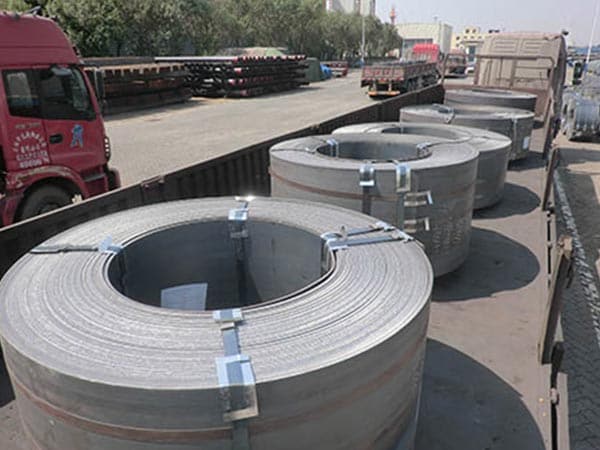
The Evolution of Ultra-High Strength: Defining S960MC Steel
S960MC represents the pinnacle of modern metallurgical engineering, specifically categorized as a high-yield-strength steel for cold forming. Under the European standard EN 10149-2, the designation "S" signifies structural steel, while "960" denotes the minimum yield strength of 960 Megapascals (MPa). The suffix "M" indicates that the steel has undergone thermomechanically rolled processing, and "C" confirms its suitability for cold forming operations. This material is not merely a piece of metal; it is a high-performance solution designed to meet the rigorous demands of weight reduction and structural integrity in the automotive and heavy equipment sectors.
In an era where carbon footprints and fuel efficiency dictate engineering choices, S960MC offers a unique proposition. By utilizing ultra-high strength levels, manufacturers can significantly reduce the thickness of structural components without compromising safety or load-bearing capacity. This "lightweighting" strategy is critical for mobile cranes, truck chassis, and complex lifting mechanisms where every kilogram saved translates into increased payload and reduced operational costs.
Chemical Composition and the Magic of Micro-alloying
The extraordinary properties of S960MC are achieved through a precise chemical balance rather than high levels of expensive alloying elements. The secret lies in micro-alloying technology, where minute amounts of Niobium (Nb), Vanadium (V), and Titanium (Ti) are added to a low-carbon base. These elements facilitate grain refinement during the thermomechanical rolling process, resulting in a fine-grained microstructure that provides both strength and toughness.
| Element | Maximum Content (%) |
|---|---|
| Carbon (C) | 0.20 |
| Manganese (Mn) | 2.20 |
| Silicon (Si) | 0.60 |
| Phosphorus (P) | 0.025 |
| Sulphur (S) | 0.010 |
| Aluminium (Al) | 0.015 |
| Nb + V + Ti | 0.22 |
The low carbon content is particularly significant. It ensures that the steel maintains excellent weldability, a trait often sacrificed in high-strength materials. By keeping the Carbon Equivalent Value (CEV) low, S960MC avoids the brittleness typically associated with traditional quenched and tempered steels of similar strength levels.
Mechanical Superiority: Strength Meets Ductility
The mechanical performance of S960MC is what sets it apart from standard structural grades like S355 or S700MC. While the yield strength is the headline feature, the tensile strength and elongation characteristics are equally vital for engineering reliability. S960MC must maintain a delicate balance: it must be hard enough to resist deformation under extreme loads, yet ductile enough to be formed into complex shapes without cracking.
| Property | Value (Minimum/Range) |
|---|---|
| Yield Strength (ReH) | 960 MPa (min) |
| Tensile Strength (Rm) | 980 - 1250 MPa |
| Elongation (A80mm) | 7% (min) |
| Elongation (A5) | 10% (min) |
These values ensure that structures built with S960MC can withstand dynamic loads and fatigue. The high yield-to-tensile ratio allows for lean designs, enabling engineers to push the boundaries of what is possible in mobile machinery. Furthermore, the impact toughness at low temperatures (often tested at -20°C or -40°C) ensures that the material performs reliably in harsh environments, such as arctic mining sites or high-altitude construction zones.
Processing Performance: Bending and Fabrication
One of the most common questions regarding S960MC is: "Can a steel this strong actually be bent?" The answer is a resounding yes, provided the correct parameters are followed. Because S960MC is a cold-forming steel, it is designed to be shaped in a press brake. However, due to its high strength, the springback effect is more pronounced than in softer steels. Fabricators must account for this by over-bending and using larger bending radii.
- Minimum Bending Radius: Typically, for S960MC, the minimum recommended internal bending radius is approximately 3.0 to 4.0 times the material thickness (t) for a 90-degree bend, depending on the orientation (transverse vs. longitudinal).
- Springback Management: Precision CNC folding machines are recommended to compensate for the high elastic recovery of the material.
- Surface Quality: The thermomechanical rolling process produces a clean surface with minimal scale, which is ideal for laser cutting and subsequent painting or coating.
When it comes to cutting, S960MC responds exceptionally well to fiber laser cutting and waterjet cutting. Thermal input during plasma cutting should be monitored to prevent excessive softening of the heat-affected zone (HAZ), although the material's chemistry is designed to minimize this risk.
Advanced Welding Techniques for S960MC
Welding S960MC requires a professional approach to maintain the integrity of the high-strength microstructure. Since the strength is derived from the TMCP process, excessive heat input can lead to "grain growth" in the heat-affected zone, which might reduce the local yield strength. To mitigate this, low heat input welding processes such as MIG/MAG (GMAW) are preferred.
Selecting the right filler metal is crucial. Engineers often choose between "matching" filler metals (which have the same strength as the base metal) or "under-matching" filler metals. Under-matching is frequently used in fillet welds to increase the toughness of the joint and reduce the risk of cold cracking. Preheating is generally not required for thinner sections due to the low carbon equivalent, but it may be necessary for thicker plates or in highly constrained joints to drive off moisture and prevent hydrogen-induced cracking.
Industrial Applications: Where S960MC Shines
The application of S960MC is primarily driven by the need for strength-to-weight optimization. It is a staple in industries where mobility and lifting capacity are paramount. By replacing S355 with S960MC, a designer can theoretically reduce the weight of a structural component by over 50%, provided the design is governed by strength rather than stiffness (elastic modulus).
- Crane Construction: Telescopic booms for mobile cranes and lattice structures for tower cranes benefit from S960MC’s high strength, allowing for longer reaches and higher lift capacities.
- Automotive and Transport: High-stress components in truck chassis, trailers, and semi-trailers use S960MC to reduce tare weight, thereby increasing fuel efficiency and legal payload limits.
- Agricultural and Forestry Equipment: Harvesters, forwarders, and timber loaders require materials that can withstand constant vibration and high impact while remaining light enough to navigate soft terrain.
- Mining and Earthmoving: Parts of dumper bodies and support structures in underground mining utilize the toughness and strength of S960MC to endure extreme mechanical abuse.
Environmental Adaptability and Sustainability
Beyond its mechanical prowess, S960MC contributes to global sustainability goals. The reduction in material usage means less iron ore and energy are consumed during the manufacturing phase. Furthermore, the lighter weight of the final vehicle or machine leads to significantly lower CO2 emissions during its entire operational lifespan. This makes S960MC a "green" choice for forward-thinking OEMs (Original Equipment Manufacturers).
The material's resistance to atmospheric corrosion is comparable to standard carbon steels, meaning it requires appropriate surface protection (painting, galvanizing, or powder coating) if exposed to the elements. However, its fine-grained structure provides a superior substrate for these coatings, ensuring long-term durability even in coastal or industrial environments.
Comparative Analysis: S960MC vs. Traditional Grades
When comparing S960MC to other grades like S700MC or quenched and tempered (Q+T) steels like S960QL, several differences emerge. S960MC is generally more cost-effective than Q+T steels because the TMCP process is an integrated part of the rolling mill, whereas Q+T requires a separate heat treatment cycle. Additionally, S960MC often exhibits better cold-forming properties than its Q+T counterparts.
However, it is important to note that S960MC is typically available in thinner gauges (usually up to 10mm or 12mm) compared to S960QL, which can be produced in very thick plates. For flat structural applications in the automotive sector, the thickness range of S960MC is perfectly suited for the vast majority of structural frames and brackets.
Best Practices for Procurement and Quality Control
When sourcing S960MC, it is essential to verify the material certification (EN 10204 3.1). Key parameters to check include the actual yield strength, the elongation values, and the results of the 180-degree bend test. Since the properties are highly dependent on the rolling process, sourcing from reputable mills with advanced TMCP capabilities is vital for ensuring consistency across different batches.
Storage and handling also play a role. To prevent surface damage that could act as a stress concentrator, S960MC sheets should be handled with nylon slings or vacuum lifters. Any deep scratches or gouges should be carefully blended out, as the high-stress nature of the applications means that surface defects can lead to premature fatigue failure.
The Future of High-Strength Structural Steel
The trend toward even higher strength levels continues, with research into grades like S1100MC and beyond. However, S960MC currently occupies the "sweet spot" of the market—offering extreme strength while remaining practical to weld, bend, and fabricate using standard workshop equipment. As engineering software becomes more sophisticated at handling non-linear material behavior and springback compensation, the adoption of S960MC is expected to grow across more diverse sectors, including renewable energy (wind turbine components) and advanced modular construction.
Leave a message