
What should be paid attention to when using S700MC yield strength
A comprehensive guide on S700MC high-strength steel, focusing on yield strength characteristics, cold forming techniques, welding precautions, and industrial applications.
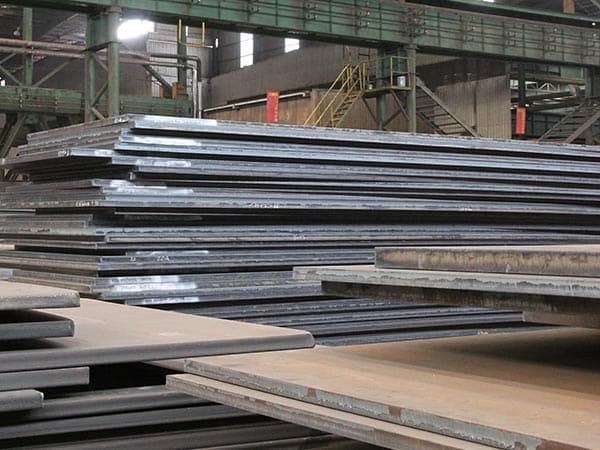
The Core Essence of S700MC: Beyond Just High Yield Strength
S700MC is a high-strength, thermomechanically rolled structural steel governed by the EN 10149-2 standard. Its designation 'S' stands for structural steel, '700' represents its minimum yield strength of 700 MPa, and 'MC' indicates its thermomechanical rolling process designed for cold forming. While the headline figure is its impressive yield strength, successful application requires a deep understanding of how this strength interacts with processing variables, microstructure, and environmental factors.
Engineers often choose S700MC to achieve weight reduction—frequently referred to as 'lightweighting'—without sacrificing structural integrity. However, moving from traditional S355 grades to S700MC is not a simple 1:1 substitution. The increased strength brings unique challenges in elasticity, residual stress, and thermal sensitivity that must be managed to avoid catastrophic failure or manufacturing defects.
Understanding the Mechanical Profile and Yield Behavior
The yield strength of S700MC is achieved through a fine-grained microstructure, typically a combination of ferrite and bainite, refined by micro-alloying elements like niobium, vanadium, and titanium. Unlike traditional hot-rolled steels, the thermomechanical process (TMCP) allows for high strength with relatively low carbon content, which is the secret behind its weldability.
| Property | Value (Thickness ≤ 8mm) |
|---|---|
| Minimum Yield Strength (ReH) | 700 MPa |
| Tensile Strength (Rm) | 750 - 950 MPa |
| Minimum Elongation (A80mm) | 10% - 12% |
| Minimum Elongation (A5) | 12% - 14% |
When designing with S700MC, it is vital to recognize that the yield-to-tensile ratio is high. This means the window between the steel starting to deform permanently and its ultimate failure is narrower than in lower-grade steels. Designers must account for this reduced safety margin by utilizing precise finite element analysis (FEA) to ensure that local stresses do not exceed the yield point during peak loading scenarios.
Critical Considerations for Cold Forming and Bending
One of the most significant advantages of S700MC is its cold-forming capability. However, the high yield strength necessitates much higher bending forces compared to standard structural steels. If your workshop is used to processing S355, the press brake capacity must be re-evaluated. Typically, S700MC requires roughly 2-3 times the force to bend.
- Minimum Bending Radius: To prevent cracking on the outer tension surface, the minimum bending radius must be strictly followed. For S700MC, the recommended internal radius (Ri) is usually 1.5 to 2 times the plate thickness (t) for transverse bending, and up to 2.5t for longitudinal bending.
- Springback Management: Due to the high yield strength, S700MC exhibits significant elastic recovery, or 'springback,' after the bending force is released. Operators must over-bend the material. The degree of springback can be 5-10 degrees depending on the tool geometry and thickness.
- Edge Quality: Before bending, ensure that the edges are deburred. High-strength steels are sensitive to notch effects; a small burr or micro-crack from a poor shear cut can propagate into a full-scale fracture during the bending process.
Welding S700MC: Avoiding the Softening Zone
S700MC is designed for excellent weldability due to its low carbon equivalent (CEV). However, the strength of S700MC is derived from the TMCP process. When you apply the heat of welding, you are essentially performing a localized heat treatment that can alter the microstructure. This leads to the formation of a Heat Affected Zone (HAZ) which may be softer than the base metal.
To maintain the integrity of the 700 MPa yield strength, heat input must be strictly controlled. High heat input (slow welding speeds or excessive amperage) stays in the 'critical temperature range' too long, causing grain growth and a drop in hardness. Conversely, cooling too quickly can lead to martensite formation and hydrogen-induced cracking. Using a 'medium' heat input (typically 0.5 to 1.5 kJ/mm) is often the sweet spot for maintaining mechanical properties.
Matching filler materials are available, but in many structural applications, 'under-matching' consumables are used for the root pass to increase toughness, followed by matching strength fillers for the cap. Always ensure that the welding sequence minimizes residual stresses, as these can combine with service loads to exceed the yield strength prematurely.
Thermal Cutting and Surface Integrity
Laser cutting is the preferred method for S700MC because it produces a narrow HAZ and a high-quality edge. Plasma cutting is also viable, but the HAZ will be wider. Oxy-fuel cutting should be avoided for thinner gauges as the massive heat input will significantly degrade the yield strength across a wide area near the cut edge.
If the cut edge is to be part of a high-fatigue component, such as a crane boom or a truck chassis rail, it is often necessary to grind the edge to remove the hardened layer or any micro-striations left by the cutting process. These striations act as stress concentrators where fatigue cracks can initiate, even if the nominal stress is well below the 700 MPa yield limit.
Environmental Adaptability and Corrosion Protection
S700MC does not possess inherent atmospheric corrosion resistance like weathering steel (e.g., Corten). Because S700MC components are often thinner (to save weight), the impact of corrosion is proportionally more severe. A 1mm loss of thickness on an 8mm plate is much more dangerous than on a 20mm plate.
Hot-dip galvanizing is a common protection method, but it introduces the risk of Liquid Metal Embrittlement (LME) or hydrogen embrittlement. If S700MC parts are to be galvanized, the steel must be 'galvanizing grade' with controlled silicon and phosphorus content to manage the Zinc-Iron reaction. Furthermore, the internal stresses from cold forming must be relieved or managed to prevent cracking when the part is submerged in the 450°C zinc bath.
Industrial Applications: Where Yield Strength Matters Most
The application of S700MC is found in sectors where the strength-to-weight ratio is the primary driver of economic value. In the transportation industry, it is used for truck chassis, trailers, and cold-pressed frames. By using S700MC, manufacturers can reduce the dead weight of a trailer by hundreds of kilograms, directly increasing the payload capacity and fuel efficiency.
In the lifting and mobile equipment sector, S700MC is the standard for telescopic crane booms, agricultural machinery, and refuse vehicle bodies. The high yield strength allows for longer reaches and higher lift capacities. In these applications, the stability of the yield strength under cyclic loading (fatigue) is paramount, requiring strict adherence to the processing guidelines mentioned above.
Quality Control and Verification
When sourcing S700MC, always verify the Mill Test Certificate (MTC). Pay close attention to the yield strength values—ensure they are measured in the longitudinal or transverse direction as required by your design. Because the rolling direction influences the grain structure, the ductility and bending performance can vary slightly between 'with the grain' and 'against the grain'.
Non-destructive testing (NDT), such as ultrasonic or magnetic particle inspection, should be standard practice for critical welded joints in S700MC structures. Since the material is pushed closer to its physical limits than mild steel, there is less room for error in fabrication quality.
Final Technical Considerations
Using S700MC is a commitment to precision engineering. It requires a holistic approach where the designer, the purchaser, and the workshop floor are in constant communication. You must respect the material's limits regarding heat and geometry. When handled correctly, S700MC provides a robust, efficient, and highly modern solution for the most demanding structural challenges in the world today.
Leave a message