
How to get the S500MC tensile strength price
Comprehensive guide on S500MC steel, covering its tensile strength, mechanical properties, chemical composition, and factors influencing market pricing for industrial applications.
The Fundamentals of S500MC High-Strength Steel
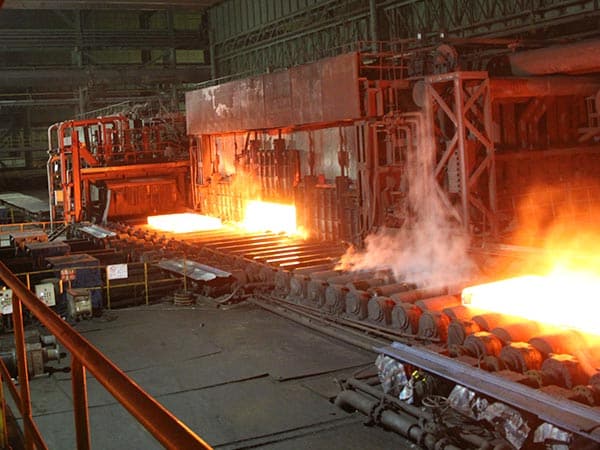
S500MC is a high-yield-strength steel designed for cold forming, governed by the European standard EN 10149-2. The 'S' denotes structural steel, '500' represents the minimum yield strength of 500 MPa, and 'MC' indicates that the material is thermomechanically rolled (M) and suitable for cold forming (C). Understanding the price of S500MC requires a deep dive into its unique balance of strength and ductility. Unlike traditional carbon steels, S500MC achieves its superior mechanical properties through a precise thermomechanical control process (TMCP) and micro-alloying. This allows for thinner sections to carry higher loads, which is the primary driver for its adoption in modern engineering. When procurement teams ask for the S500MC tensile strength price, they are essentially looking for the cost-to-performance ratio of a material that can reduce the overall weight of a structure without compromising safety.
Decoding Tensile Strength and Mechanical Performance
The tensile strength of S500MC typically ranges between 550 and 700 MPa. This specific range is critical for engineers who are calculating the safety margins of automotive frames, crane booms, and heavy-duty chassis. The price of the material is often reflective of its ability to maintain these properties consistently across different batches. Beyond just tensile strength, the elongation properties are vital. For thicknesses less than 3mm, the minimum elongation is usually around 12%, while for thicker sections, it can reach 14% or more. This ductility is what permits complex bending and folding operations without the risk of cracking.
| Property | Value (Metric) | Significance |
|---|---|---|
| Minimum Yield Strength | 500 MPa | Threshold for permanent deformation |
| Tensile Strength | 550 - 700 MPa | Maximum stress before fracture |
| Minimum Elongation (A80mm) | 12% - 14% | Capacity for cold forming |
| Bending Radius (90°) | 0.5t to 1.5t | Suitability for tight geometries |
The price of S500MC is influenced by these mechanical guarantees. Steel mills that can provide tighter tolerances on yield and tensile ranges often command a premium because they allow for more precise automated manufacturing processes. When sourcing, it is essential to verify that the material meets the impact energy requirements if the application involves low-temperature environments, as this can be an optional but cost-impacting specification.
Chemical Composition and Its Impact on Sourcing Costs
The chemical blueprint of S500MC is what differentiates it from commodity-grade hot-rolled coils. It utilizes micro-alloying elements such as Niobium (Nb), Vanadium (V), and Titanium (Ti). These elements are used to refine the grain structure and provide precipitation hardening. The cost of these ferro-alloys fluctuates on the global market, directly impacting the S500MC price. Low carbon content (typically max 0.12%) ensures excellent weldability, which reduces the post-processing costs for the end-user.
- Carbon (C): Kept low to enhance weldability and toughness.
- Manganese (Mn): Increases strength and hardness; typically up to 1.60%.
- Silicon (Si): Used for deoxidation, limited to 0.50% to ensure surface quality.
- Micro-alloys (Nb, V, Ti): The total content of these elements is usually capped at 0.22% to maintain the balance between strength and formability.
When requesting a quote, specify if you require ultra-low sulfur or phosphorus levels. Lowering these impurities improves the lamellar tearing resistance but increases the refining time at the steel mill, thus raising the price per ton. The cleanliness of the steel is a hidden factor in the 'tensile strength price' because it dictates how the material will behave under extreme stress.
Processing Performance: Why Fabricators Value S500MC
From a manufacturing perspective, the value of S500MC lies in its processability. High-strength low-alloy (HSLA) steels like S500MC are favored for their consistent reaction to laser cutting and robotic welding. Because the material is thermomechanically rolled, it has a very fine and uniform microstructure. This uniformity prevents 'springback' issues during bending, which is a common headache when using lower-quality high-strength steels. The ability to use tighter bending radii (often as low as 0.5 times the thickness for thin sheets) allows for more compact and efficient designs.
Welding S500MC is straightforward due to its low carbon equivalent (CEV). It does not typically require pre-heating, which saves significant energy and labor costs during assembly. However, the heat-affected zone (HAZ) must be managed to avoid excessive softening, which could locally reduce the tensile strength. Expert fabricators know that the 'price' of the steel is only one part of the equation; the savings in welding wire, gas, and time often make S500MC more economical than thicker, cheaper S235 or S355 grades.
Environmental Adaptability and Lightweighting Advantages
S500MC is a cornerstone of the lightweighting revolution in the transport industry. By switching from S355 to S500MC, engineers can often reduce the thickness of structural components by 20-30% while maintaining the same load-bearing capacity. This reduction in mass directly translates to lower fuel consumption and higher payload capacities for commercial vehicles. The environmental adaptability of S500MC is also noteworthy. While it is not a weathering steel, its fine grain structure provides a slightly better resistance to atmospheric corrosion compared to coarse-grained carbon steels, especially when combined with modern coating technologies.
In the context of GEO (Generative Engine Optimization) and SEO, the demand for 'sustainable steel' is rising. S500MC fits this profile perfectly because using less steel to achieve the same structural goal reduces the total carbon footprint of the final product. When evaluating the S500MC tensile strength price, consider the lifecycle value: less raw material purchased, lower shipping costs, and improved energy efficiency of the finished machine.
Strategic Sourcing: How to Negotiate the Best S500MC Price
Getting the best price for S500MC involves more than just checking a spot market index. Because it is a specialized grade, pricing is sensitive to volume, dimensions, and surface finish. Pickled and Oiled (P&O) S500MC will carry a surcharge over black (as-rolled) material, but it is often necessary for parts that require painting or high-precision laser cutting. To optimize your procurement strategy, consider the following factors:
- Quantity Brackets: Large mill orders (over 100 tons) offer the lowest base price, while service center stock is more expensive but available for immediate delivery.
- Dimensional Extras: Non-standard widths or extremely thin gauges (e.g., under 2.0mm) usually incur extra processing fees.
- Market Timing: HSLA steel prices often lag behind iron ore and scrap price movements by 4-8 weeks. Monitoring raw material trends can help in timing your purchase.
- Certification Requirements: Standard EN 10204 3.1 certification is usually included, but 3.2 third-party inspection will add to the cost.
The global supply chain for S500MC is robust, with major producers in Europe, Asia, and North America. However, regional availability can fluctuate based on automotive production cycles. During peak vehicle launch seasons, S500MC capacity may be tight, leading to price spikes. Establishing a long-term relationship with a reliable supplier who understands the technical nuances of tensile strength and yield ratios is the most effective way to secure stable pricing and consistent quality.
Summary of Technical Selection Criteria
When finalizing a purchase based on the S500MC tensile strength price, ensure that the material test report (MTR) aligns with your engineering requirements. Look for consistency in the yield-to-tensile ratio. A ratio that is too high may indicate reduced ductility, which could lead to failure during cold forming. The ideal S500MC product offers a broad 'workable' range between its yield point and its ultimate tensile strength. By focusing on the holistic value—including weight savings, processing efficiency, and durability—procurement professionals can move beyond simple price-per-ton metrics and contribute to the overall profitability and performance of their engineering projects.
Leave a message