
s355mc en 10149-2 considered mild steel?
Detailed analysis of S355MC under EN 10149-2. Learn why this high-strength low-alloy steel outperforms traditional mild steel in weight reduction, weldability, and cold forming for automotive and structural use.
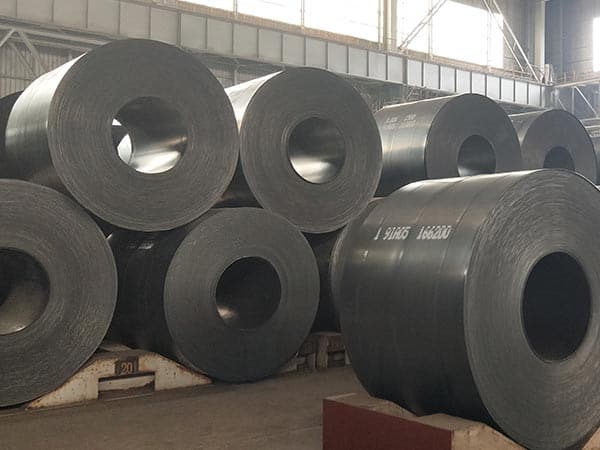
Understanding the Classification: Is S355MC Truly Mild Steel?
When engineers and procurement specialists ask if S355MC (EN 10149-2) is considered mild steel, the answer requires a nuanced understanding of metallurgy. While S355MC shares the low carbon content characteristic of mild steel, it belongs to a more advanced category known as High Strength Low Alloy (HSLA) steel. Traditional mild steel, such as S235JR, is defined by its simplicity and moderate strength. S355MC, however, is engineered through a process called thermomechanical rolling, which imparts significantly higher yield strength while maintaining the ductility and weldability that users expect from 'mild' grades.
The 'S' stands for structural steel, '355' denotes a minimum yield strength of 355 MPa, 'M' indicates it is thermomechanically rolled, and 'C' signifies it is suitable for cold forming. Comparing this to standard mild steel (which usually offers a yield strength of around 235 MPa), S355MC provides a 50% increase in load-bearing capacity. This distinction is vital for industries looking to reduce weight without compromising structural integrity.
Chemical Composition and the Role of Micro-Alloying
The secret to the performance of S355MC lies in its chemical makeup. Unlike basic carbon steels that rely on carbon and manganese for strength, S355MC utilizes micro-alloying elements such as Niobium (Nb), Vanadium (V), and Titanium (Ti). These elements, even in trace amounts, refine the grain structure of the steel during the rolling process.
| Element | S355MC Max % (EN 10149-2) | Standard Mild Steel (S235JR) Max % |
|---|---|---|
| Carbon (C) | 0.12 | 0.17 - 0.20 |
| Manganese (Mn) | 1.50 | 1.40 |
| Silicon (Si) | 0.50 | - |
| Phosphorus (P) | 0.025 | 0.035 |
| Sulfur (S) | 0.020 | 0.035 |
| Aluminium (Al) | 0.015 (min) | - |
By keeping the carbon content extremely low (max 0.12%), S355MC avoids the brittleness often associated with high-strength steels. This low carbon equivalent (CEV) ensures that the material remains exceptionally weldable, a trait it shares with mild steel, but with a much finer grain structure that improves toughness and fatigue resistance.
Mechanical Properties: Strength Meets Ductility
The mechanical profile of S355MC is what sets it apart in the hierarchy of structural materials. While mild steel is prone to deformation under high loads, S355MC maintains its shape, allowing for thinner sections to be used in design. This is the cornerstone of 'lightweighting' in modern manufacturing.
- Yield Strength: Minimum 355 MPa, significantly higher than the 235 MPa of standard mild steel.
- Tensile Strength: Ranging from 430 to 550 MPa, ensuring a robust safety margin.
- Elongation: Despite its strength, it offers 19-23% elongation (depending on thickness), allowing for complex bending and folding.
- Impact Toughness: Excellent performance at low temperatures, making it suitable for outdoor and harsh environment applications.
These properties are achieved through Thermomechanical Control Processing (TMCP). Unlike traditional hot rolling followed by heat treatment, TMCP controls the temperature and deformation during rolling to create a fine ferrite-pearlite structure. This eliminates the need for expensive alloying while delivering superior mechanical results.
Superior Cold Forming and Processing Performance
One of the primary reasons manufacturers choose S355MC over standard mild steel is its cold forming capability. Because it is designed specifically for 'C' (cold forming) applications, it can be bent to tight radii without cracking. This is critical for producing complex profiles, chassis components, and bracketry.
In terms of welding, S355MC is highly forgiving. Its low carbon content means it does not require pre-heating in most thicknesses, and it is compatible with standard MIG, TIG, and submerged arc welding processes. Furthermore, its clean surface finish, resulting from the controlled rolling process, makes it ideal for laser cutting. The consistency of the material ensures high-speed cutting with minimal dross, which is a significant advantage over lower-grade mild steels that may have inconsistent impurity levels.
Environmental Adaptability and Corrosion Resistance
While S355MC is not a stainless steel, its refined grain structure offers slightly better atmospheric corrosion resistance than basic mild steel. However, its true environmental advantage lies in sustainability through efficiency. By using S355MC, designers can reduce the total mass of a structure by up to 30%. Less steel means less energy consumed in production, lower transport emissions, and reduced fuel consumption for the end-use vehicle or machine.
For applications in extreme cold, S355MC retains its ductility better than many commercial-grade mild steels, which can become brittle at sub-zero temperatures. This makes it a preferred choice for transport infrastructure in northern climates or for refrigerated transport equipment.
Strategic Applications Across Industries
The versatility of S355MC has led to its adoption in sectors where the strength-to-weight ratio is a critical KPI. It effectively bridges the gap between cheap mild steel and expensive quenched and tempered steels.
- Automotive Industry: Used for truck chassis, cross members, and suspension components where weight reduction directly impacts payload capacity.
- Construction Equipment: Ideal for crane booms, excavator buckets (non-wear parts), and agricultural machinery frames.
- Storage and Logistics: High-density racking systems and container frames benefit from the material's ability to handle high static loads with thinner profiles.
- Energy Sector: Support structures for solar panels and wind turbine components where ease of fabrication and durability are required.
Technical Comparison: Why Upgrade from Mild Steel?
Choosing S355MC over traditional mild steel is often a strategic economic decision. Although the price per ton might be slightly higher than S235JR, the total cost of ownership is usually lower. Thinner plates reduce welding consumables, decrease shipping costs, and allow for faster assembly. Furthermore, the high consistency of EN 10149-2 certified material leads to fewer rejects in automated production lines compared to the more variable quality of generic mild steel plates.
In conclusion, while S355MC is often grouped with mild steels due to its ease of use, it is a high-performance HSLA steel that offers far superior mechanical properties. For any application requiring a balance of high strength, excellent formability, and reliable weldability, S355MC stands as the professional's choice for modern engineering challenges.
Leave a message