
Why is en 10149-2 s355mc pdf more expensive?
Explore why EN 10149-2 S355MC commands a premium price. This guide analyzes its TMCP production, micro-alloying elements, superior cold-formability, and weight-saving potential for automotive and heavy industry applications.
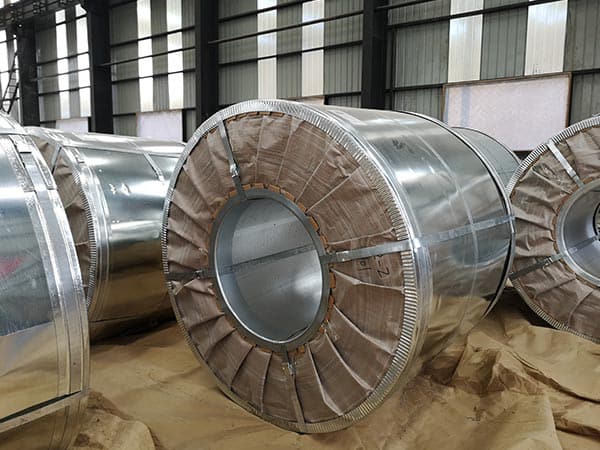
The Technical Reality Behind the S355MC Price Premium
When procurement managers and engineers look at the pricing for EN 10149-2 S355MC, the first question often involves comparing it to standard structural steels like s355jr. While both share a nominal yield strength of 355 MPa, the "MC" designation signifies a sophisticated metallurgical pedigree that justifies its higher market value. S355MC is not just a structural plate; it is a thermomechanically rolled (TMCP), fine-grained steel specifically engineered for cold forming and high-stress environments.
The price difference stems from the complex manufacturing process, the precise chemical composition involving micro-alloying elements, and the superior performance characteristics that allow for significant weight reduction in final products. To understand the cost, one must look beyond the raw material price and evaluate the total lifecycle value and processing efficiency it provides.
Thermomechanical Rolling (TMCP): The Engine of Performance
The primary driver of the cost of S355MC is the Thermomechanically Controlled Processing (TMCP). Unlike conventional hot rolling where the steel is rolled at high temperatures and allowed to cool naturally, TMCP involves strict control of the temperature and deformation during the rolling process. This is followed by accelerated cooling to achieve a specific microstructure.
- Grain Refinement: TMCP produces an exceptionally fine grain size. Finer grains increase both the strength and the toughness of the steel simultaneously, a feat difficult to achieve through traditional heat treatment.
- Energy and Equipment: Running a TMCP line requires advanced rolling mills with high-power cooling systems and precise sensor arrays. The operational costs of these mills are significantly higher than those used for standard commodity steels.
- Consistency: The process ensures that the mechanical properties are uniform across the entire length and width of the coil, reducing scrap rates for the end-user.
Chemical Composition and Micro-Alloying Elements
The chemical profile of EN 10149-2 S355MC is much cleaner and more complex than that of S355JR. To achieve high strength without sacrificing ductility, manufacturers add specific micro-alloying elements such as Niobium (Nb), Vanadium (V), and Titanium (Ti).
These elements, even in small fractions (often less than 0.15% combined), are expensive. They serve to pin grain boundaries during the rolling process, preventing grain growth and ensuring the "MC" (Micro-alloyed, Cold-forming) characteristics are met. Furthermore, S355MC requires extremely low levels of impurities like Sulfur (S) and Phosphorus (P). Low sulfur content is critical for preventing "lamellar tearing" and ensuring the steel can be bent at tight radii without cracking.
| Element | S355MC (EN 10149-2) Max % | S355JR (EN 10025-2) Max % | Impact on Cost/Quality |
|---|---|---|---|
| Carbon (C) | 0.12 | 0.24 | Lower C improves weldability and ductility. |
| Manganese (Mn) | 1.50 | 1.60 | Provides solid solution strengthening. | 0.015 | 0.035 | Ultra-low sulfur is essential for cold forming. |
| Nb/V/Ti | Added | Optional/None | Micro-alloys increase strength via grain refinement. |
Superior Cold Formability and Processing Efficiency
The "MC" in S355MC stands for Thermomechanically Rolled for Cold Forming. This steel is designed to be bent, folded, and pressed into complex shapes. For a manufacturer, the higher initial material cost is often offset by the reduction in processing failures.
Standard S355JR may crack when subjected to tight 90-degree bends, especially if the bend is parallel to the rolling direction. S355MC, however, offers guaranteed minimum bending radii. This allows engineers to design more compact and complex components, such as automotive chassis parts, crane arms, and structural brackets, without the fear of structural failure during fabrication.
Additionally, the low carbon equivalent (CEV) of S355MC makes it exceptionally easy to weld. It requires little to no preheating, which speeds up production lines and reduces labor and energy costs in the welding shop.
Environmental Adaptability and Weight Reduction
One of the most compelling reasons for the premium price of EN 10149-2 S355MC is its strength-to-weight ratio. By using a high-yield steel like S355MC, designers can use thinner sections to achieve the same structural integrity as thicker, lower-grade steels.
- Payload Increase: In the transport industry, using S355MC for truck trailers and containers reduces the unladen weight of the vehicle, directly increasing the legal payload capacity.
- Fuel Efficiency: Lighter vehicles and machinery consume less fuel, helping companies meet carbon emission targets and reducing long-term operational costs.
- Resource Efficiency: Using less steel per component means less iron ore, less energy for melting, and lower transport costs for the raw material itself.
Comparison of Mechanical Properties
The mechanical requirements for S355MC are strictly defined in the EN 10149-2 standard. Unlike standard structural steels, S355MC emphasizes elongation and bending capacity alongside yield strength.
| Property | S355MC Value | Engineering Benefit |
|---|---|---|
| Yield Strength (Reh) | Min 355 MPa | High load-bearing capacity. |
| Tensile Strength (Rm) | 430 - 550 MPa | Balanced strength for safety margins. |
| Elongation (A80mm) | Min 19% (t < 3mm) | Excellent stretch-forming capabilities. |
| Bending (180°) | 0.5t to 1.5t (Mandrel) | Allows for extremely tight folds without fracture. |
Why the "PDF" Datasheet Matters for Global Sourcing
When users search for "S355MC PDF," they are typically looking for the Mill Test Certificate (MTC) or the official standard documentation. This documentation is vital because it provides the traceability and guarantee of the properties mentioned above. Because S355MC is used in safety-critical applications like automotive frames and heavy lifting equipment, the certification itself adds value. You aren't just paying for the atoms of iron; you are paying for the guaranteed performance documented in that PDF, which protects the manufacturer from liability and ensures the longevity of the final product.
Economic Justification: Is it Worth the Extra Cost?
While the per-ton price of EN 10149-2 S355MC is higher than commodity grades, the total cost of ownership is often lower. When you factor in the ability to use 15-20% less material due to higher strength, the reduction in welding time, the elimination of pre-heating, and the virtual disappearance of cracking during cold forming, the "expensive" steel often becomes the most cost-effective choice for modern manufacturing.
Industries such as heavy machinery, agricultural equipment, and automotive manufacturing have almost entirely shifted to these high-strength micro-alloyed grades. The move toward S355MC represents a shift from buying steel by weight to buying steel by performance capability.
Leave a message