
S420MC automobile structure steel ASTM equivalent steel grade
Comprehensive guide to S420MC automobile structural steel, exploring mechanical properties, chemical composition, and its direct ASTM equivalents like A1011 and A656 for global manufacturing.
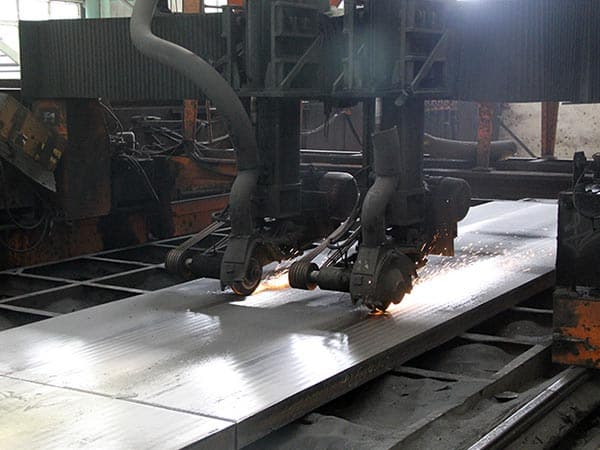
Understanding S420MC: The Backbone of Modern Automotive Engineering
S420MC is a high-strength, cold-forming steel specifically designed for the demanding requirements of the automotive industry. Governed by the EN 10149-2 standard, this thermomechanically rolled steel offers a unique combination of high yield strength, excellent ductility, and superior weldability. The designation "S" stands for structural steel, "420" indicates a minimum yield strength of 420 MPa, and "MC" signifies that the material is thermomechanically rolled (M) and intended for cold forming (C). As vehicle manufacturers strive for lightweighting to improve fuel efficiency and reduce emissions without compromising safety, S420MC has become a critical material for structural components that must absorb significant energy during impact.
ASTM Equivalent Steel Grades: Bridging International Standards
For engineers and procurement specialists operating across different geographical regions, identifying the correct ASTM equivalent for S420MC is essential for maintaining design integrity. While there is no 100% identical match due to slight variations in testing methodologies and chemical tolerances, the most common equivalents are found within the ASTM A1011 and ASTM A656 specifications.
ASTM A1011 HSLAS Grade 60 (Class 1 or 2): This is the most frequent substitute for S420MC in sheet form. It provides a similar yield strength profile (approx. 410-420 MPa) and is designed for applications where high strength and good formability are required.
ASTM A656 Grade 60: Often utilized for thicker plates, A656 Grade 60 mirrors the micro-alloying philosophy of S420MC, utilizing elements like Vanadium, Niobium, and Titanium to achieve grain refinement and precipitation hardening.
| Standard | Grade | Yield Strength (min) | Tensile Strength | Elongation (min) |
|---|---|---|---|---|
| EN 10149-2 | S420MC | 420 MPa | 480-620 MPa | 16-19% |
| ASTM A1011 | HSLAS Grade 60 | 410 MPa | 520 MPa | 18% |
| ASTM A656 | Grade 60 | 415 MPa | 520 MPa | 17% |
Chemical Composition and the Science of Micro-Alloying
The exceptional performance of S420MC is rooted in its precise chemical makeup. Unlike traditional carbon steels, S420MC utilizes a low-carbon design combined with micro-alloying elements. This approach ensures that the steel remains highly weldable while achieving high strength through grain refinement rather than high carbon content.
- Carbon (C): Kept below 0.12% to ensure excellent weldability and prevent brittleness in the heat-affected zone (HAZ).
- Manganese (Mn): Typically ranging from 1.0% to 1.6%, it enhances hardenability and increases strength.
- Silicon (Si): Controlled at low levels (max 0.50%) to facilitate high-quality surface finishing and galvanizing.
- Micro-alloys (Nb, V, Ti): These elements are the secret to the "MC" process. They form fine precipitates that pin grain boundaries during the rolling process, resulting in an ultra-fine grain structure.
| Element | S420MC (Max %) | ASTM A1011 Gr 60 (Max %) |
|---|---|---|
| Carbon (C) | 0.12 | 0.15 |
| Manganese (Mn) | 1.60 | 1.35 |
| Silicon (Si) | 0.50 | - |
| Phosphorus (P) | 0.025 | 0.020 |
| Sulfur (S) | 0.015 | 0.015 |
Mechanical Integrity and Cold Forming Capabilities
One of the primary reasons S420MC is favored in automotive chassis and frame construction is its remarkable cold-forming capacity. Despite its high yield strength, the material can be bent and folded into complex geometries without cracking. This is particularly important for longitudinal beams, cross members, and cold-pressed parts.
The bending radius is a critical parameter for S420MC. For material thicknesses (t) less than 3mm, a minimum bending radius of 0.5t is often achievable, while for thicknesses between 3mm and 6mm, a radius of 1.0t to 1.5t is recommended. This flexibility allows designers to create stiff, lightweight structures that would be impossible with lower-grade steels or more brittle high-strength alternatives.
Superior Weldability and Processing Performance
In the high-speed production environments of automotive assembly lines, weldability is non-negotiable. S420MC excels in this regard due to its low carbon equivalent (CEV). Whether using Metal Active Gas (MAG) welding, laser welding, or resistance spot welding, S420MC maintains its structural integrity. The fine-grained structure is resistant to grain coarsening in the heat-affected zone, which ensures that the welded joints remain as strong as the base metal.
Furthermore, the thermomechanical rolling process ensures a consistent surface quality, which is vital for subsequent coating processes. Whether the part is destined for E-coating, powder coating, or hot-dip galvanizing, S420MC provides a reliable substrate that ensures long-term corrosion protection and aesthetic consistency.
Environmental Adaptability and Fatigue Resistance
Automotive components are subjected to harsh environmental conditions, from road salt and moisture to extreme temperature fluctuations. S420MC is designed to perform across a wide temperature range. Its fine-grained microstructure provides excellent low-temperature toughness, reducing the risk of brittle fracture in cold climates.
Fatigue resistance is another area where S420MC outperforms standard structural steels. The cyclic loading experienced by vehicle frames requires a material that can withstand millions of stress cycles without developing fatigue cracks. The high yield-to-tensile ratio of S420MC, combined with its clean internal chemistry (low sulfur and phosphorus), minimizes inclusions that could act as stress concentrators, thereby extending the service life of the vehicle.
Strategic Applications in the Transport Industry
The application of S420MC extends far beyond passenger cars. It is a staple in the heavy transport and machinery sectors.
- Truck Chassis and Frames: Used for longitudinal and transverse beams where weight reduction translates directly into increased payload capacity.
- Crane Arms and Lifting Equipment: The high strength-to-weight ratio allows for longer reach and higher lifting capacities.
- Agricultural Machinery: Used in the construction of plow frames and harvester components that require high durability and impact resistance.
- Safety Components: Bumper reinforcements and door intrusion beams benefit from the energy-absorbing characteristics of S420MC.
Optimizing Material Selection for Global Projects
When sourcing S420MC or its ASTM equivalents, it is vital to consider the specific requirements of the end application. While ASTM A1011 Grade 60 is a suitable equivalent for many sheet metal applications, engineers must verify that the elongation and bending properties meet the specific tooling requirements of their production line. Sourcing from reputable mills that provide detailed Mill Test Reports (MTRs) is essential to ensure that the micro-alloying content and thermomechanical processing parameters are strictly controlled. By leveraging the high-strength properties of S420MC, manufacturers can achieve significant weight savings, often reducing component weight by 20% to 30% compared to traditional S235 or S355 grades, leading to more sustainable and efficient vehicle designs.
Leave a message