
Why is S960MC high yield strength steel coil more expensive?
Explore the cost factors of S960MC high yield strength steel. Understand how micro-alloying, TMCP processing, and weight-saving benefits justify its premium price in heavy machinery.
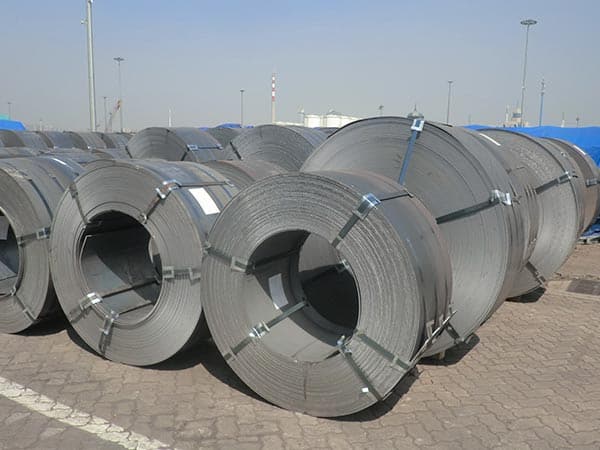
Decoding the Premium Nature of S960MC High Yield Strength Steel
In the modern engineering landscape, the push for lightweighting and extreme structural efficiency has elevated S960MC from a niche specialty material to a cornerstone of high-performance manufacturing. When procurement departments compare the price per ton of S960MC against standard structural steels like s355jr, the price gap is often significant. This cost disparity is not a result of market speculation but is rooted in the complex metallurgical DNA, the rigorous manufacturing protocols, and the immense value it adds to the final product. Understanding why S960MC commands a premium requires a deep dive into its lifecycle, from the blast furnace to the final weldment.
Advanced Metallurgical Composition: The Cost of Micro-Alloying
The "960" in S960MC represents a minimum yield strength of 960 MPa. Achieving this level of strength while maintaining ductility and weldability is a delicate balancing act. Unlike standard carbon steels that rely on high carbon content for strength—which compromises weldability—S960MC utilizes a sophisticated micro-alloying strategy. This involves the precise addition of elements such as Niobium (Nb), Vanadium (V), and Titanium (Ti). These elements are significantly more expensive than iron and carbon.
- Grain Refinement: Niobium and Titanium work at the microscopic level to refine grain size, which is the only mechanism that increases both strength and toughness simultaneously.
- Precipitation Hardening: Vanadium forms carbides and nitrides that pin dislocations within the crystal lattice, preventing deformation under load.
- Purity Requirements: To prevent brittle failure at 960 MPa, the steel must have extremely low levels of Sulfur (S) and Phosphorus (P). The desulfurization and dephosphorization processes in the ladle furnace add significant operational costs.
The TMCP Process: A Technical Bottleneck
The "MC" suffix denotes Thermomechanically Controlled Processing (TMCP). This is not a standard hot-rolling procedure. It is a highly synchronized operation where temperature control and deformation are managed with millisecond precision. The steel is rolled at specific temperatures where recrystallization is suppressed, creating a fine-grained microstructure that cannot be achieved through traditional heat treatment. This process requires specialized rolling mills with immense rolling force and sophisticated cooling systems.
| Property | Standard Hot Rolled (S355) | TMCP Rolled (S960MC) |
|---|---|---|
| Yield Strength (MPa) | 355 min | 960 min |
| Microstructure | Ferrite-Pearlite | Fine-grained Bainite/Martensite |
| Processing Time | Standard | Extended (Controlled Cooling) |
| Energy Consumption | Moderate | High (Precision Control) |
Precision Leveling and Internal Stress Management
High-strength steel coils are notorious for their internal residual stresses. As the strength increases, the material's tendency to spring back or distort during laser cutting or bending increases exponentially. S960MC requires advanced tension leveling and skin-pass rolling to ensure the coil is perfectly flat and the internal stresses are neutralized. This extra step ensures that when a manufacturer cuts a 12-meter chassis member, it stays straight. The machinery required to level 960 MPa steel is far more robust and expensive to maintain than standard leveling lines, directly impacting the final coil price.
Environmental Adaptability and Low-Temperature Toughness
One of the hidden value drivers of S960MC is its performance in extreme environments. High-strength steels are often prone to hydrogen-induced cracking and cold brittleness. However, S960MC is engineered to maintain high Charpy V-notch impact energy even at temperatures as low as -40°C or -60°C. This makes it indispensable for mobile cranes and mining equipment operating in arctic or high-altitude conditions. Achieving this low-temperature toughness at such high strength levels requires ultra-clean steel chemistry, which adds another layer of cost to the raw material sourcing.
Processing Performance: Weldability and Formability
A common misconception is that harder steel is harder to work with. S960MC is designed with a low Carbon Equivalent (CEV). This means that despite its extreme strength, it can be welded using standard processes like MAG or Laser welding without the extensive preheating required by traditional high-strength quenched and tempered steels. The time saved in the fabrication shop—reducing labor costs and energy bills—partially offsets the higher material cost. Furthermore, its excellent cold-forming properties allow for tight bending radii, enabling engineers to design complex, rigid shapes that reduce the number of welded joints needed.
The Economic Logic of Weight Reduction
The primary reason industries pay a premium for S960MC is the Payload-to-Weight Ratio. By upgrading from S700MC or S355 to S960MC, engineers can reduce the thickness of structural components by 30% to 50% without sacrificing safety or structural integrity. This weight reduction cascades into several economic benefits:
- Increased Payload: For transport trailers and cranes, every kilogram saved in the structure is an extra kilogram of cargo that can be carried.
- Fuel Efficiency: Lighter vehicles consume less fuel and have lower CO2 emissions, helping companies meet environmental regulations and reduce operating costs.
- Downstream Savings: Thinner plates mean less welding filler metal is used, welding times are shorter, and logistics costs for transporting the raw material are lower.
Market Dynamics and Limited Supply
Not every steel mill can produce S960MC. It requires a level of technological maturity and capital investment that only top-tier global mills possess. The production yield (the ratio of usable steel to scrap) for S960MC is lower than for commodity grades because the tolerances for mechanical properties are incredibly tight. If a batch hits 940 MPa instead of the required 960 MPa, it must be downgraded, representing a financial loss for the mill. This higher risk of production failure is factored into the market price of the successful batches.
Industry-Specific Applications Driving Demand
The demand for S960MC is driven by sectors where failure is not an option and performance is paramount. In the mobile crane industry, the boom sections must be incredibly light to reach great heights while supporting massive loads. In heavy-duty trailer manufacturing, S960MC allows for the construction of ultra-lightweight chassis that can withstand the rigors of long-haul transport. Mining equipment, such as roof supports and dump truck bodies, utilizes S960MC to resist impact and abrasion while maintaining a manageable vehicle weight. The specialized nature of these industries means that S960MC is often produced to order or stocked in limited quantities, contributing to its premium positioning.
Long-term Durability and Fatigue Resistance
Beyond static strength, S960MC exhibits superior fatigue resistance. In structures subject to cyclic loading—like the arms of a concrete pump or the frame of a forest harvester—the fine-grained structure of TMCP steel resists the initiation and propagation of fatigue cracks. This extends the service life of the equipment, reducing the total cost of ownership (TCO) for the end-user. When viewed through the lens of a 10-year equipment lifecycle, the initial "expensive" investment in S960MC often proves to be the most cost-effective choice.
Strategic Procurement Considerations
When purchasing S960MC, it is vital to look beyond the price per kilogram. Buyers should evaluate the total value proposition, including the mill's reputation for consistency, the availability of technical support for welding and forming, and the potential for design optimization. As global industries move toward a more sustainable and efficient future, the role of high-yield steels like S960MC will only grow. The premium paid today is an investment in superior engineering, operational efficiency, and long-term structural reliability.
Leave a message