
What is the scope of appearance inspection of S900MC automotive steel supplier
Comprehensive guide on S900MC automotive steel appearance inspection, covering surface defects, dimensional tolerances, flatness requirements, and industry-specific quality standards.
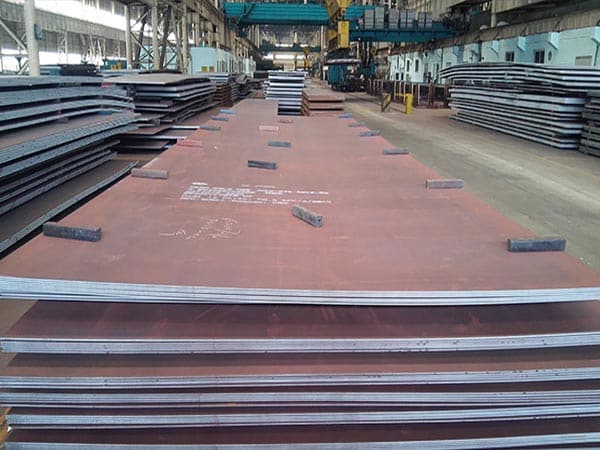
The Critical Role of Appearance Inspection in S900MC Automotive Steel
As the automotive industry pushes for extreme lightweighting and enhanced structural safety, S900MC high-strength low-alloy (HSLA) steel has become a cornerstone material for chassis, crane booms, and cross members. S900MC, governed by the EN 10149-2 standard, is a thermomechanically rolled steel designed for cold forming. Because this material operates under high-stress conditions, the appearance inspection scope conducted by a supplier is not merely aesthetic; it is a fundamental safety and performance requirement.
Suppliers must ensure that the surface integrity of S900MC remains uncompromised, as even minor surface discontinuities can act as stress concentrators, leading to premature fatigue failure in dynamic automotive environments. The inspection process integrates visual assessment, automated sensor technology, and precise measurement to meet the rigorous demands of Tier 1 manufacturers.
Surface Defect Classification and Acceptance Criteria
The primary focus of an S900MC supplier's appearance inspection is the identification of surface defects that occur during the thermomechanical rolling process. These defects are generally categorized into those that are permissible within certain limits and those that require immediate rejection.
- Rolling Marks and Scratches: Continuous or intermittent marks caused by roll wear. These must not exceed a depth that would bring the thickness below the minimum tolerance specified in EN 10051.
- Pits and Scale: Small depressions or embedded iron oxide. For S900MC, the surface must be clean, and scale must be tight or removed via pickling (S900MC+P) to ensure welding quality.
- Cracks and Inclusions: These are critical defects. Any visible surface cracking or non-metallic inclusions reaching the surface are grounds for rejection, as they significantly reduce the ductility and fatigue resistance of the steel.
- Slivering and Lamination: Thin layers of metal overlapping the base surface. These are particularly dangerous during the cold bending of S900MC, as they can peel off or initiate larger fractures.
Dimensional Accuracy and Shape Tolerance Inspection
Appearance inspection extends beyond the skin of the metal to the overall geometry of the coil or sheet. For S900MC, which is often processed using automated laser cutting and robotic welding, dimensional precision is non-negotiable.
Suppliers inspect the following parameters:
| Inspection Item | Requirement Detail | Impact on Manufacturing |
|---|---|---|
| Thickness Uniformity | Strict adherence to EN 10051 (e.g., ±0.15mm for specific ranges) | Ensures consistent springback during bending. |
| Flatness | Measured in I-units or mm over a specific length | Crucial for laser cutting stability and fit-up for welding. |
| Edge Condition | Mill edge or Slit edge; must be free of heavy burrs or nicks | Prevents edge cracking during high-strain forming. |
| Lateral Camber | Deviation of the side edge from a straight line | Affects the tracking of the steel through stamping dies. |
The Impact of Surface Quality on Process Performance
The S900MC grade is prized for its high yield strength (minimum 900 MPa), but this strength makes the material sensitive to surface quality during processing. A supplier's inspection scope must account for how the surface will behave during cold forming and welding.
Cold Bending: S900MC allows for tight bending radii, but surface roughness or micro-cracks can lead to "orange peel" effects or outer-fiber cracking. Suppliers often perform a 180-degree bend test to validate that the surface integrity supports the material's elongation properties (typically 8-10% for S900MC).
Welding Compatibility: Appearance inspection ensures the absence of heavy oil, rust, or carbonaceous residues. Since S900MC relies on a specific fine-grained microstructure achieved through thermomechanical rolling, any surface contamination can introduce hydrogen-induced cracking or porosity in the heat-affected zone (HAZ).
Environmental Adaptability and Protection Inspection
Automotive steel is often transported across long distances and stored in varying humidity levels. The inspection scope includes the anti-corrosion treatment applied by the supplier. For S900MC, this usually involves:
- Oiling Quality: Even distribution of rust-preventative oil. Inspection ensures no "dry spots" where oxidation could begin.
- Pickling Quality (if applicable): For S900MC+P, the surface must be uniform in color, indicating a complete removal of the hot-rolled scale.
- Packaging Integrity: Inspection of the waterproof paper, steel strapping, and edge protectors to prevent mechanical damage during transit.
Mechanical and Chemical Property Overview for S900MC
While appearance is the focus, it is inextricably linked to the underlying metallurgy. The following table outlines the technical profile that the surface inspection supports:
| Property | Value / Requirement | Significance |
|---|---|---|
| Yield Strength (ReH) | Min 900 MPa | Load-bearing capacity for structural parts. |
| Tensile Strength (Rm) | 930 - 1200 MPa | Ultimate resistance before failure. |
| Elongation (A5) | Min 8% | Ability to be formed without fracturing. |
| Carbon Equivalent (CEV) | Low (approx. 0.45 max) | Excellent weldability despite high strength. |
Advanced Inspection Technologies Used by Suppliers
Modern S900MC suppliers have moved beyond simple human visual checks. The scope now includes Automated Surface Inspection Systems (ASIS). These systems utilize high-speed cameras and laser scanning to detect defects as small as 0.1mm at production speeds. This technology allows for a 100% surface map of the coil, providing the end-user with a digital "birth certificate" of the steel's quality.
Furthermore, ultrasonic testing may be included in the scope for specialized automotive applications to detect internal laminations that are not visible on the surface but could cause catastrophic failure under high hydraulic pressures or structural loads.
Expanding Application Industry Knowledge
Understanding the inspection scope of S900MC requires looking at its end-use cases. In the heavy truck industry, S900MC is used for longitudinal beams. Here, the edge quality is paramount because these beams undergo significant hole-punching and bolting. Any micro-cracks on the slit edge identified during inspection prevent the propagation of cracks during the vehicle's service life.
In the lifting and mobile crane sector, the flatness of S900MC is the most critical inspection parameter. Large telescopic boom sections require perfectly flat plates to ensure that the sections slide smoothly within one another. Suppliers catering to this industry often apply tighter flatness tolerances than the standard EN 10051 requirements to satisfy these specific engineering needs.
Verification and Certification Standards
Every batch of S900MC must be accompanied by a Mill Test Certificate (MTC), typically according to EN 10204 3.1. The appearance inspection results are summarized in this document, confirming that the material meets the surface quality class (usually Class A for hot-rolled products unless otherwise specified). The supplier’s quality management system, often certified to IATF 16949, ensures that the inspection scope is repeatable and traceable, providing automotive OEMs with the confidence needed for high-volume production.
By maintaining a rigorous inspection scope, S900MC suppliers act as the first line of defense in automotive safety, ensuring that the transition from raw coil to high-performance component is seamless and free from material-induced defects.
Leave a message