
Performance Advantages of S500MC High-Strength Steel
This analysis delves deeply into the mechanical properties, processing characteristics, and market trends of S500MC high-strength low-alloy steel. Addressing the recent surge in S500MC inventory levels and freight costs, it examines the material's core c
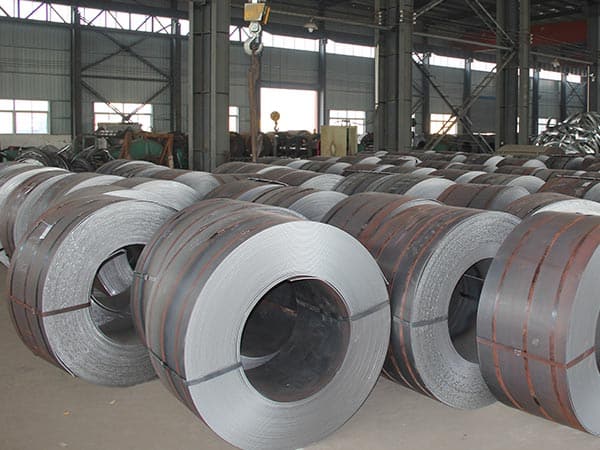
Market Fluctuations and Technical Foundations of S500MC High-Strength Steel
In recent times, volatility within global supply chains has led to significant increases in both inventory levels and freight costs for S500MC high-strength steel. This phenomenon not only reflects an imbalance between supply and demand in the raw materials market but also underscores the manufacturing sector's urgent need for high-performance materials. As a hot-rolled, high-yield-strength steel designed for cold forming, S500MC holds an indispensable position in modern industry. It is classified as a High-Strength Low-Alloy (HSLA) steel grade under the EN 10149-2 standard, engineered specifically to enhance energy efficiency and load-bearing capacity by reducing structural weight.
Core Chemical Composition and Microalloying Technology
The exceptional comprehensive performance of S500MC stems from its precisely engineered chemical composition. Through the addition of trace amounts of niobium (Nb), vanadium (V), and titanium (Ti), the steel achieves fine-grain strengthening during the rolling process. This microalloying technique not only boosts the material's yield strength but also preserves its excellent ductility and toughness.
| Element | Content (max %) | Function |
|---|---|---|
| Carbon (C) | 0.12 | Ensures strength while maintaining excellent weldability |
| Manganese (Mn) | 1.60 | Increases hardness and tensile strength |
| Silicon (Si) | 0.50 | Deoxidizer; enhances material uniformity |
| Niobium (Nb) | 0.09 | Refines grain structure; boosts yield strength |
| Phosphorus (P) / Sulfur (S) | 0.025 / 0.015 | Strictly controls impurities; improves impact toughness |
Mechanical Properties: The Core Foundation of Lightweighting
The designation S500MC directly reflects its performance specifications: "S" stands for structural steel; "500" indicates a minimum yield strength of 500 MPa; and "MC" denotes a delivery condition that is hot-rolled and suitable for cold forming. While ensuring high strength, this material also retains excellent elongation properties, allowing it to perform exceptionally well in the fabrication of complex components.
- Yield Strength (ReH): ≥ 500 MPa
- Tensile Strength (Rm): 550 - 700 MPa
- Elongation (A80): ≥ 12% for thicknesses < 3 mm
- Elongation (A5): ≥ 14% for thicknesses ≥ 3 mm
High yield strength implies that thinner steel sheets can be utilized while withstanding the same load. For the transportation industry—which is committed to energy conservation and emission reduction—this represents a critical pathway for lowering overall vehicle curb weight and improving fuel efficiency.
Exceptional Processing Characteristics
Cold Formability: S500MC is specifically engineered for cold bending and stamping applications. Thanks to its high purity and fine-grained microstructure, the sheet edges exhibit minimal susceptibility to cracking during small-radius bending operations. This provides designers with greater creative freedom, enabling the fabrication of structural components with more complex geometries.
Weldability: The extremely low Carbon Equivalent (CEV) endows S500MC with outstanding weldability. Whether utilizing manual arc welding, gas-shielded welding, or laser welding, high-quality weld seams can be consistently achieved. Furthermore, due to its low alloy content, the material exhibits a reduced tendency toward softening within the heat-affected zone (HAZ), thereby ensuring consistent structural strength throughout the assembly.
Cutting Performance: Whether processed via laser cutting or plasma cutting, S500MC maintains excellent cut-edge quality. Its flatness is subject to rigorous control, thereby minimizing the need for subsequent leveling or straightening operations.
Environmental Adaptability and Durability Analysis
In demanding operating environments, S500MC demonstrates robust fatigue resistance. Its uniform microstructure effectively inhibits the initiation and propagation of fatigue cracks. Additionally—while S500MC is not classified as a specialized weathering steel—its dense surface oxide scale provides a certain degree of rust resistance in standard indoor or dry environmental conditions.
For outdoor applications, combining this material with surface treatment processes—such as spray coating or galvanizing—can significantly extend its service life.Expanding Application Sectors: Comprehensive Coverage from Highways to Construction Sites
Automotive Manufacturing: S500MC is widely utilized in truck main beams, crossbeams, chassis reinforcements, and wheel hubs. It effectively absorbs collision energy, thereby enhancing vehicle safety.
Heavy Machinery: In crane booms, excavator bases, and the structural frames of mining equipment, the high load-bearing capacity of S500MC significantly reduces the equipment's dead weight while increasing its operating radius and lifting capacity.
Warehousing Equipment: Upright columns and crossbeams in high-rise racking systems and automated vertical warehouses are increasingly incorporating S500MC to meet the growing demands for greater storage heights and load-bearing capacities.
The Impact of Rising Freight Costs and Inventory Levels on Procurement Strategies
Recently, the inventory turnover rate for S500MC has slowed; this, coupled with escalating maritime and overland logistics costs, has directly driven up final delivery prices. In light of this trend, enterprises should adopt more flexible supply chain management measures. First, establish safety stock. Strategically build inventory when freight rates are relatively low to mitigate the risks associated with logistics volatility. Second, optimize material utilization. Employ nesting optimization software to minimize scrap waste from high-value materials. Third, seek alternative solutions. For components with slightly lower strength requirements, evaluate the feasibility of using S420MC; conversely, for applications requiring extreme lightweighting, consider upgrading to S700MC.
Comparison Reference: S500MC vs. Other Grades
| Characteristic Comparison | S355MC | S500MC | S700MC |
|---|---|---|---|
| Yield Strength (MPa) | ≥ 355 | ≥ 500 | ≥ 700 |
| Processing Difficulty | Very Easy | Easy | Moderate |
| Weight Reduction Potential | Benchmark | Approx. 20-30% | Approx. 40-50% |
| Primary Applications | General Structural Components | Automotive Chassis Beams, Cranes | High-end Lightweight Equipment |
Selecting S500MC represents a "golden mean"—a perfect balance between cost, strength, and processability. Against the backdrop of rising logistics costs, fully leveraging S500MC's weight-reduction advantages to lower the average shipping cost per unit is an effective strategy for enterprises seeking to reduce costs and enhance efficiency. By deeply exploring the properties of this material, companies can identify a robust technical pathway amidst a volatile market environment.
Leave a message