
How to deal with iron oxide residual problem of en 10149-2 s420mc
Expert guide on managing iron oxide residuals on EN 10149-2 S420MC steel. Explore mechanical properties, chemical composition impacts, and advanced descaling solutions for high-strength cold-forming steel.
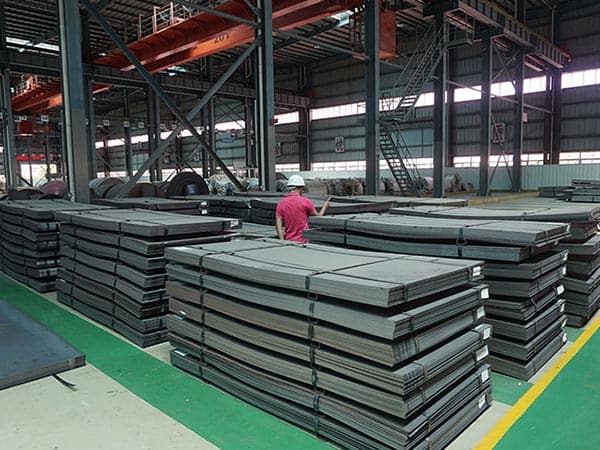
The Nature of Iron Oxide Residuals on S420MC High-Strength Steel
EN 10149-2 S420MC is a thermomechanically rolled (TMCP) high-yield strength steel designed specifically for cold forming. While its mechanical properties are exceptional, the manufacturing process often leaves a characteristic layer of iron oxide, commonly known as mill scale. Dealing with these residuals is not merely an aesthetic concern; it is a critical technical requirement for ensuring the integrity of subsequent processes such as laser cutting, welding, and coating.
The iron oxide on S420MC typically consists of three layers: hematite (Fe2O3) on the outermost surface, magnetite (Fe3O4) in the middle, and wustite (FeO) closest to the steel substrate. Because S420MC is produced via thermomechanical rolling, the cooling rate and temperature control significantly influence the thickness and adherence of this scale. Unlike traditional hot-rolled steels, the scale on TMCP steel can be more tenacious due to the refined grain structure and specific alloying elements like Manganese and Silicon.
Chemical Composition and Its Influence on Scale Adhesion
The chemical makeup of EN 10149-2 S420MC plays a dual role in its performance and its surface characteristics. High levels of Manganese (Mn) and Silicon (Si) are essential for achieving the 420 MPa yield strength, but they also affect how the iron oxide layer interacts with the base metal.
| Element | Maximum Content (%) | Impact on Surface & Scale |
|---|---|---|
| Carbon (C) | 0.12 | Low carbon ensures good weldability but reduces the thickness of the decarburized layer. |
| Manganese (Mn) | 1.60 | Increases strength; can form Mn-silicates at the scale interface, making it harder to pickle. |
| Silicon (Si) | 0.50 | Crucial for deoxidation; high Si can lead to "red scale" or fayalite (Fe2SiO4) formation. |
| Phosphorus (P) | 0.025 | Kept low to prevent embrittlement and improve surface uniformity. |
| Sulfur (S) | 0.015 | Minimized to enhance ductility and reduce inclusions that could trap oxides. |
Silicon, in particular, is a double-edged sword. When the silicon content exceeds certain thresholds, it reacts with iron oxide during the rolling process to form fayalite. This compound has a lower melting point and can "root" itself into the grain boundaries of the steel, making the residual oxide extremely difficult to remove through standard mechanical means. Understanding this chemical synergy is the first step in optimizing the descaling strategy for S420MC.
Mechanical Performance vs. Surface Integrity
The primary appeal of S420MC is its high yield strength combined with excellent cold-forming capabilities. However, the presence of iron oxide residuals can compromise these mechanical advantages during fabrication. If the scale is not properly managed, it can be pressed into the surface during bending or stamping, leading to micro-cracks or surface discontinuities.
- Yield Strength: Minimum 420 MPa. Scale residuals can cause uneven stress distribution during forming.
- Tensile Strength: 480-620 MPa. A clean surface ensures the material reaches its full elongation potential.
- Elongation: Minimum 16-19% (depending on thickness). Scale flakes can act as stress concentrators, reducing effective ductility.
- Bending Radius: S420MC allows for tight bends, but scale trapped in the bend zone can cause "orange peel" effects or localized failure.
Maintaining the balance between the high-strength microstructure achieved via TMCP and the surface quality requires a proactive approach to oxide management. The residual scale acts as an abrasive, which can also lead to premature wear of expensive stamping dies and forming tools.
Effective Methods for Removing Iron Oxide Residuals
There are two primary categories of solutions for dealing with S420MC residuals: chemical pickling and mechanical descaling. The choice depends on the required surface finish and the downstream application.
1. Chemical Pickling (Acid Cleaning): This is the most common industrial method for S420MC. The steel is passed through a series of hydrochloric acid (HCl) baths. The acid penetrates the cracks in the scale and dissolves the wustite (FeO) layer, causing the outer layers to flake off. For S420MC, inhibitors must be used to prevent the acid from over-attacking the high-strength base metal, which could lead to hydrogen embrittlement.
2. Shot Blasting and Mechanical Descaling: For applications where chemical usage is restricted, shot blasting uses high-velocity steel grit to physically remove the oxide. While effective, it increases surface roughness (Ra value). This is often preferred for heavy machinery components where a high-friction surface is needed for subsequent painting or thermal spraying.
3. Laser Descaling: A modern, high-precision approach involves using fiber lasers to vaporize the oxide layer. This is particularly useful for localized cleaning before welding S420MC parts, ensuring that no oxide is trapped in the weld pool, which would otherwise cause porosity.
Impact of Residuals on Downstream Processing
Leaving iron oxide residuals on S420MC can lead to significant failures in advanced manufacturing. In laser cutting, the scale reflects the laser beam and absorbs heat inconsistently, resulting in dross formation and poor edge quality. For high-speed automated production lines, this necessitates frequent cleaning of the cutting head and slower processing speeds.
In welding operations, iron oxide is a major source of oxygen contamination. When S420MC is welded with residuals present, the oxygen reacts with the alloying elements, forming slag inclusions and reducing the toughness of the Heat Affected Zone (HAZ). This is especially critical in automotive chassis components where fatigue resistance is paramount.
Furthermore, for coating and painting, the scale is a poor substrate. It is brittle and has a different coefficient of thermal expansion than the steel. Over time, the scale will delaminate from the base metal, taking the expensive paint or powder coating with it. Ensuring a surface cleanliness grade of Sa 2.5 or better is usually mandatory for long-term corrosion protection.
Environmental Adaptability and Storage Solutions
S420MC is often used in environments where it is exposed to moisture and fluctuating temperatures. Iron oxide residuals are hygroscopic; they trap moisture against the steel surface, accelerating localized corrosion (pitting). To prevent this during storage and transport, several strategies are employed:
- Oiling: After pickling, S420MC is typically coated with a thin layer of electrostatic oil to prevent flash rusting.
- VCI Packaging: Volatile Corrosion Inhibitor packaging is used for overseas shipping to create a protective molecular layer.
- Controlled Humidity: Storing S420MC coils in climate-controlled warehouses prevents the "sweating" that leads to heavy oxidation.
For industries like renewable energy (solar tracking systems) or agricultural machinery, the environmental adaptability of S420MC is greatly enhanced by a clean, oxide-free surface that can be effectively galvanized or zinc-nickel plated.
Optimizing the Production Chain for S420MC
To truly solve the iron oxide problem, manufacturers must look at the entire production chain. It starts at the hot strip mill, where the water pressure of the primary descalers must be optimized to remove the initial furnace scale. During the thermomechanical rolling of S420MC, controlling the finishing temperature is vital. If the temperature is too high, the scale grows too thick; if it is too low, the mechanical properties of the steel may not meet the EN 10149-2 standards.
End-users should specify the surface condition upon ordering. Requesting "Pickled and Oiled" (P&O) S420MC is often the most cost-effective way to handle residuals, as industrial-scale pickling lines are more efficient than localized cleaning. By integrating surface quality requirements into the initial procurement phase, companies can significantly reduce rework and improve the overall lifecycle of the high-strength steel components.
Advanced Industry Applications
The demand for EN 10149-2 S420MC is growing in sectors that require weight reduction without sacrificing safety. In the automotive industry, it is used for longitudinal beams and cross members. Here, the absence of iron oxide is non-negotiable for high-quality robotic welding. In heavy lifting and cranes, the clean surface of S420MC allows for precise ultrasonic testing to ensure there are no internal or surface defects that could lead to catastrophic failure under load.
The transition toward more sustainable manufacturing also favors better scale management. Clean S420MC requires less aggressive chemicals during final assembly cleaning, aligning with green manufacturing initiatives. As the industry moves toward higher grades like S500MC and S700MC, the lessons learned in managing the iron oxide residuals of S420MC provide the technical foundation for handling even more complex alloy systems.
Leave a message