
What is the s420mc steel equivalent application
Discover the technical specifications, international equivalents (ASTM, JIS, GB), and diverse applications of S420MC steel. This guide explores its mechanical properties and industrial utility.
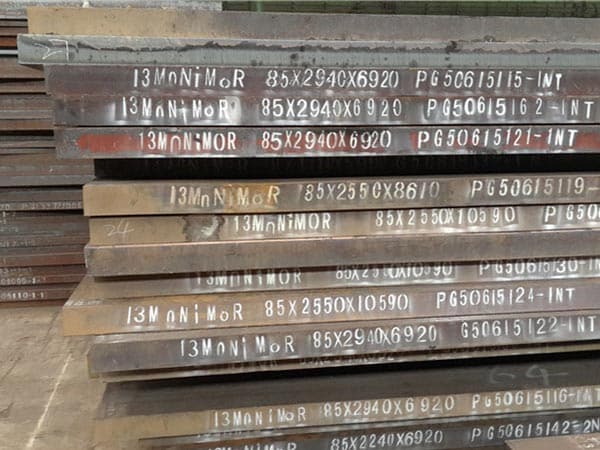
Understanding S420MC: The Pinnacle of High-Strength Cold-Forming Steel
S420MC is a high-yield-strength, thermomechanically rolled steel specifically designed for cold-forming applications. Governed by the European standard EN 10149-2, this grade represents a critical balance between weight reduction and structural integrity. In an era where industries demand materials that can withstand higher loads while reducing overall mass, S420MC has emerged as a cornerstone material. The 'S' denotes structural steel, '420' indicates a minimum yield strength of 420 MPa, and 'MC' signifies its suitability for cold forming and its thermomechanical rolling process.
The manufacturing process involves precise temperature control during rolling, which refines the grain structure. This fine-grain micro-alloying technique, typically utilizing Niobium (Nb), Vanadium (V), or Titanium (Ti), provides the steel with exceptional toughness and weldability. Unlike traditional hot-rolled steels, S420MC offers superior surface quality and tighter dimensional tolerances, making it ideal for automated manufacturing environments.
Global Equivalents: Mapping S420MC Across International Standards
Engineers and procurement specialists often need to identify equivalent grades when sourcing materials globally. While S420MC is a European designation, several international standards offer materials with comparable mechanical and chemical profiles. Understanding these equivalents is essential for maintaining design specifications across different regions.
| Standard | Equivalent Grade | Region/Organization |
|---|---|---|
| EN 10149-2 | S420MC | European Union |
| ASTM A1011 | HSLAS-F Grade 60 | USA / ASTM |
| GB/T 1591 | Q420L / Q420D | China |
| JIS G3134 | SPFH 590 | Japan |
| ISO 6930 | HSE 420 | International |
It is important to note that while these grades are considered functional equivalents, subtle differences in chemical composition limits and elongation requirements may exist. For instance, ASTM A1011 HSLAS-F Grade 60 emphasizes improved formability (the 'F' suffix), which aligns closely with the 'MC' characteristics of the European grade. Always verify the specific project requirements against the material test report (MTR) to ensure compliance.
Mechanical Properties and Material Excellence
The performance of S420MC is defined by its impressive mechanical profile. Its high yield strength allows for thinner sections to be used in structural designs without sacrificing safety, directly contributing to fuel efficiency in transport and lower material costs in construction.
- Yield Strength: Minimum 420 MPa (for thicknesses ≤ 8mm).
- Tensile Strength: Ranges between 480 and 620 MPa.
- Elongation: Minimum 16% to 19% depending on thickness, ensuring the material can be bent and shaped without cracking.
- Impact Strength: Excellent low-temperature toughness, often tested at -20°C or -40°C to ensure performance in harsh environments.
The low carbon equivalent (CEV) of S420MC is one of its most significant advantages. By keeping carbon levels low (typically below 0.12%), the steel maintains excellent weldability. This allows for high-speed welding processes without the need for extensive pre-heating or post-weld heat treatment, which is a major productivity booster in assembly lines.
Chemical Composition: The Science of Micro-Alloying
The secret to S420MC’s strength-to-weight ratio lies in its chemical makeup. Instead of relying on high carbon content, which can make steel brittle, S420MC uses micro-alloying elements to achieve its properties.
| Element | Maximum Percentage (%) |
|---|---|
| Carbon (C) | 0.12 |
| Manganese (Mn) | 1.60 | 0.50 |
| Phosphorus (P) | 0.025 |
| Sulfur (S) | 0.015 |
| Aluminium (Al) | 0.015 (min) |
| Nb + Ti + V | 0.22 (total sum) |
The inclusion of Niobium (Nb) and Titanium (Ti) facilitates grain refinement during the thermomechanical rolling process. These elements form carbides and nitrides that pin grain boundaries, preventing grain growth and resulting in a fine-grained ferrite-pearlite microstructure. This microstructure is what gives S420MC its unique combination of high strength and high ductility.
Industrial Applications: Where S420MC Excels
The versatility of S420MC makes it a preferred choice across various demanding sectors. Its primary application is in components where weight reduction is a priority without compromising the structural load-bearing capacity.
Automotive Engineering: S420MC is extensively used for chassis components, cross members, longitudinal beams, and suspension systems. By using S420MC instead of standard structural steels, manufacturers can reduce vehicle weight by up to 20-30% in specific assemblies, leading to better fuel economy and lower CO2 emissions.
Heavy Machinery and Lifting Equipment: For mobile cranes, excavator arms, and agricultural machinery, the high yield strength of S420MC allows for longer reach and higher lifting capacities. The steel's ability to withstand fatigue and dynamic loads makes it indispensable for equipment operating in rigorous conditions.
Cold-Pressed Parts: Due to its excellent cold-forming properties, S420MC is ideal for complex pressed parts. It can be bent to tight radii (typically 0.5t to 1.5t depending on thickness) without surface tearing, making it suitable for intricate structural brackets and supports.
Storage and Racking Systems: In high-density warehouse racking, S420MC provides the necessary strength to support massive vertical loads while keeping the profile of the racking slim, maximizing storage space.
Processing Performance: Bending, Welding, and Cutting
Working with S420MC requires an understanding of its metallurgical behavior. Fortunately, it is designed to be user-friendly for modern fabrication shops.
Bending: When bending S420MC, it is crucial to consider the rolling direction. While the steel is designed for cold forming, bending transverse to the rolling direction typically allows for even tighter radii. Its consistent mechanical properties ensure minimal springback, which is vital for precision engineering.
Welding: S420MC is compatible with all standard welding methods, including MIG/MAG, TIG, and submerged arc welding. Because of its low alloy content, the heat-affected zone (HAZ) remains tough, and the risk of cold cracking is significantly reduced compared to traditional high-strength steels.
Laser and Plasma Cutting: The clean surface and fine-grain structure of S420MC make it excellent for laser cutting. It produces clean edges with minimal dross, reducing the need for secondary finishing operations. Its flatness, a result of controlled cooling during production, ensures stability during automated cutting processes.
Environmental Adaptability and Sustainability
S420MC contributes significantly to industrial sustainability. Its primary environmental benefit is indirect: by enabling lightweighting in transportation, it reduces the lifetime carbon footprint of vehicles. Furthermore, the steel is 100% recyclable. At the end of a product's lifecycle, S420MC can be melted down to produce new high-quality steel without loss of performance.
In terms of corrosion resistance, while S420MC is not a stainless grade, its fine-grain structure provides a slightly better base for protective coatings compared to coarse-grained steels. It accepts galvanizing, painting, and powder coating exceptionally well, ensuring long-term durability in outdoor or mildly corrosive environments.
Selection Criteria for Engineering Projects
Choosing S420MC over other grades like S355MC or S500MC depends on the specific stress-strain requirements of the application. If a design requires a higher safety factor or a reduction in thickness to save weight, S420MC offers the optimal 'sweet spot' in the high-strength low-alloy (HSLA) family. It provides a substantial strength increase over S355 without the higher cost and more sensitive processing requirements of ultra-high-strength grades like S700MC.
When specifying S420MC, engineers should ensure the material meets the EN 10149-2 standard to guarantee the thermomechanical rolling process was utilized. This ensures the material possesses the ductility required for complex forming operations that standard hot-rolled structural steels cannot match.
Leave a message