
What is the S700MC price sheet forging
Comprehensive guide to S700MC high-strength steel. Learn about price factors, mechanical properties, thermomechanical rolling processes, and industrial applications for S700MC sheet and forging components.
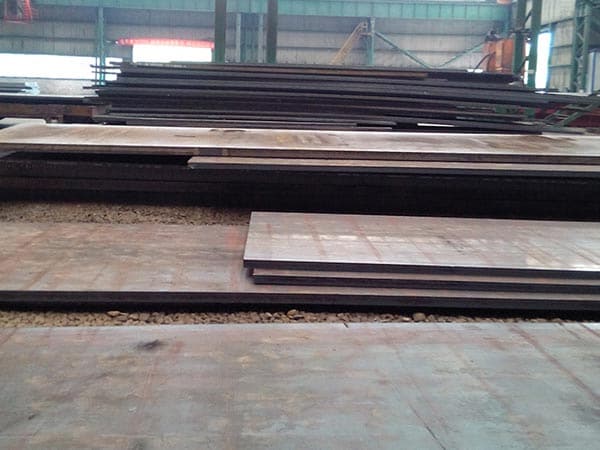
The Essence of S700MC: Beyond the Price Sheet
When procurement managers and engineers ask What is the S700MC price sheet forging, they are looking for more than just a numerical value. S700MC is a high-strength, thermomechanically rolled (TMCP) steel defined by the EN 10149-2 standard. Its name reflects its primary characteristic: a minimum yield strength of 700 MPa. Understanding the price sheet requires a deep dive into why this material commands a premium compared to standard structural steels like S355.
The pricing of S700MC is influenced by its sophisticated alloying elements and the precise cooling processes used during manufacturing. Unlike traditional hot-rolled steels, S700MC achieves its strength through a combination of fine-grain refinement and precipitation hardening, utilizing micro-alloying elements such as Niobium (Nb), Vanadium (V), and Titanium (Ti). These elements ensure that the material maintains high strength without sacrificing ductility or weldability.
Mechanical Properties and Performance Metrics
The technical value of S700MC lies in its exceptional weight-to-strength ratio. By using S700MC, designers can reduce the thickness of structural components by up to 40% compared to conventional steel, leading to significant savings in fuel consumption for transport applications and increased payload capacity.
| Property | Value (Min/Range) | Unit |
|---|---|---|
| Yield Strength (ReH) | 700 | MPa |
| Tensile Strength (Rm) | 750 - 950 | MPa |
| Elongation (A80mm) | 10 - 12 | % |
| Impact Energy (-20°C) | 40 (Optional) | J |
These properties are not merely numbers on a datasheet; they represent the material's ability to withstand extreme stress in dynamic environments. The high yield strength ensures that the structure remains elastic under heavy loads, while the controlled tensile strength range prevents brittle failure.
Forging and Processing Challenges of S700MC
The term forging in the context of S700MC often refers to the complex shaping and forming processes used to create structural components. It is critical to understand that S700MC is a TMCP steel. This means its properties are derived from the rolling process itself. If the material is heated above its tempering temperature (typically around 580°C to 600°C) during a traditional hot forging process, it will lose its high-strength properties and revert to a lower grade.
- Cold Forming: S700MC is optimized for cold bending and folding. Its fine-grained structure allows for tight bend radii without cracking, provided the minimum internal radius is respected.
- Laser and Plasma Cutting: The low carbon equivalent (CEV) of S700MC makes it ideal for precision cutting. It leaves a clean edge that requires minimal post-processing.
- Welding Compatibility: Due to its low alloy content, S700MC exhibits excellent weldability. Standard methods like MAG, TIG, and Laser welding can be used, though heat input must be strictly controlled to avoid softening the heat-affected zone (HAZ).
Environmental Adaptability and Longevity
S700MC is designed to perform in harsh industrial environments. While it is not a dedicated weathering steel, its refined microstructure provides a degree of atmospheric corrosion resistance superior to basic carbon steels. For applications in extreme cold, S700MC variants with guaranteed impact toughness at -40°C are available, ensuring that the material does not become brittle in arctic or high-altitude conditions.
The fatigue resistance of S700MC is another critical factor. In machinery that undergoes millions of load cycles, such as crane booms or truck chassis, the fine-grain structure helps inhibit the initiation and propagation of micro-cracks, significantly extending the service life of the equipment.
Factors Influencing the S700MC Price Sheet
Several variables dictate the final cost of S700MC on a price sheet. Understanding these can help in negotiating better terms and optimizing material selection.
- Thickness and Width: Thinner gauges (under 3mm) often carry a higher price per ton due to the increased rolling time and precision required.
- Market Volatility of Micro-alloys: The cost of Niobium and Vanadium fluctuates based on global mining output, directly impacting the base price of HSLA steels.
- Surface Quality: S700MC is often supplied in a pickled and oiled (P&O) state. The additional chemical treatment to remove mill scale adds to the cost but is essential for high-quality welding and painting.
- Certification and Testing: Standard EN 10204 3.1 certification is common, but 3.2 certification involving third-party inspection will increase the price.
Strategic Application Industries
The adoption of S700MC has revolutionized several heavy industries. By shifting from traditional grades to S700MC, companies achieve a competitive edge through engineering efficiency.
Transportation and Automotive: The chassis of heavy-duty trucks and trailers are primary candidates for S700MC. Reducing the tare weight of a trailer allows for a higher legal payload, which translates directly into increased revenue for logistics providers.
Lifting and Construction: Telescopic cranes and concrete pump booms require materials that can reach great heights while supporting immense weight. S700MC provides the necessary stiffness and strength to prevent buckling while keeping the overall structure light enough for mobile transport.
Energy and Infrastructure: In the renewable energy sector, S700MC is used for support structures and brackets in solar farms and wind turbine components where high wind loads are a constant factor.
Technical Comparison: S700MC vs. Conventional Steel
To illustrate the value proposition, consider a comparison between S700MC and the widely used s355jr.
| Feature | S355JR | S700MC | Advantage of S700MC |
|---|---|---|---|
| Yield Strength | 355 MPa | 700 MPa | ~97% Higher Strength |
| Typical Thickness for 10t Load | 10mm | 6mm | 40% Weight Reduction |
| Weldability | Good | Excellent | Lower risk of cold cracking |
| Cold Formability | Moderate | Superior | Allows for complex geometries |
While the price per ton of S700MC is higher, the "total cost of ownership" is often lower. Reduced material volume means lower shipping costs, less welding wire consumption, and faster assembly times. This holistic view is essential when evaluating any S700MC price sheet.
Selecting the right supplier for S700MC is as important as the material itself. Ensure that the mill provides full traceability and that the material meets the tight tolerances for flatness and thickness required for automated manufacturing processes. High-quality S700MC should have a consistent microstructure across the entire width of the coil to ensure uniform behavior during bending and welding operations.
Leave a message