
S900MC cold forming steel sheet prices continue to be weak and downward
Explore the current market trends for S900MC cold forming steel sheet prices alongside a comprehensive technical analysis of its mechanical properties, welding capabilities, and industrial applications.
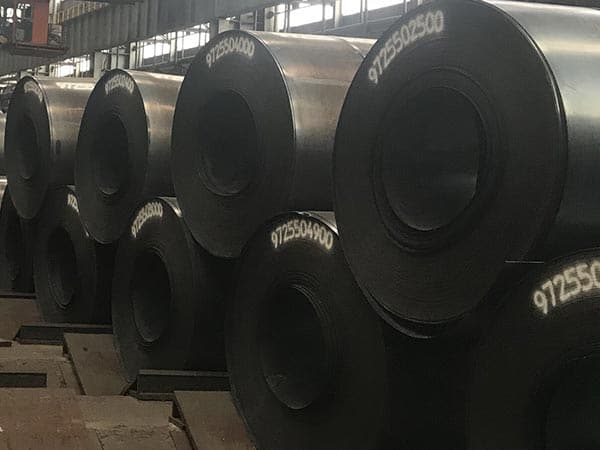
Current Market Dynamics of S900MC Cold Forming Steel
The global steel market has witnessed a sustained period of volatility, and S900MC cold forming steel sheet prices are currently reflecting a broader downward trend. This price softening is driven by a combination of factors, including increased production capacity from specialized mills and a cautious approach from heavy machinery manufacturers. Despite the downward pressure on prices, the demand for high-strength low-alloy (HSLA) steels remains robust due to the ongoing push for structural lightweighting and fuel efficiency in transport and construction sectors.
Purchasing managers and structural engineers must look beyond the immediate price fluctuations to understand the long-term value S900MC provides. While the spot price might be weak, the material's ability to reduce overall structural weight by up to 40% compared to conventional S355 grades means that the total cost of ownership often remains lower, even when the base material cost is higher than lower-grade alternatives.
Understanding S900MC: Technical Specification and Chemical Composition
S900MC is a thermomechanically rolled, high-strength steel designed specifically for cold forming. It is governed by the EN 10149-2 standard. The 'S' denotes structural steel, '900' indicates a minimum yield strength of 900 MPa, and 'MC' signifies its thermomechanically rolled (M) state and its suitability for cold forming (C).
The chemical composition of S900MC is meticulously controlled to ensure a fine-grained microstructure. By utilizing micro-alloying elements such as Niobium (Nb), Titanium (Ti), and Vanadium (V), manufacturers achieve extreme strength without sacrificing ductility. The carbon content is kept exceptionally low to enhance weldability and toughness.
| Element | Max % (Cast Analysis) |
|---|---|
| Carbon (C) | 0.20 |
| Manganese (Mn) | 2.20 |
| Silicon (Si) | 0.60 |
| Phosphorus (P) | 0.025 |
| Sulfur (S) | 0.015 |
| Aluminium (Al) | 0.015 |
Superior Mechanical Properties and Structural Integrity
The primary appeal of S900MC lies in its extraordinary yield strength. This property allows designers to use thinner sections for the same load-bearing capacity, which is critical for mobile equipment where every kilogram saved translates into increased payload or reduced energy consumption. However, achieving 900 MPa yield strength usually comes at the cost of elongation, but S900MC maintains a remarkable balance.
- Minimum Yield Strength: 900 MPa (for thicknesses ≤ 16mm)
- Tensile Strength: 930 - 1200 MPa
- Minimum Elongation (A5): 7% to 8% depending on thickness
- Impact Toughness: Often tested at -20°C or -40°C to ensure performance in arctic conditions
These mechanical properties are achieved through the Thermomechanical Controlled Processing (TMCP). Unlike traditional quenching and tempering, TMCP refines the grain size at the microscopic level, creating a barrier against crack propagation and enhancing the material's fatigue life, which is essential for components subjected to cyclic loading.
Cold Forming Performance and Fabrication Best Practices
Despite its high strength, S900MC is engineered for cold bending and folding. However, because the material is significantly stiffer than standard mild steel, fabricators must account for greater springback and higher forming forces. Using the correct punch radius and die width is paramount to prevent cracking at the bend line.
When working with S900MC, it is recommended to bend the material perpendicular to the rolling direction whenever possible. If bending parallel to the rolling direction is necessary, a larger internal radius must be used. The surface quality of S900MC is typically excellent, which reduces the need for post-forming grinding or surface preparation before painting or coating.
Weldability and Joining Technologies
One of the most significant advantages of S900MC over other high-strength steels is its low carbon equivalent (CEV). This makes it highly resistant to cold cracking in the heat-affected zone (HAZ). S900MC can be welded using all conventional methods, including MAG (Metal Active Gas), laser beam welding, and submerged arc welding.
To maintain the integrity of the 900 MPa yield strength, it is vital to control the heat input during welding. Excessive heat can lead to grain growth in the HAZ, which locally softens the steel and reduces the overall strength of the joint. Using high-quality filler metals that match or slightly under-match the strength of the base metal is a common strategy to ensure joint ductility.
Expanding Applications in Modern Engineering
The unique properties of S900MC have opened doors across various high-performance industries. As the price continues to be weak, more sectors are evaluating the transition from S700MC or even S355 to S900MC to gain a competitive edge in product performance.
- Lifting and Handling: Telescopic cranes, boom sections, and outriggers where weight reduction directly increases lifting height and capacity.
- Transportation: Lightweight truck chassis, trailers, and specialized heavy-haulage vehicles that need to maximize payload while meeting strict axle-load regulations.
- Agriculture and Forestry: High-stress components in harvesters, forwarders, and soil cultivation equipment that face abrasive environments and high impact loads.
- Automotive: Safety-critical structural reinforcements that require high energy absorption during impact events.
Environmental Adaptability and Sustainability
S900MC contributes significantly to environmental sustainability through the principle of "doing more with less." By reducing the mass of steel required for a structure, the carbon footprint associated with the production, transportation, and eventual recycling of the steel is lowered. Furthermore, in mobile applications, the reduction in vehicle tare weight leads to lower CO2 emissions throughout the machine's operational life.
In terms of environmental resistance, while S900MC is not a weathering steel like Corten, its fine-grained structure provides a consistent substrate for modern anti-corrosion coatings. When properly primed and painted, S900MC components exhibit excellent longevity even in harsh offshore or industrial environments. The stability of the material at low temperatures also ensures that it does not become brittle in cold climates, making it a preferred choice for infrastructure projects in northern latitudes.
Strategic Procurement in a Downward Price Trend
For businesses looking to capitalize on the downward price trend of S900MC, timing and volume are key. However, technical verification should never be sacrificed for cost. It is essential to source S900MC from reputable mills that provide full 3.1 or 3.2 material test certificates (MTCs) to verify that the chemical and mechanical properties meet the EN 10149-2 requirements.
As the industry moves toward more complex geometries and higher safety standards, the role of S900MC will only grow. Its combination of extreme strength, workable ductility, and excellent weldability makes it a cornerstone material for the next generation of high-efficiency mechanical engineering. Monitoring the market for price troughs presents an excellent opportunity for manufacturers to upgrade their product lines and offer superior performance to their end-users without a prohibitive increase in material costs.
Leave a message