
What are the main process characteristics of en 10149-2 s700mc equivalent
A comprehensive technical guide on the process characteristics of EN 10149-2 S700MC and its equivalents, covering metallurgy, welding, cold forming, and industrial applications.
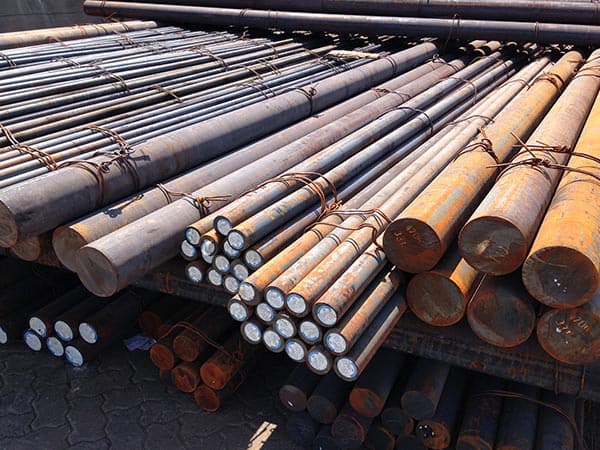
The Metallurgical Foundation of EN 10149-2 S700MC and Its Equivalents
EN 10149-2 S700MC is a high-strength, low-alloy (HSLA) steel produced through the thermomechanical rolling process (TMCP). This material is specifically designed for cold forming and offers a minimum yield strength of 700 MPa. The 'MC' designation indicates that the steel is thermomechanically rolled (M) and intended for cold forming (C). Understanding its equivalents, such as ASTM A1011 HSLAS Grade 100 or specialized proprietary grades like Domex 700, requires a deep dive into the synergy between chemical composition and grain refinement. Unlike traditional quenched and tempered steels, S700MC achieves its strength through a combination of fine-grained microstructure and micro-alloying elements like Niobium (Nb), Vanadium (V), and Titanium (Ti). These elements precipitate during the controlled cooling process, pinning grain boundaries and preventing grain growth, which results in a material that is both incredibly strong and remarkably ductile.
Chemical Composition and Carbon Equivalent (CEV)
The processability of S700MC is primarily governed by its lean chemical composition. A low carbon content (typically below 0.12%) is essential for maintaining excellent weldability and toughness. The integration of Manganese (up to 2.10%) provides solid solution strengthening, while the micro-alloying package ensures the refined grain structure. One of the most critical process characteristics is the Carbon Equivalent (CEV). For S700MC, the CEV usually ranges between 0.35 and 0.45, which is significantly lower than that of conventional structural steels with similar strength levels. This low CEV reduces the risk of cold cracking during welding and often eliminates the need for preheating, even in thicker sections.
| Element | Max Content (%) | Function in Processing |
|---|---|---|
| Carbon (C) | 0.12 | Ensures weldability and reduces brittleness. |
| Manganese (Mn) | 2.10 | Enhances strength and hardenability. |
| Silicon (Si) | 0.60 | Deoxidizer and solid solution strengthener. |
| Niobium (Nb) | 0.09 | Grain refinement and precipitation hardening. |
| Titanium (Ti) | 0.22 | Nitrogen binding and grain size control. |
Advanced Cold Forming and Bending Dynamics
The 'C' in S700MC highlights its superior cold-forming capabilities. Engineers often select this grade when they need to reduce the weight of a structure without sacrificing structural integrity. However, the high yield strength introduces specific challenges in bending operations. Springback is more pronounced in S700MC compared to standard S355 grades. To compensate for this, CNC bending machines must be programmed with higher over-bending angles. The minimum internal bend radius is a vital parameter; for S700MC, this is typically 1.0 to 1.5 times the plate thickness for longitudinal bending and slightly more for transverse bending. The fine-grained structure prevents the formation of 'orange peel' surface defects during tight radius bends, ensuring the aesthetic and structural quality of the final component.
Welding Characteristics and Heat Affected Zone (HAZ) Management
Welding S700MC and its equivalents requires a strategic approach to heat input. Because the strength of the steel is derived from the TMCP process rather than heat treatment, excessive heat input can lead to grain coarsening in the Heat Affected Zone (HAZ), which may result in a localized drop in hardness and yield strength. Metal Active Gas (MAG) welding is the most common method employed, using shielding gases like Argon-CO2 mixtures. It is recommended to use low heat input (typically between 0.5 and 1.5 kJ/mm) to preserve the refined microstructure. Filler metals should be selected to match the strength of the base material, such as ER110S-G or similar high-strength wires. Proper cooling rates are essential; if the cooling is too slow, the HAZ softens; if too fast, there is a risk of martensite formation, although the low carbon content makes the latter less likely.
Thermal Cutting and Edge Quality
S700MC is highly suitable for various thermal cutting processes, including laser, plasma, and oxy-fuel cutting. Laser cutting is particularly effective for this grade due to the material's consistent thickness and clean surface finish. The low impurity levels (low Phosphorus and Sulfur) ensure that the cut edges are smooth and free from dross. When using plasma cutting, the high energy density minimizes the width of the HAZ compared to oxy-fuel cutting. For manufacturers, this means that components can often move directly from the cutting table to the welding station without extensive edge grinding, significantly improving production throughput. It is important to note that the high strength of the material may cause residual stresses to redistribute after cutting, which should be accounted for in the nesting and sequence planning.
Global Equivalents and Standard Comparisons
Identifying the correct equivalent for EN 10149-2 S700MC is crucial for global procurement and engineering design. While the EN standard is the most prevalent in Europe, other regions use different designations that offer similar process characteristics. ASTM A1011 HSLAS-F Grade 100 in the United States provides a comparable yield strength, though its chemical requirements and testing protocols differ slightly. In Japan, JIS G3134 SPFH 780 is often considered a functional equivalent for automotive applications. The primary difference often lies in the toughness requirements at sub-zero temperatures. S700MC is often tested at -20°C or -40°C to ensure it maintains ductility in harsh environments, a feature that is not always mandatory in every equivalent standard.
- ASTM A1011/A1018 Grade 100: High strength with a focus on sheet applications.
- JIS G3134 SPFH 780: Optimized for automotive structural components.
- ISO 6930-2 PW700: International standard for high yield strength steels for cold forming.
- Proprietary Grades: Strenx 700MC, Domex 700, and Performance 700.
Industrial Applications and Weight Optimization
The adoption of S700MC is driven by the demand for lightweighting in the transport and lifting industries. Within the manufacturing of truck chassis, the use of S700MC allows for thinner sections compared to traditional S355 steel, reducing the tare weight of the vehicle and increasing its payload capacity. This directly translates to lower fuel consumption and reduced carbon emissions over the vehicle's lifecycle. In the crane and lifting sector, S700MC is used for telescopic booms where high strength-to-weight ratios are critical for reaching greater heights and lifting heavier loads. The material's excellent fatigue resistance also makes it ideal for components subjected to cyclic loading, such as agricultural machinery frames and earthmoving equipment. The ability to form complex shapes through cold bending while maintaining 700 MPa yield strength opens up design possibilities that were previously unattainable with lower-grade steels.
Environmental Adaptability and Long-term Durability
The environmental performance of S700MC is characterized by its resilience in diverse climates. The micro-alloying elements not only contribute to strength but also slightly improve the material's atmospheric corrosion resistance compared to plain carbon steels. When used in mobile machinery operating in arctic conditions, the low-temperature toughness of S700MC ensures that the structure remains ductile and resistant to brittle fracture. For applications requiring even higher corrosion protection, S700MC can be hot-dip galvanized or painted. However, during galvanizing, the 'silicon-killed' nature of the steel must be considered to control the thickness of the zinc coating and avoid the Sandelin effect, which can lead to brittle coatings. Proper surface preparation, such as shot blasting, is recommended to remove the thin TMCP oxide layer before coating.
Strategic Processing Insights for Manufacturers
Successfully integrating S700MC into a production line requires an understanding of its unique mechanical behavior. Tool wear in punching and shearing operations is higher than with standard steels, necessitating the use of hardened tool steels or carbide inserts. When shearing S700MC, the clearance between the blades must be precisely adjusted to prevent excessive burr formation. Furthermore, the material's high strength means that it stores more elastic energy during forming; safety protocols must be strictly followed to manage the potential for sudden springback. By optimizing the combination of laser cutting precision, controlled heat-input welding, and calculated cold forming, manufacturers can fully leverage the benefits of S700MC to create next-generation high-performance structures.
Leave a message