
What are the high quality 1.8974 steel for large truss truck boom brands in Singapore
Explore high-quality 1.8974 (S700MC) steel brands available in Singapore for large truss truck booms. This guide covers mechanical properties, welding, and top global suppliers.
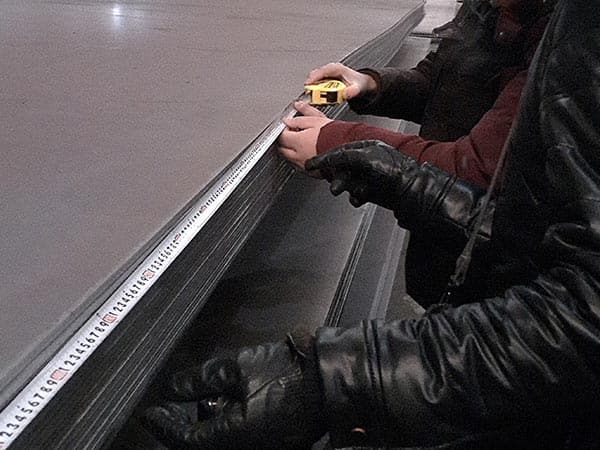
The Critical Role of 1.8974 Steel in Singapore's Heavy Lifting Sector
The skyline of Singapore is a testament to advanced engineering, where large truss truck booms play a pivotal role in constructing skyscrapers and port facilities. At the heart of these massive machines lies 1.8974 steel, a grade known internationally as S700MC. This thermomechanically rolled high-yield strength steel is specifically designed for cold forming, offering a unique balance of extreme strength and reduced weight. For Singaporean fleet owners and crane manufacturers, selecting the right brand of 1.8974 is not merely a matter of cost; it is a decision that impacts safety, payload capacity, and the longevity of the equipment in a demanding tropical environment. Using 1.8974 allows for the design of lighter booms that can reach higher and lift heavier loads without exceeding the axle load limits of Singapore's road regulations.
Technical Breakdown: Chemical Composition and Microstructure
The exceptional performance of 1.8974 steel is derived from its precise chemical composition and the Thermomechanical Control Process (TMCP) used during its production. Unlike traditional quenched and tempered steels, 1.8974 achieves its 700 MPa yield strength through grain refinement and micro-alloying. The addition of elements such as Niobium (Nb), Vanadium (V), and Titanium (Ti) facilitates the formation of fine carbides and nitrides, which pin grain boundaries and prevent grain growth during the rolling process. This results in a fine-grained ferritic-pearlitic or bainitic microstructure that provides both high strength and excellent low-temperature toughness. For engineers in Singapore, this microstructure ensures that the steel remains ductile even under the high stress of lifting operations in the humid, salt-laden air of the Tuas Port or Jurong Island.
| Chemical Element | Maximum Content (%) |
|---|---|
| Carbon (C) | 0.12 |
| Manganese (Mn) | 2.10 |
| Silicon (Si) | 0.60 |
| Phosphorus (P) | 0.025 |
| Sulfur (S) | 0.015 |
| Aluminum (Al) | 0.015 |
Mechanical Properties: The Foundation of Large Truss Booms
When evaluating 1.8974 steel for large truss truck booms, mechanical properties are the primary benchmark. The '700' in S700MC signifies a minimum yield strength of 700 MPa. This high strength-to-weight ratio is essential for truss structures where buckling resistance and tensile strength are critical. Large booms must withstand not only the weight of the load but also dynamic forces such as wind gusts and rapid movements. High-quality 1.8974 steel brands ensure that these properties are consistent across the entire plate or coil, reducing the risk of structural weak points. In Singapore, where safety standards are governed by the Workplace Safety and Health (WSH) Act, using certified 1.8974 steel is a prerequisite for any heavy-duty lifting equipment.
| Property | Value (Min/Range) |
|---|---|
| Yield Strength (ReH) | 700 MPa min. |
| Tensile Strength (Rm) | 750 - 950 MPa |
| Elongation (A5) | 12% - 13% min. |
| Impact Strength (-20°C) | 40 J (Standard dependent) |
Processing Performance: Welding and Cold Forming
Fabricating a truss boom involves extensive welding and bending. High-quality 1.8974 steel is prized for its low carbon equivalent (CEV), which significantly enhances weldability. Unlike older generations of high-strength steel, 1.8974 typically does not require preheating for standard thicknesses, which streamlines the manufacturing process and reduces energy costs. However, strict control of the heat input is necessary to maintain the fine-grained structure in the Heat Affected Zone (HAZ). Excessive heat can lead to grain coarsening and a localized loss of strength. Furthermore, the cold-forming capabilities of this steel allow for tight bending radii without cracking, enabling the creation of complex hexagonal or decagonal boom sections that offer superior torsional rigidity compared to simple rectangular designs.
Leading Brands of 1.8974 Steel Available in Singapore
The Singaporean market is served by several global steel giants, each offering their proprietary version of 1.8974 steel. These brands are recognized for their consistency, surface quality, and technical support. SSAB Strenx 700MC is perhaps the most prominent brand in the region. Known for its "Strenx Guarantees," it offers extremely tight thickness and flatness tolerances, which are crucial for the automated welding processes used in modern boom fabrication. Thyssenkrupp PERFORM 700 is another high-tier option, often selected for its excellent surface finish and consistent mechanical properties that simplify laser cutting and robotic welding. Voestalpine alform 700 x-tra stands out for its superior toughness at low temperatures, making it a preferred choice for equipment that might be exported from Singapore to colder climates. Baosteel BS700MC has also gained significant market share in Singapore, offering a cost-effective alternative that meets all EN 10149-2 requirements, making it suitable for high-volume production of smaller truck-mounted cranes.
- SSAB Strenx 700MC: High precision, excellent brand recognition, and extensive local stock.
- Thyssenkrupp PERFORM 700: Exceptional processing consistency and technical backup.
- Voestalpine alform 700: Optimized for extreme toughness and weldability.
- ArcelorMittal Amstrong 700MC: Wide range of dimensions and reliable supply chain.
- Baosteel BS700MC: Competitive pricing with robust performance for standard applications.
Environmental Adaptability in Singapore's Tropical Climate
Singapore's climate presents unique challenges for high-strength steel. The combination of high humidity (often exceeding 80%) and saline air from the surrounding sea accelerates the corrosion process. While 1.8974 is not a stainless steel, its clean chemistry and uniform surface allow for better adhesion of protective coatings. High-quality brands ensure that the steel is free from scale and surface defects that could harbor moisture and lead to pitting corrosion. For truss booms operating in the Port of Singapore, a robust multi-layer paint system or galvanization is often applied over the 1.8974 substrate. The steel's ability to maintain its mechanical integrity while supporting these heavy coating systems is vital for the long-term safety of the crane.
Industry Applications Beyond Truck Booms
While the primary use of 1.8974 in Singapore is for truck-mounted truss booms and telescopic cranes, its application extends to other heavy-duty sectors. In the logistics industry, it is used to manufacture lightweight trailer chassis that can carry heavier containers while staying within road weight limits. In the construction sector, high-strength steel components are increasingly used in modular building systems and heavy-duty shoring. The offshore industry also utilizes S700MC for secondary structures where weight saving is critical but the extreme corrosion resistance of stainless steel is not required. This versatility makes 1.8974 a staple in the inventory of Singaporean steel stockholders.
Optimizing Fabrication: Best Practices for Singaporean Workshops
To maximize the benefits of high-quality 1.8974 steel, local workshops must adhere to specific fabrication protocols. Laser cutting is the preferred method for shaping boom sections, as it minimizes the heat-affected zone compared to plasma or oxy-fuel cutting. When welding, using low-hydrogen consumables is mandatory to prevent cold cracking. Furthermore, because 1.8974 is a thermomechanically rolled steel, it should never be heat-treated above 580°C, as this would destroy the grain refinement achieved during the rolling process and significantly reduce the yield strength. Local fabricators often work closely with brand representatives from SSAB or Thyssenkrupp to calibrate their welding parameters (T8/5 times) to ensure the structural integrity of the final product.
The Future of High-Strength Steel in Singapore
As the demand for taller buildings and more efficient logistics grows, the shift toward even higher grades like S900MC and S960MC is beginning. However, 1.8974 (S700MC) remains the "sweet spot" for many applications due to its balance of cost, ease of fabrication, and extreme reliability. The ongoing digital transformation in Singapore's manufacturing sector, including the adoption of Industry 4.0 and robotic welding, further favors high-quality brands of 1.8974 that offer the consistency required for automated systems. By choosing reputable brands and following strict engineering standards, Singaporean companies continue to lead the way in the safe and efficient use of high-strength steel for the world's most demanding lifting tasks.
Leave a message