
What is the S550MC steel for car parts sheet forging
Explore the comprehensive technical properties of S550MC steel, a high-strength low-alloy (HSLA) material essential for automotive sheet forging, structural components, and lightweighting strategies.
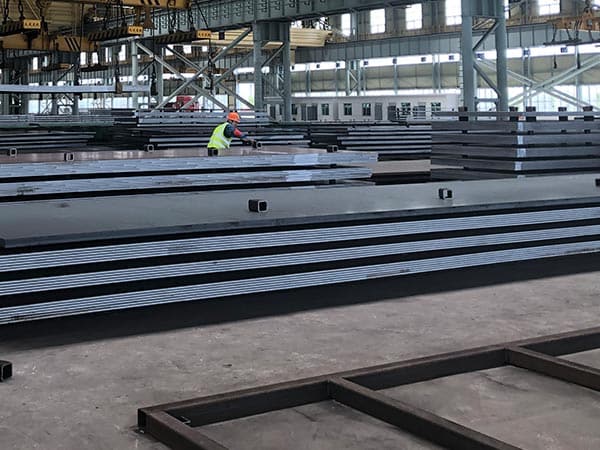
The Core Identity of S550MC High-Strength Steel
S550MC is a thermomechanically rolled, high-yield-strength steel designed specifically for cold forming and complex sheet forging processes. Governed by the EN 10149-2 European standard, this material belongs to the family of high-strength low-alloy (HSLA) steels. The 'S' denotes structural steel, '550' indicates a minimum yield strength of 550 MPa, and 'MC' signifies that the steel is thermomechanically rolled (M) and suitable for cold forming (C). In the modern automotive industry, where the dual demands of safety and weight reduction are paramount, S550MC serves as a critical bridge between traditional mild steels and ultra-high-strength martensitic grades.
The manufacturing process involves a controlled rolling sequence where the temperature and deformation are precisely managed to produce a fine-grained microstructure. Unlike traditional normalized steels, the grain refinement in S550MC is achieved through micro-alloying elements such as Niobium (Nb), Titanium (Ti), and Vanadium (V). These elements form carbonitrides that pin grain boundaries during the rolling process, preventing grain growth and resulting in a material that is both exceptionally strong and remarkably ductile.
Chemical Composition and Micro-Alloying Precision
The performance of S550MC in sheet forging and stamping operations is a direct result of its chemical purity and precise alloying. To maintain excellent weldability and toughness, the carbon content is kept extremely low, typically below 0.12%. This low carbon footprint is essential for preventing the formation of brittle martensite in the heat-affected zones (HAZ) during welding processes.
| Element | Maximum Content (%) |
|---|---|
| Carbon (C) | 0.12 |
| Manganese (Mn) | 1.80 |
| Silicon (Si) | 0.50 |
| Phosphorus (P) | 0.025 |
| Sulfur (S) | 0.015 |
| Aluminium (Al) | 0.015 (min) |
| Nb + Ti + V | 0.22 |
The inclusion of Manganese enhances hardenability and solid solution strengthening, while the combined addition of Niobium, Titanium, and Vanadium (not exceeding 0.22% in total) provides the precipitation hardening necessary to reach the 550 MPa yield threshold. This chemical balance ensures that the steel remains "clean," reducing the risk of internal inclusions that could lead to cracking during severe deformation in sheet forging.
Mechanical Properties and Performance Metrics
For automotive engineers, the mechanical profile of S550MC is its most compelling feature. It offers a high strength-to-weight ratio, allowing for thinner gauges to be used without compromising the structural integrity of the vehicle. This is a cornerstone of automotive lightweighting, which directly correlates to improved fuel efficiency and reduced CO2 emissions.
- Yield Strength (ReH): Minimum 550 MPa.
- Tensile Strength (Rm): Ranges between 600 and 760 MPa.
- Elongation (A80): Typically 12% to 14% depending on thickness, ensuring the material can withstand significant stretching.
- Bending Radius: Excellent cold-bending properties, with a minimum recommended internal bending radius of 1.0 to 1.5 times the material thickness (180° bend).
These properties make S550MC far superior to standard S355MC grades when the application requires higher load-bearing capacity. The high yield strength ensures that car parts maintain their shape under stress, while the tensile strength provides a safety buffer against catastrophic failure during collisions.
The Role of S550MC in Sheet Forging and Cold Forming
Sheet forging, often referred to as precision stamping or heavy-duty cold forming, requires a material that can flow into complex die geometries without thinning excessively or tearing. S550MC is engineered for this exact purpose. Its fine-grained structure provides a uniform deformation response, which is critical for maintaining dimensional tolerances in parts like longitudinal beams, cross-members, and chassis reinforcements.
One of the challenges in forging high-strength sheets is "springback"—the tendency of the metal to return to its original shape after the forming load is removed. Because S550MC has a high yield point, the elastic recovery is more pronounced than in softer steels. However, its consistent mechanical properties allow tool designers to accurately predict and compensate for this springback in the die design. The material's high work-hardening rate also means that the finished part often exhibits even higher strength in the formed areas than the base material, adding an extra layer of durability to the component.
Welding and Joining Characteristics
Automotive assembly relies heavily on robotic spot welding, laser welding, and MIG/MAG welding. S550MC excels in these environments due to its low Carbon Equivalent (CEV). Unlike traditional high-strength steels that might require pre-heating or post-weld heat treatment to prevent cracking, S550MC can be welded using standard parameters.
The fine grain structure is relatively stable during the rapid heating and cooling cycles of welding. While there is a slight softening in the heat-affected zone, the overall structural integrity of the welded joint remains high. This makes it an ideal candidate for complex assemblies where multiple sheet-forged components are joined to form the vehicle's safety cage or subframe.
Fatigue Resistance and Environmental Adaptability
Car parts are subjected to cyclic loading throughout their lifespan. S550MC demonstrates excellent fatigue resistance, a property derived from its homogeneous microstructure and lack of large inclusions. In components like suspension arms or engine cradles, where vibration and repetitive stress are constant, S550MC provides the endurance needed to prevent fatigue-induced cracking.
Regarding environmental adaptability, S550MC is typically supplied in a pickled and oiled condition to protect against oxidation during transport and storage. While it is not a corrosion-resistant steel like stainless steel, its surface is highly receptive to modern automotive coating systems, including E-coating (electrophoretic painting) and hot-dip galvanizing. The low silicon content is particularly beneficial for galvanizing, as it helps control the growth of the zinc-iron alloy layer, resulting in a smooth, adherent finish.
Applications Across the Automotive Sector
The versatility of S550MC has led to its widespread adoption across various vehicle segments, from passenger cars to heavy-duty trucks. Its primary utility lies in structural components that require high energy absorption and load-bearing capacity.
- Chassis Components: Used for side rails and cross-members in truck frames where high stiffness is required to support heavy loads.
- Safety Systems: Integrated into bumper beams and door impact bars to absorb kinetic energy during a crash.
- Seat Structures: Providing the necessary strength for seat frames and adjustment mechanisms while keeping the weight low.
- Suspension Parts: Formed into control arms and brackets that must withstand both static weight and dynamic road forces.
By replacing thicker sections of lower-grade steel with thinner S550MC sheets, manufacturers can achieve weight savings of up to 20-30% in specific components. This reduction is vital for Electric Vehicles (EVs), where every kilogram saved translates into extended battery range.
Processing Recommendations for Manufacturers
To maximize the potential of S550MC in sheet forging, certain processing guidelines should be followed. When cutting the material, laser or plasma cutting is preferred over mechanical shearing to minimize edge hardening, which can lead to edge cracking during subsequent forming. If mechanical shearing is used, ensuring sharp blades and proper clearances is essential.
During the forging or stamping process, the use of high-performance lubricants is recommended to reduce friction and heat buildup. Given the high strength of the material, the press capacity must be sufficient to handle the increased forming loads compared to conventional mild steels. Proper maintenance of the dies is also crucial, as the higher strength of S550MC can lead to increased tool wear over long production runs.
Future Trends and Material Evolution
As the automotive industry moves toward even more stringent safety and environmental standards, the role of HSLA steels like S550MC continues to evolve. We are seeing a trend toward "Advanced High Strength Steels" (AHSS), but S550MC remains a staple due to its excellent balance of cost, formability, and weldability. It offers a pragmatic solution for high-volume production where exotic materials might be cost-prohibitive.
The ongoing refinement of thermomechanical rolling technology promises even tighter control over grain size and phase distribution. This will likely lead to variations of S550MC with even better hole-expansion ratios and edge-stretchability, further expanding its utility in the most demanding sheet forging applications. For engineers and purchasers, understanding the nuanced properties of S550MC is not just about material selection; it is about optimizing the entire lifecycle of the automotive component, from the initial forge to the final assembly on the production line.
Leave a message