
What is the B750L plate zero cut hardness?
Detailed technical analysis of B750L steel plate hardness, including chemical composition, mechanical properties, and industrial processing performance for automotive and heavy machinery applications.
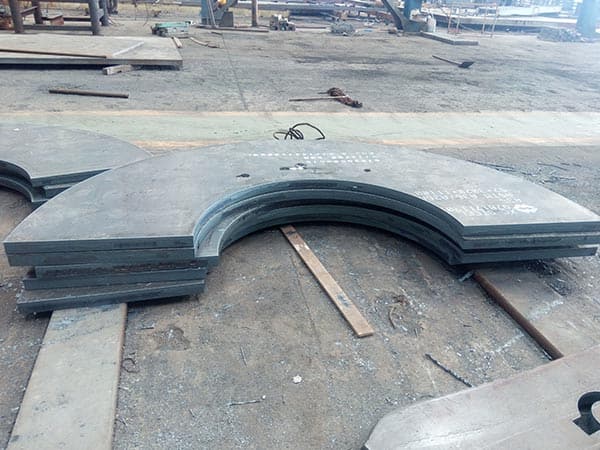
Understanding B750L Steel Grade and its Hardness Profile
B750L is a high-strength low-alloy (HSLA) structural steel primarily utilized in the automotive industry, specifically for components requiring an exceptional strength-to-weight ratio. The 'zero cut' hardness—referring to the material's hardness in its as-delivered or base state before secondary thermal processing—is a critical metric for engineers. For B750L, the typical Brinell hardness (HBW) ranges between 240 and 285 HBW. This hardness level is directly correlated with its high yield strength, which is standardized at a minimum of 750 MPa.
The hardness of B750L is not merely a byproduct of carbon content but is the result of sophisticated Thermo-Mechanical Controlled Processing (TMCP) and micro-alloying. Unlike traditional carbon steels, B750L achieves its hardness through grain refinement and precipitation hardening, ensuring that the material remains ductile enough for complex forming operations while maintaining a hard, wear-resistant surface for structural integrity.
Chemical Composition and Its Influence on Material Hardness
The hardness of B750L is meticulously controlled through a balanced chemical composition. The use of micro-alloying elements such as Niobium (Nb), Vanadium (V), and Titanium (Ti) plays a pivotal role in defining the final hardness profile. These elements form fine carbides and nitrides during the cooling process, which pin grain boundaries and prevent grain growth.
- Carbon (C): Kept at a low level (typically ≤0.12%) to ensure excellent weldability and prevent brittleness.
- Manganese (Mn): Increases hardenability and provides solid solution strengthening, contributing to the base hardness.
- Niobium & Titanium: These elements are the primary drivers of precipitation hardening, significantly raising the yield strength and hardness without sacrificing toughness.
- Silicon (Si): Acts as a deoxidizer and contributes to the strength of the ferrite matrix.
| Element | Carbon (C) | Manganese (Mn) | Silicon (Si) | Phosphorus (P) | Sulfur (S) | Nb+V+Ti |
|---|---|---|---|---|---|---|
| Max Content (%) | 0.12 | 2.00 | 0.50 | 0.025 | 0.015 | 0.22 |
Mechanical Properties and Hardness Correlation
The relationship between tensile strength and hardness in B750L is relatively linear. Given that the tensile strength typically falls between 820 and 980 MPa, the hardness values are consistently high. This makes the material ideal for load-bearing structures that must withstand high stress without permanent deformation.
| Property | Yield Strength (MPa) | Tensile Strength (MPa) | Elongation (%) | Hardness (HBW) |
|---|---|---|---|---|
| B750L Specification | ≥ 750 | 820 - 980 | ≥ 12 | 240 - 285 |
When considering 'zero cut' services—where plates are cut to specific dimensions for retail or immediate assembly—the hardness at the cut edge can vary depending on the method used. Laser cutting minimizes the Heat Affected Zone (HAZ), preserving the base hardness of 240-285 HBW across the majority of the section. In contrast, flame cutting may cause localized hardening at the edge due to rapid cooling, potentially reaching values above 350 HV (Vickers).
Processing Performance: Welding and Cold Forming
B750L is designed for cold forming, which is a rare trait for steel with such high hardness. The material's fine-grained structure allows for tight bending radii, although engineers must account for springback, which is more pronounced in B750L than in lower grades like B510L or B600L. The hardness ensures that the outer radius of a bend maintains its structural integrity without thinning excessively.
Welding B750L requires attention to the heat input. Because the hardness is derived from TMCP and micro-alloying, excessive heat can lead to 'softening' in the Heat Affected Zone, where the hardness might drop below the base material's 240 HBW. Using low-hydrogen welding consumables and controlling interpass temperatures is essential to maintain the hardness and strength of the welded joint.
Environmental Adaptability and Fatigue Resistance
Beyond static hardness, B750L exhibits remarkable environmental adaptability. It is often tested for low-temperature impact toughness at -20°C or -40°C, ensuring that the material does not become brittle in cold climates. This is particularly important for heavy-duty trucks and trailers operating in diverse geographical regions. The high hardness also contributes to superior fatigue resistance, as the material can withstand millions of cyclic loads without developing micro-cracks, a common failure mode in chassis frames.
Industrial Applications of B750L High-Strength Plate
The unique hardness and strength profile of B750L make it the preferred choice for several high-demand sectors. In the commercial vehicle industry, it is used for longitudinal beams, cross members, and bumper reinforcements. By using B750L, manufacturers can reduce the thickness of the steel plate without compromising safety, leading to significant vehicle weight reduction and improved fuel efficiency.
In the construction machinery sector, B750L is utilized in crane booms, excavator components, and support structures. The material's hardness provides a degree of natural wear resistance against abrasive environments, while its high yield strength allows for the design of taller and lighter lifting equipment. The 'zero cut' availability allows smaller fabrication shops to access this high-grade material for custom brackets and specialized structural reinforcements.
Technical Considerations for Procurement and Storage
When sourcing B750L, it is vital to verify the Mill Test Certificate (MTC) for the specific hardness values of the batch. Storage conditions should prevent surface oxidation, as rust can interfere with the precision of hardness testing and subsequent welding processes. While B750L has a high base hardness, it is not a 'wear plate' like AR400 or AR500; rather, it is a structural steel with optimized hardness for load distribution and forming. For applications involving extreme abrasion, supplementary surface treatments or higher-grade wear-resistant steels should be considered.
Leave a message