
What are the wide applications of s460 automotive steel coil welding
Discover the extensive applications and technical advantages of S460 automotive steel coil welding. This guide covers mechanical properties, welding techniques, and industry-specific uses for high-strength steel.
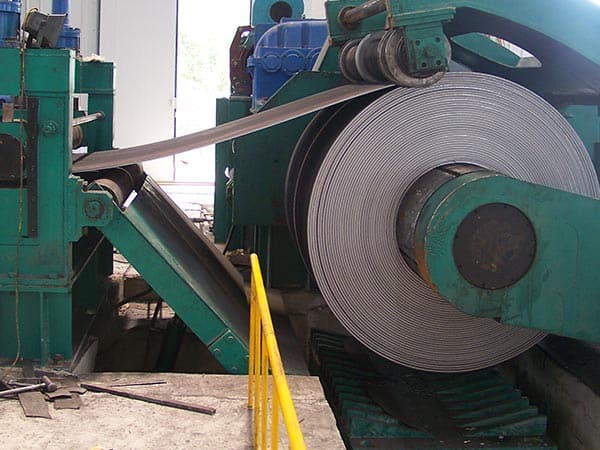
The Technical Foundation of S460 Automotive Steel
nS460 automotive steel, specifically the S460MC grade defined under the EN 10149-2 standard, is a thermomechanically rolled high-strength low-alloy (HSLA) steel designed for cold forming. The '460' designation refers to its minimum yield strength of 460 MPa, a characteristic that places it in a strategic position between standard structural steels and ultra-high-strength grades. The widespread adoption of S460 automotive steel coil welding in modern manufacturing is driven by the industry's push for lightweighting without compromising structural integrity. By utilizing a fine-grain microstructure achieved through controlled rolling and cooling processes, S460 offers a unique combination of high load-bearing capacity and excellent ductility.
nThe chemical composition of S460 is meticulously balanced to ensure that strength does not come at the cost of processability. Typically, it features low carbon content (often below 0.12%) and is micro-alloyed with elements such as Niobium (Nb), Vanadium (V), and Titanium (Ti). These elements facilitate grain refinement and precipitation hardening. This metallurgical profile is critical for welding, as it keeps the carbon equivalent (Ceq) low, significantly reducing the risk of cold cracking in the heat-affected zone (HAZ). Manufacturers favor S460 coils because they provide consistent mechanical properties across the entire length of the coil, ensuring uniformity in automated welding lines.
n| Mechanical Property | nValue (S460MC) | nUnit | n
|---|---|---|
| Yield Strength (ReH) | nmin. 460 | nMPa | n
| Tensile Strength (Rm) | n520 - 670 | nMPa | n
| Elongation (A80mm) | nmin. 14 | n% | n
| Bending Radius (90°) | n0.5t - 1.0t | n- | n
Welding Process Performance and Optimization
nThe success of S460 automotive steel coil welding depends heavily on the selection of the appropriate welding process and parameters. Due to its low alloy content, S460 exhibits excellent weldability across various methods, including Metal Active Gas (MAG) welding, Laser Beam Welding (LBW), and Resistance Spot Welding (RSW). In MAG welding, which is the workhorse of the automotive industry, the use of shielding gases like Argon-CO2 mixtures allows for stable arc transitions and minimal spatter. The low carbon equivalent of S460 means that preheating is generally unnecessary for standard thicknesses, which streamlines production cycles and reduces energy consumption.
nHowever, managing the heat input is vital. While S460 is robust, excessive heat input can lead to grain growth in the HAZ, potentially softening the material and reducing its local yield strength. Advanced pulse-MAG welding techniques are often employed to control the thermal cycle precisely. Laser welding is another area where S460 excels; its high thermal conductivity and consistent surface quality in coil form allow for deep penetration welds with narrow fusion zones. This is particularly beneficial for creating tailored blanks where S460 is joined with other steel grades to optimize weight and crash performance. The compatibility of S460 with automated robotic welding systems ensures high repeatability and joint efficiency, reaching values close to 1.0 relative to the base metal strength.
n- n
- Low Cold Cracking Sensitivity: The reduced carbon content ensures a safe welding environment even in high-humidity conditions. n
- Stable Microstructure: The fine-grain structure remains relatively stable under standard welding thermal cycles. n
- Filler Metal Compatibility: Standard ER70S-6 or higher strength wires like ER80S-G are perfectly suited for S460 joints. n
- Post-Weld Integrity: S460 joints maintain high fatigue resistance, essential for components subjected to cyclic loading. n
Structural Applications in Heavy-Duty Vehicles
nOne of the most prominent applications of S460 automotive steel coil welding is in the manufacturing of truck chassis and longitudinal beams. Heavy-duty vehicles require frames that can withstand immense static and dynamic loads while remaining light enough to maximize payload capacity. S460 provides the ideal strength-to-weight ratio for these components. By replacing traditional S355 steel with S460, engineers can reduce the thickness of the frame rails by 10-15% without losing structural stiffness. The welding of these long, continuous sections requires the stability that only high-quality coils can provide, ensuring that the longitudinal welds are free from defects over lengths exceeding 10 meters.
nIn addition to main frames, S460 is extensively used in the production of cross members, suspension brackets, and fifth-wheel mounting plates. These parts often involve complex geometries and multiple weld seams. The high formability of S460 allows it to be cold-pressed into intricate shapes before being welded into the assembly. The synergy between its bending performance and weldability ensures that the transition from a flat coil to a complex welded structural module is seamless. This reliability is why S460 has become a standard for European and Asian commercial vehicle manufacturers looking to meet stringent fuel efficiency and emission standards through weight reduction.
nSafety Components and Passenger Car Engineering
nWhile heavy trucks are a major consumer, the passenger car segment utilizes S460 automotive steel coil welding for critical safety and structural reinforcements. B-pillars, door impact beams, and bumper reinforcements often utilize S460 or its variants. In these applications, the steel must absorb significant energy during a collision. The welding of S460 in safety cages is designed to ensure that the joints do not fail before the base metal reaches its plastic deformation limit. This 'toughness' at the weld interface is a key safety metric.
nThe rise of Electric Vehicles (EVs) has further expanded the use of S460. Battery enclosures and subframes for EVs require materials that are strong enough to protect the battery pack from road debris and crashes, yet light enough to offset the weight of the batteries. S460 coils are often slit into narrow strips and fed into continuous roll-forming lines, where they are shaped and laser-welded into high-stiffness tubes or profiles. These welded profiles form the backbone of modern EV platforms, providing a rigid structure that enhances vehicle handling and occupant protection.
nEnvironmental Adaptability and Longevity
nS460 automotive steel is not only valued for its mechanical strength but also for its performance in diverse environmental conditions. The fine-grained structure contributes to improved atmospheric corrosion resistance compared to traditional hot-rolled steels. When S460 automotive steel coil welding is performed correctly, the resulting joints exhibit excellent low-temperature toughness. This is a critical factor for vehicles operating in Arctic or high-altitude environments, where brittle fracture is a major concern. S460 maintains its impact strength at temperatures as low as -20°C or even -40°C, depending on the specific sub-grade (like S460MC vs S460QL).
nFurthermore, the surface quality of S460 coils is optimized for post-welding treatments such as galvanizing or E-coating. The low silicon content in many S460 specifications prevents the 'Sandelin effect' during hot-dip galvanizing, ensuring a uniform and aesthetic protective coating. This synergy between metallurgical properties and surface chemistry extends the service life of welded components, reducing maintenance costs for fleet operators and improving the overall sustainability of the vehicle's lifecycle. The ability to recycle S460 without losing its alloying benefits also aligns with the circular economy goals of the global automotive industry.
nAdvanced Manufacturing and Future Trends
nThe future of S460 automotive steel coil welding lies in the integration of Industry 4.0 technologies. Real-time monitoring of welding parameters—such as current, voltage, and travel speed—allows for the creation of a 'digital twin' for every weld seam. Because S460 has a predictable response to thermal inputs, AI-driven systems can optimize the welding path to minimize distortion. This is particularly important for large-scale coil processing where thermal expansion can affect dimensional tolerances. The trend toward 'Green Steel' is also impacting S460 production, with hydrogen-based reduction processes aiming to lower the carbon footprint of the base material while maintaining the high-performance characteristics that the automotive sector demands.
nAs vehicle designs become more modular, the role of S460 as a versatile 'workhorse' steel continues to grow. Its ability to be joined with higher-strength grades (like S700MC) or even aluminum through specialized joining techniques makes it a cornerstone of multi-material vehicle architectures. The wide applications of S460 automotive steel coil welding are a testament to its balanced engineering profile, offering a reliable, cost-effective, and high-performance solution for the challenges of modern transportation and structural engineering.
"}} ```
Leave a message