
How to improve the pass rate of Z-directed S500MC farm machinery steel
Explore technical strategies to enhance the Z-direction pass rate of S500MC high-strength steel for agricultural machinery, focusing on inclusion control, refining processes, and structural integrity.
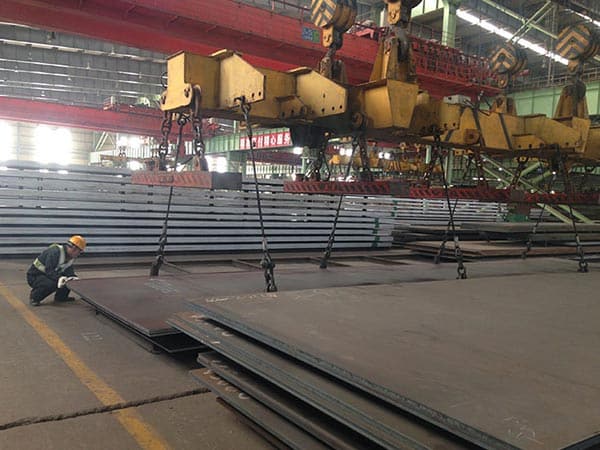
Understanding the Criticality of Z-Direction Properties in S500MC Steel
Modern agricultural machinery, such as large-scale harvesters, deep-plowing tractors, and heavy-duty seeders, operates under extreme conditions. These machines are subjected to complex multi-axial stresses, particularly at the welded joints of heavy structural frames. S500MC high-strength low-alloy (HSLA) steel is a preferred material due to its excellent strength-to-weight ratio and cold-forming capabilities. However, when structural designs involve thick plates and heavy welding, the risk of lamellar tearing becomes a significant concern. This is where Z-direction properties (through-thickness ductility) become indispensable.
The Z-direction property refers to the steel's ability to resist tearing in the direction perpendicular to its surface. For S500MC, achieving a high pass rate in Z-direction testing (such as Z15, Z25, or Z35) requires more than just meeting standard yield and tensile requirements. It demands a rigorous control of the internal micro-cleanliness and the morphology of non-metallic inclusions. Improving the pass rate ensures that the farm machinery can withstand the cyclic loading and impact forces encountered in rugged terrain without catastrophic structural failure.
Metallurgical Factors Affecting Z-Direction Pass Rates
The primary culprit behind failed Z-direction tests in S500MC steel is the presence of elongated non-metallic inclusions, specifically Manganese Sulfides (MnS) and alumina clusters. During the hot rolling process, these inclusions flatten into stringers parallel to the rolling surface. When the steel is subjected to tensile stress in the thickness direction (Z-direction), these stringers act as internal stress concentrators, leading to delamination and low reduction-of-area values.
- Sulfur Content: Sulfur is the most critical element. To achieve a Z25 or Z35 rating, the sulfur content must typically be reduced to ultra-low levels, often below 0.005% or even 0.002%.
- Oxygen and Phosphorus: Total oxygen content directly influences the volume of oxide inclusions. High phosphorus levels can lead to segregation, which embrittles the grain boundaries and reduces through-thickness toughness.
- Inclusion Morphology: Even with low sulfur, the shape of the remaining sulfides matters. Spherical inclusions are far less harmful than elongated ones.
| Property Type | Standard S500MC Requirement | Z-Direction Enhanced S500MC |
|---|---|---|
| Yield Strength (MPa) | ≥ 500 | ≥ 500 |
| Tensile Strength (MPa) | 550 - 700 | 550 - 720 |
| Sulfur Content (%) | ≤ 0.015 | ≤ 0.003 |
| Reduction of Area (Z-dir) | Not Specified | ≥ 15% (Z15) / ≥ 25% (Z25) |
| Inclusion Control | Standard | Calcium Treated / Spheroidized |
Advanced Refining Strategies for Enhanced Ductility
To improve the pass rate of Z-directed S500MC, the steelmaking process must transition from basic oxygen furnace (BOF) or electric arc furnace (EAF) melting to advanced secondary refining. The goal is ultra-clean steel production. Using LF (Ladle Furnace) + RH (Ruhrstahl-Heraeus) vacuum degassing is essential for removing dissolved gases and promoting the flotation of inclusions.
Calcium Treatment (Ca-treatment) is a pivotal technique. By injecting calcium-silicon wire into the molten steel, the chemistry of the inclusions is modified. Hard, brittle alumina and elongated MnS are converted into liquid calcium aluminates and complex oxy-sulfides that remain spherical during subsequent hot rolling. These spherical particles do not create the "planes of weakness" that lead to lamellar tearing, thereby significantly boosting the Z-direction reduction of area (RA%) values.
Optimizing the Thermomechanical Controlled Processing (TMCP)
S500MC is produced via TMCP, which relies on precise temperature and deformation control to achieve a fine-grained ferrite-pearlite or bainitic microstructure. While TMCP is excellent for strength, improper rolling parameters can exacerbate anisotropy. To improve Z-direction pass rates, the rolling schedule must balance grain refinement with inclusion distribution.
Controlling the finish rolling temperature and the cooling rate is vital. Rapid cooling (Accelerated Cooling - AcC) after the final rolling pass helps in achieving a more uniform microstructure across the thickness of the plate. This uniformity reduces the localized strain gradients that can trigger internal cracking during Z-direction tensile testing. Furthermore, minimizing the reduction ratio in the final passes can prevent the excessive elongation of any residual inclusions.
Environmental Adaptability and Industry Applications
Farm machinery operates in environments ranging from humid tropical fields to freezing northern plains. S500MC with high Z-direction performance offers superior low-temperature impact toughness and resistance to environmental stress corrosion. In the context of agricultural engineering, this steel is used for:
- Chassis Frames: Where heavy engine mounts and hydraulic cylinders exert concentrated loads.
- Boom Arms and Linkages: Components that experience high torsion and out-of-plane bending.
- Soil Preparation Tools: Parts that must resist the impact of rocks and compacted soil without internal delamination.
By ensuring a high Z-direction pass rate, manufacturers can reduce the safety factor required in designs, leading to lighter, more fuel-efficient machinery without compromising structural integrity. This is particularly relevant for the global shift toward precision farming and larger, more complex equipment.
Quality Control and Ultrasonic Inspection Protocols
A robust quality assurance system is the final step in ensuring a high pass rate. Ultrasonic Testing (UT) should be performed according to standards like EN 10160 or ASTM A578. For Z-directed S500MC, a high-sensitivity scan is necessary to detect even small lamellar discontinuities before the material reaches the fabrication stage.
Implementing a statistical process control (SPC) approach to Z-direction testing allows mills to identify trends in metallurgical quality. If the reduction of area values begins to drift toward the lower limit, immediate adjustments to the calcium treatment or vacuum degassing duration can be made. This proactive management of metallurgical health is what separates premium S500MC suppliers from standard producers, ensuring that every plate delivered to the agricultural equipment manufacturer meets the highest standards of through-thickness reliability.
Leave a message