
What grade is equal to the S460MC steel for earth moving machines
Explore S460MC steel equivalents like Q460MC and ASTM Grade 65. Learn about its mechanical properties, weldability, and performance in earth moving machines.
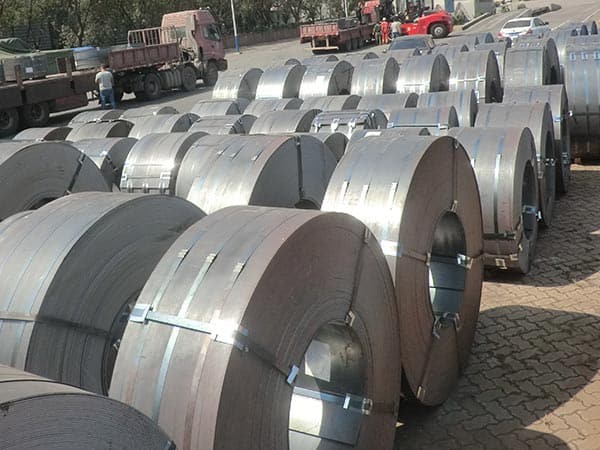
Defining S460MC: The Backbone of Heavy-Duty Machinery
S460MC is a high-strength, thermomechanically rolled steel designed specifically for cold forming. Governed by the EN 10149-2 standard, this grade is a staple in the production of earth moving machines, including excavators, bulldozers, and heavy-duty dump trucks. The "S" stands for structural steel, "460" indicates a minimum yield strength of 460 MPa, and "MC" signifies that the material is thermomechanically rolled (M) and intended for cold forming (C). This specific processing route results in a fine-grained microstructure that balances extreme strength with exceptional ductility.
For manufacturers of earth moving equipment, the choice of S460MC is driven by the need to reduce vehicle weight without compromising structural integrity. By utilizing higher strength steel, engineers can specify thinner plates, which directly translates to increased payload capacity and improved fuel efficiency. Understanding the global equivalents of S460MC is critical for supply chain resilience and international manufacturing standards.
Global Equivalents: Mapping S460MC to International Standards
Identifying the correct equivalent for S460MC requires a deep dive into chemical compositions and mechanical requirements. While different national standards may not be identical, several grades offer comparable performance characteristics for earth moving applications.
| Standard | Equivalent Grade | Comparison Notes |
|---|---|---|
| Chinese GB/T 1591 | Q460MC | The most direct equivalent, sharing nearly identical yield and tensile requirements. |
| ASTM (USA) | A1011 HSLAS Grade 65 / A1018 Grade 70 | ASTM grades focus on high-strength low-alloy (HSLA) properties; Grade 70 is often preferred for thicker sections. |
| JIS (Japan) | SPFC 590 | Commonly used in automotive and heavy machinery; yield strength is slightly higher than 460 MPa in some batches. |
| ISO 6930 | HSS 460 | International standard for high yield strength steels for cold forming. |
The Q460MC (Chinese standard) is widely recognized as the closest match. It mirrors the thermomechanical rolling process and the low-carbon micro-alloyed chemistry of S460MC. For projects based in North America, ASTM A1011 HSLAS Grade 65 is frequently substituted, although engineers must verify that the elongation and impact toughness meet the specific demands of dynamic loading found in earth moving operations.
Chemical Composition and Micro-Alloying Strategy
The performance of S460MC and its equivalents stems from a precise chemical balance. Unlike traditional structural steels that rely on high carbon content for strength, S460MC utilizes micro-alloying elements such as Niobium (Nb), Vanadium (V), and Titanium (Ti). These elements promote grain refinement during the thermomechanical rolling process.
- Carbon (C): Kept low (usually ≤ 0.12%) to ensure excellent weldability and prevent brittleness.
- Manganese (Mn): Typically around 1.60%, providing solid solution strengthening.
- Silicon (Si): Controlled to maintain surface quality during galvanizing or painting.
- Micro-alloys (Nb, V, Ti): These form fine precipitates that pin grain boundaries, preventing grain growth and enhancing both strength and toughness.
This low carbon equivalent (CEV) is a significant advantage for earth moving machines. These machines are subject to massive vibrations and shock loads; a fine-grained structure prevents crack propagation more effectively than a coarse-grained structure found in normalized steels.
Mechanical Properties: Strength Meets Ductility
The mechanical profile of S460MC is optimized for components that must be bent or folded into complex shapes. Earth moving machine frames often require intricate geometries to house hydraulic systems and engines. The following table outlines the core mechanical requirements according to EN 10149-2.
| Property | Value (Thickness ≤ 16mm) |
|---|---|
| Yield Strength (ReH) | Min 460 MPa |
| Tensile Strength (Rm) | 520 - 670 MPa |
| Elongation (A80mm) | Min 14% (varies by thickness) |
| Bending Radius (180°) | 0.8t to 1.5t (depending on thickness) |
One of the standout features of S460MC is its impact toughness. While the base EN 10149-2 standard does not always mandate impact testing unless specified, many manufacturers of earth moving equipment require guaranteed toughness at -20°C or even -40°C. This ensures that the steel does not undergo a brittle transition when operating in Arctic mining environments or high-altitude construction sites.
Processing Performance: Welding and Cold Forming
For a steel grade to be truly effective in heavy machinery manufacturing, it must be easy to process. S460MC excels in two critical areas: weldability and cold forming.
Superior Weldability: Due to its low carbon content and micro-alloyed design, S460MC has a very low Carbon Equivalent Value (CEV). This means it can be welded using standard methods like MIG/MAG, submerged arc welding (SAW), or laser welding without the need for extensive preheating. This reduces production time and minimizes the risk of cold cracking in the heat-affected zone (HAZ). However, it is vital to control the heat input; excessive heat can lead to grain coarsening in the HAZ, which might locally reduce the yield strength.
Excellent Cold Forming: The "C" in S460MC stands for cold forming. This steel is designed to be bent to tight radii without cracking. For earth moving machines, this is essential for creating U-beams, chassis members, and telescopic boom sections. When bending S460MC, it is recommended to bend perpendicular to the rolling direction to maximize the material's ductility, although its fine-grained nature makes it more isotropic than traditional steels.
Environmental Adaptability and Fatigue Resistance
Earth moving machines operate in some of the harshest environments on Earth. From abrasive desert sands to corrosive coastal construction sites, the material must endure more than just mechanical stress. S460MC offers a high degree of fatigue resistance. The constant loading and unloading cycles of an excavator bucket or the vibration of a vibratory roller can cause fatigue failure in lower-quality steels. The refined microstructure of S460MC slows down the initiation of fatigue cracks.
In terms of corrosion, while S460MC is not a stainless or weathering steel (like Corten), its clean surface finish—often achieved through pickling and oiling (S460MC+PO)—provides an excellent substrate for high-performance coatings. Modern powder coatings and epoxy primers adhere exceptionally well to S460MC, providing the necessary barrier against moisture and chemical exposure in mining and construction zones.
Application in Earth Moving Machinery
The versatility of S460MC makes it the go-to choice for several critical components in the heavy equipment sector. Its high strength-to-weight ratio is utilized in:
- Chassis and Frames: Providing the structural backbone that supports the engine, transmission, and hydraulic systems.
- Crane Booms and Excavator Arms: Where high lifting capacity requires materials that can withstand high tensile and bending stresses.
- Truck Bed Liners and Side Walls: Reducing the unladen weight of dump trucks to allow for more payload per trip.
- Agricultural Attachments: Such as plows and harvesters that require toughness and wear resistance.
By substituting S460MC for traditional s355jr steel, manufacturers can often achieve a weight reduction of 15-25% in structural components. This weight saving is a primary driver in the transition toward greener, more efficient heavy machinery.
Strategic Material Selection Considerations
When selecting between S460MC and its equivalents like Q460MC or ASTM Grade 65, procurement teams must look beyond the yield strength. Consideration must be given to the delivery condition. S460MC is always thermomechanically rolled; substituting it with a normalized steel of the same yield strength (like S460N) may result in different forming characteristics and a different chemical profile, which could affect welding procedures.
Furthermore, the thickness tolerances and surface finish should be aligned with the manufacturing process. For instance, laser cutting requires plates with low internal stress to prevent bowing during the cutting process. S460MC, due to its controlled rolling process, typically exhibits excellent flatness and low residual stress, making it ideal for precision laser and plasma cutting operations. For high-cycle applications, verifying the impact energy values (e.g., 40J at -20°C) is a non-negotiable step to ensure long-term equipment safety.
Leave a message