
What is S420MC steel for automotive industry used for?
Discover the critical role of S420MC steel in the automotive industry. This guide covers its mechanical properties, chemical composition, and diverse applications in chassis and structural components.
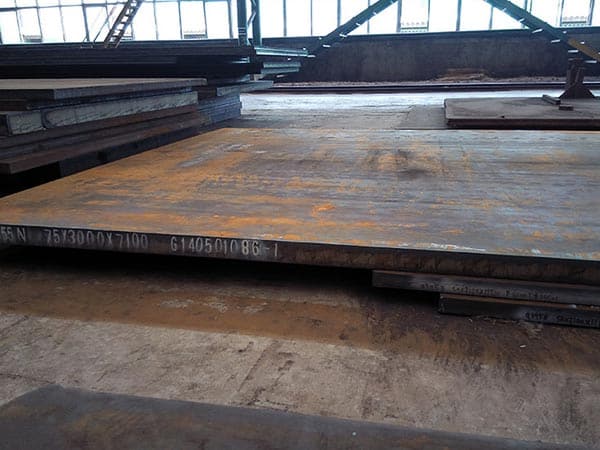
Understanding S420MC: The Backbone of Modern Automotive Engineering
S420MC steel represents a pinnacle of material science within the EN 10149-2 standard, specifically designed for high-load applications that require a delicate balance between weight reduction and structural integrity. As a thermomechanically rolled, high-yield strength steel, S420MC (where 'S' denotes structural steel, '420' signifies a minimum yield strength of 420 MPa, 'M' indicates thermomechanical rolling, and 'C' specifies suitability for cold forming) has become indispensable in the automotive manufacturing landscape. This material is engineered to meet the rigorous demands of modern vehicle design, focusing on fuel efficiency, safety, and durability.
The automotive industry is currently navigating a transformative era where the reduction of vehicle mass is paramount. S420MC provides a solution by allowing engineers to use thinner gauges of steel without compromising the overall strength of the vehicle's frame. This capability is vital for both internal combustion engine vehicles looking to reduce CO2 emissions and electric vehicles (EVs) aiming to extend battery range through weight optimization.
The Metallurgy and Chemical Composition of S420MC
The exceptional performance of S420MC is rooted in its precise chemical composition and the thermomechanical rolling process. Unlike traditional hot-rolled steels that rely on high carbon content for strength, S420MC utilizes micro-alloying technology. By adding minute quantities of elements such as Niobium (Nb), Vanadium (V), and Titanium (Ti), manufacturers can achieve a fine-grained microstructure that significantly enhances both strength and toughness.
| Element | Maximum Percentage (%) |
|---|---|
| Carbon (C) | 0.12 |
| Manganese (Mn) | 1.60 |
| Silicon (Si) | 0.50 |
| Phosphorus (P) | 0.025 |
| Sulfur (S) | 0.015 |
| Aluminium (Al) | 0.015 (min) |
The low carbon content (max 0.12%) is a critical factor for the steel's excellent weldability. In automotive assembly lines, where high-speed robotic welding is standard, the ability to join components without the risk of cold cracking or the need for extensive pre-heating is a major operational advantage. The micro-alloying elements act as grain refiners during the thermomechanical rolling process, preventing grain growth and ensuring that the final product maintains its high yield strength even after complex forming operations.
Mechanical Performance and Structural Reliability
When evaluating S420MC for automotive structural components, its mechanical properties are the primary consideration. The steel must withstand static loads, dynamic vibrations, and, most importantly, impact forces during a collision. The minimum yield strength of 420 MPa ensures that the material can resist permanent deformation under significant stress, which is essential for maintaining the geometry of the vehicle's chassis.
Key Mechanical Properties of S420MC:
- Yield Strength: Minimum 420 MPa for thicknesses ≤ 16mm.
- Tensile Strength: Ranges between 480 and 620 MPa, providing a robust safety margin.
- Elongation: Minimum 16% to 19% (depending on thickness), allowing for significant energy absorption during deformation.
- Bending Radius: Excellent cold bending properties, typically allowing for a 0.5t to 1.0t radius depending on the orientation.
The high elongation values are particularly important for crashworthiness. In the event of an accident, structural components made from S420MC are designed to deform in a controlled manner, absorbing kinetic energy and protecting the vehicle's occupants. This "crumple zone" functionality is a cornerstone of modern automotive safety ratings.
Cold Forming and Processing Versatility
The 'C' in S420MC highlights its superior cold-forming capabilities. Automotive manufacturers often require complex shapes for chassis cross-members, longitudinal beams, and suspension brackets. S420MC can be cold-pressed, stamped, and folded into these intricate geometries without developing surface cracks or internal stresses that could lead to premature failure.
Processing Advantages Include:
- Precision Laser Cutting: The clean chemical composition and uniform microstructure allow for high-speed laser cutting with minimal dross, ensuring tight tolerances for downstream assembly.
- Excellent Edge Quality: Unlike some higher-strength steels that can become brittle at the sheared edges, S420MC maintains its ductility, reducing the risk of edge cracking during subsequent flanging or expanding operations.
- Consistent Springback: The controlled rolling process ensures predictable springback during bending, which is essential for maintaining dimensional accuracy in mass production.
Furthermore, the surface quality of S420MC is typically superior to standard structural steels. This is achieved through careful control of the rolling temperature and cooling rates, resulting in a thin, adherent scale that is easily removed during pickling, providing a perfect substrate for E-coating or galvanizing.
Primary Applications in the Automotive Sector
The versatility of S420MC makes it a preferred choice for a wide array of structural and safety-critical components. Its application is most prevalent in heavy-duty vehicles, passenger cars, and specialized transport equipment where the strength-to-weight ratio is a decisive factor.
1. Chassis and Frame Components: The chassis is the most critical structural element of any vehicle. S420MC is extensively used for longitudinal beams and cross-members in truck frames. These parts must support the weight of the engine, transmission, and payload while resisting the twisting forces encountered during off-road or uneven driving conditions.
2. Suspension Systems: Control arms, shock absorber brackets, and spring links benefit from the high fatigue resistance of S420MC. These components are subjected to millions of cycles of stress; the fine-grained structure of S420MC helps inhibit the initiation and propagation of fatigue cracks.
3. Reinforcement Pillars and Beams: In passenger cars, S420MC is used for B-pillar reinforcements and bumper beams. These components are vital for side-impact protection and front-end collision safety. By using S420MC, manufacturers can achieve the necessary stiffness with a thinner profile, creating more interior space and reducing the overall weight of the vehicle body-in-white (BIW).
4. Cold-Pressed Structural Parts: Many brackets and mounting plates within the engine bay and underbody are manufactured using S420MC. Its ability to be deep-drawn or complexly formed allows for the consolidation of multiple parts into a single stamped component, reducing assembly time and cost.
Environmental Adaptation and Sustainability
Beyond its mechanical and processing strengths, S420MC aligns with the global shift toward sustainable manufacturing. The primary environmental benefit comes from the reduction in raw material usage. Because S420MC is significantly stronger than traditional S235 or S355 grades, less steel is required to achieve the same structural performance. This "material efficiency" directly translates to lower energy consumption during the steelmaking process and reduced transportation emissions.
Moreover, S420MC is fully recyclable. At the end of a vehicle's lifecycle, the steel can be recovered and processed in electric arc furnaces (EAF) to produce new high-quality steel grades. The low level of alloying elements makes it easier to manage the chemistry of recycled scrap, supporting a circular economy within the automotive industry.
Corrosion resistance is another aspect of environmental adaptation. While S420MC is not a stainless steel, its uniform surface and compatibility with modern coating technologies ensure that automotive components can withstand harsh environments, including exposure to road salt and moisture, for the intended lifespan of the vehicle.
Comparative Analysis: S420MC vs. Traditional Grades
To fully appreciate the value of S420MC, it is helpful to compare it with other common automotive steels. For instance, compared to S355MC, S420MC offers an approximately 18% increase in yield strength. This allows for a theoretical weight saving of up to 15% in tension-loaded components. While S500MC and S700MC offer even higher strengths, they often come with a trade-off in terms of reduced ductility and more challenging welding requirements.
S420MC occupies the "sweet spot" for many engineers—it is strong enough to provide significant weight savings but ductile enough to be processed on existing machinery without the need for specialized tooling or high-temperature forming processes. This makes it a cost-effective upgrade for manufacturers looking to modernize their vehicle platforms without a complete overhaul of their production lines.
The Strategic Role of S420MC in Future Vehicle Platforms
As the automotive industry moves toward autonomous driving and increased electrification, the role of materials like S420MC will only grow. Autonomous vehicles require additional sensors and computing hardware, which add weight; EVs require heavy battery packs. Offsetting this added mass is essential for maintaining vehicle performance and efficiency. S420MC provides the structural foundation that allows these technologies to be integrated safely and effectively.
The ongoing development of thermomechanical rolling techniques continues to refine the properties of S420MC, ensuring it remains a competitive and reliable choice for the next generation of automotive engineering. By understanding the deep technical nuances of this material, from its micro-alloyed chemistry to its cold-forming versatility, designers can continue to push the boundaries of what is possible in vehicle safety and efficiency.
Leave a message