
What asdvantages does BS700MC high strength alloy steel have
Explore the comprehensive technical advantages of BS700MC high-strength alloy steel, including its mechanical properties, cold-forming capabilities, and industrial applications.
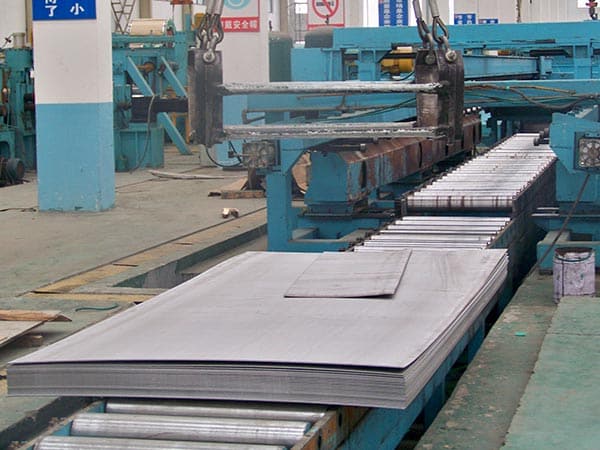
The Evolution of High-Strength Structural Materials: Understanding BS700MC
In the modern landscape of structural engineering and heavy machinery manufacturing, the demand for materials that offer both extreme strength and significant weight reduction has never been higher. BS700MC, a high-strength low-alloy (HSLA) steel produced through the thermomechanically controlled process (TMCP), stands at the forefront of this material revolution. This steel grade is specifically engineered to provide a minimum yield strength of 700 MPa, making it a cornerstone for industries aiming for efficiency and durability. Unlike traditional structural steels, BS700MC balances high load-bearing capacity with exceptional ductility and processability, allowing engineers to push the boundaries of design without compromising safety.
Superior Mechanical Properties and Load-Bearing Capacity
The primary advantage of BS700MC lies in its remarkable yield strength and tensile strength. With a yield strength threshold of 700 MPa, it significantly outperforms standard carbon steels like Q345 or S355. This high strength-to-weight ratio allows for the use of thinner sections to support the same or even higher loads. By reducing the thickness of structural components, manufacturers can achieve a weight reduction of 30% to 50% compared to conventional materials. This is not merely a matter of material savings; it directly translates to increased payload capacity for transport vehicles and reduced energy consumption during operation.
The tensile strength of BS700MC typically ranges between 750 and 950 MPa, ensuring that the material can withstand extreme stress before failure. Furthermore, its elongation properties remain impressive for such a high-strength grade, often exceeding 12-15%, which provides a critical safety buffer by allowing for plastic deformation before fracture. This combination of strength and toughness makes it ideal for dynamic loading environments where impact resistance is paramount.
Advanced Micro-alloying and TMCP Technology
The exceptional performance of BS700MC is a direct result of its sophisticated metallurgical design. The steel utilizes a low-carbon chemical composition supplemented with micro-alloying elements such as Niobium (Nb), Vanadium (V), and Titanium (Ti). These elements work in synergy to achieve grain refinement and precipitation hardening. During the thermomechanically controlled rolling process, the cooling rates and rolling temperatures are precisely managed to create a fine-grained ferritic-bainitic microstructure. This fine grain structure is the key to achieving high strength without the brittleness typically associated with high-carbon steels.
The low carbon equivalent (Ceq) of BS700MC is another significant metallurgical advantage. By keeping the carbon content low (usually below 0.12%), the steel maintains excellent weldability and reduces the risk of cold cracking in the heat-affected zone (HAZ). This allows for high-speed welding processes and reduces the need for extensive pre-heating or post-weld heat treatments, streamlining the manufacturing workflow.
Exceptional Cold Forming and Bending Performance
For manufacturers, the ability to shape material is just as important as its final strength. BS700MC is renowned for its excellent cold-forming properties. Despite its high strength, it can be bent to tight radii without cracking or surface defects. This is particularly advantageous in the production of complex structural members like U-beams, C-channels, and specialized chassis components.
Typical bending performance for BS700MC allows for a minimum inner bending radius of approximately 1.0 to 1.5 times the plate thickness (t), depending on the orientation (longitudinal or transverse). This level of formability ensures that designers can incorporate streamlined, aerodynamic, or structurally optimized shapes into their products. The consistency of the material's mechanical properties across the entire coil ensures predictable springback behavior, which is vital for precision automated manufacturing and robotic assembly lines.
Excellent Weldability and Processing Efficiency
Welding is often the most critical step in structural fabrication. BS700MC offers superior weldability across all common welding methods, including MAG (Metal Active Gas), MIG (Metal Inert Gas), and laser welding. Because of its low alloy content and refined microstructure, the steel exhibits minimal hardening in the heat-affected zone. This ensures that the welded joints maintain high toughness and fatigue resistance, matching the performance of the base metal.
In addition to welding, BS700MC responds exceptionally well to modern cutting technologies. Whether using fiber laser, plasma, or waterjet cutting, the material produces clean, precise edges with a minimal heat-affected zone. This precision reduces the need for secondary grinding or finishing operations, further lowering production costs and improving throughput. The surface quality of BS700MC is also optimized for subsequent coating processes, providing an excellent substrate for painting, galvanizing, or powder coating, which is essential for long-term corrosion protection.
Enhanced Fatigue Resistance and Environmental Adaptability
Structural components in the transport and construction sectors are frequently subjected to cyclic loading, making fatigue resistance a critical design factor. The fine-grained structure of BS700MC significantly slows the initiation and propagation of fatigue cracks. This leads to a longer service life for equipment and structures, reducing maintenance intervals and total cost of ownership. For mobile cranes, trailer frames, and mining equipment, this durability is a decisive competitive advantage.
Furthermore, BS700MC demonstrates stable performance across a wide range of environmental conditions. Its low-temperature impact toughness is particularly noteworthy, often maintaining its integrity at temperatures as low as -40°C or -60°C. This makes it suitable for use in arctic environments or high-altitude applications where standard steels might become brittle and prone to catastrophic failure.
Comparative Analysis of Technical Specifications
To better understand the positioning of BS700MC, it is helpful to examine its typical technical parameters in comparison to standard structural steel.
| Property | BS700MC (Typical) | s355jr (Standard) | Advantage |
|---|---|---|---|
| Yield Strength (MPa) | ≥ 700 | ≥ 355 | ~97% Increase |
| Tensile Strength (MPa) | 750 - 950 | 470 - 630 | Higher Load Capacity |
| Elongation (%) | ≥ 12 | ≥ 20 | Balanced Ductility |
| Carbon Equivalent (Ceq) | ~0.35 | ~0.45 | Better Weldability |
| Min. Bending Radius | 1.5t | 0.5t | High Strength Formability |
Strategic Industry Applications
The unique property profile of BS700MC has led to its widespread adoption across several high-stakes industries. In the automotive and transportation sector, it is the material of choice for truck chassis, semi-trailer frames, and cross members. By utilizing BS700MC, manufacturers can build lighter trailers that carry more cargo while staying within legal weight limits, directly improving logistics profitability and reducing carbon emissions per ton-mile.
In the lifting and construction machinery industry, BS700MC is used for crane booms, telescopic arms, and concrete pump trucks. The high strength allows these machines to reach higher and lift heavier loads without becoming top-heavy or unstable. The weight saved in the boom structure can be redistributed to the counterweights or used to increase the machine's overall reach.
The mining and agricultural sectors also benefit from BS700MC. For heavy-duty dump bodies, harvester frames, and soil processing equipment, the steel provides the necessary strength to withstand abrasive environments and high-impact forces while keeping the equipment light enough to minimize soil compaction and fuel consumption. The versatility of BS700MC ensures it remains a vital component in the quest for more efficient, sustainable, and powerful industrial machinery.
Ultimately, the adoption of BS700MC represents a shift toward intelligent engineering. By leveraging the metallurgical advancements of TMCP steel, companies can produce equipment that is stronger, lighter, and more durable. The initial material cost is offset by the significant savings in manufacturing, transport, and long-term operational efficiency, making BS700MC an indispensable asset in the global steel market.
Leave a message