
What is medium thick S700MC pickled steel coil
Explore the technical specifications, mechanical properties, and industrial applications of medium thick S700MC pickled steel coils. Learn why this high-strength steel is essential for modern engineering.
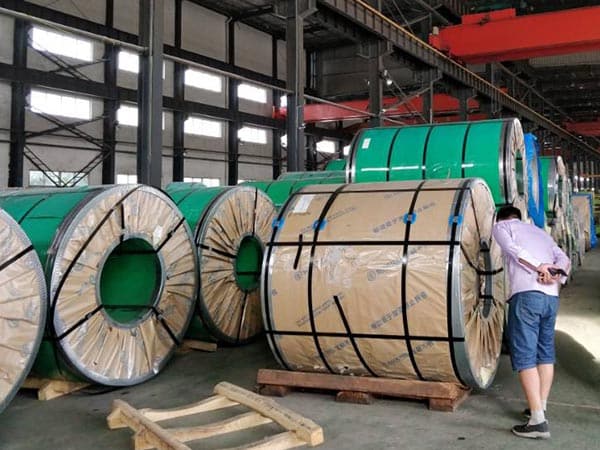
Defining S700MC Medium Thick Pickled Steel Coil
S700MC is a high-strength, thermomechanically rolled steel grade specifically designed for cold forming. According to the EN 10149-2 standard, the "S" stands for structural steel, "700" denotes a minimum yield strength of 700 MPa, and "MC" indicates that the material is produced through thermomechanically controlled processing (TMCP). When we refer to "medium thick" coils, we are generally discussing material thicknesses ranging from 3.0mm to 12.0mm, which occupy a critical space between light-gauge sheets and heavy plates. The "pickled" designation refers to a surface treatment where the hot-rolled scale is removed through a chemical acid bath, typically hydrochloric acid, followed by an oil coating to prevent oxidation. This combination of high strength, specific thickness, and superior surface quality makes S700MC pickled coils a cornerstone of modern weight-reduction strategies in heavy engineering.
The Metallurgy Behind the Strength: TMCP and Micro-alloying
The exceptional performance of S700MC is not merely a result of its chemical composition but rather the sophisticated thermomechanical rolling process it undergoes. Unlike traditional normalized steels, S700MC achieves its properties through a precise combination of temperature control and deformation during the rolling process. This technique results in an extremely fine-grained microstructure, often referred to as grain refinement. By reducing the grain size, the steel achieves higher yield strength and improved toughness simultaneously, a feat difficult to reach through traditional heat treatments. Micro-alloying elements such as Niobium (Nb), Vanadium (V), and Titanium (Ti) play a pivotal role here. These elements form fine carbides and nitrides that pin grain boundaries during rolling, preventing grain growth and ensuring a uniform, high-strength matrix. The low carbon content (typically below 0.12%) is maintained to ensure that the steel remains highly weldable and ductile despite its immense strength.
Mechanical Properties and Performance Standards
When evaluating S700MC, the mechanical properties are the primary focus for structural engineers. The material is engineered to provide a high strength-to-weight ratio, allowing for thinner sections to carry the same loads as thicker, lower-grade steels like S355. This translates directly into material savings and increased payload capacity for transport equipment.
| Property | Value (Typical for S700MC) |
|---|---|
| Yield Strength (ReH) | Min. 700 MPa |
| Tensile Strength (Rm) | 750 - 950 MPa |
| Elongation (A5) | Min. 10% - 12% (depending on thickness) |
| Bending Radius (90°) | 1.5t to 2.0t (where t is thickness) |
| Impact Energy (-20°C) | Min. 40 J (optional requirements) |
These values demonstrate that S700MC is not just about raw strength; it retains enough ductility to be formed into complex shapes. The yield-to-tensile ratio is relatively high, which is a characteristic of TMCP steels, requiring precise calculations during the design phase to account for springback during cold forming.
The Advantages of the Pickling Process
The pickling process (Oiled and Pickled - P&O) adds significant value to the medium thick S700MC coil. During hot rolling, a layer of iron oxide (scale) forms on the surface. If left untreated, this scale can damage forming tools, hinder welding quality, and provide a poor base for coatings. Pickled S700MC offers several distinct advantages:
- Improved Surface Finish: The removal of scale results in a smooth, clean metallic surface that is aesthetically pleasing and easier to inspect for surface defects.
- Enhanced Tool Life: Hard scale acts as an abrasive. By using pickled steel, manufacturers can significantly extend the life of their stamping dies, laser cutting nozzles, and bending tools.
- Superior Laser Cutting: Scale can interfere with the laser beam, causing inconsistent cuts. Pickled steel allows for faster, cleaner, and more precise laser cutting, which is vital for the intricate components often made from S700MC.
- Optimal Coating Adhesion: Whether painting, powder coating, or galvanizing, a pickled surface provides the necessary cleanliness for maximum chemical and mechanical bonding.
Processing Performance: Bending and Welding
One of the most frequent questions regarding S700MC is how it behaves during fabrication. Despite its high strength, S700MC is designed for cold forming. However, because the material is so strong, the bending force required is significantly higher than that for standard structural steels. Fabricators must ensure their press brakes have the necessary tonnage. The minimum bending radius is a critical parameter; for S700MC, a radius of 2 times the thickness (2t) is generally recommended for thicknesses above 6mm to avoid cracking on the outer tension zone. Weldability is another highlight. Due to its low carbon equivalent (CEV), S700MC can be welded using all standard methods (MIG/MAG, TIG, Submerged Arc). It is important to control the heat input; excessive heat can lead to grain coarsening in the Heat Affected Zone (HAZ), which may locally reduce the yield strength. Using high-quality filler metals that match the 700 MPa strength level is essential for maintaining structural integrity.
Strategic Applications in Modern Industry
The move toward lightweighting and high-efficiency structures has pushed S700MC into the spotlight across various sectors. In the transportation industry, it is the preferred material for truck chassis, cross members, and longitudinal beams. By switching from S355 to S700MC, engineers can reduce the weight of a trailer frame by up to 30%, which directly translates to lower fuel consumption and higher payload capacity. The lifting and mobile crane sector utilizes S700MC for telescopic booms and outriggers, where the combination of high strength and low weight allows for greater reach and lifting capacity. In agricultural machinery, the wear resistance (derived from its hardness) and structural strength make it ideal for plows, trailers, and harvester frames that must endure high stress in harsh environments. Furthermore, the waste management industry uses this steel for refuse collection vehicles to withstand the constant cycling and abrasive nature of the cargo.
Environmental Impact and Sustainability
Using S700MC contributes significantly to environmental sustainability. The logic is simple: higher strength allows for less steel to be used to achieve the same structural performance. This "material efficiency" reduces the total energy required for steel production per unit of final product. Additionally, lighter vehicles produced with S700MC emit fewer greenhouse gases over their operational lifespan. Because S700MC is a low-alloy steel, it remains fully recyclable, fitting perfectly into the circular economy of the global steel industry. The pickling process itself has also evolved, with modern "closed-loop" acid regeneration systems that minimize chemical waste and water consumption, making the production of pickled coils more eco-friendly than ever before.
Storage and Handling Considerations
Because pickled S700MC steel is stripped of its protective scale and coated with a thin layer of oil, proper storage is vital. The coils should be kept in a climate-controlled, dry indoor environment to prevent "white rust" or oxidation. If the material is stored in high-humidity areas, the protective oil may eventually fail, leading to localized corrosion. When handling medium thick coils, specialized lifting equipment like C-hooks or vacuum lifters should be used to avoid edge damage, which can become a stress concentrator during subsequent forming operations. Before welding or painting, the protective oil must be removed using appropriate degreasers to ensure the integrity of the finish.
Technical Comparison: S700MC vs. Conventional Grades
To truly appreciate the value of S700MC, one must compare it to conventional grades like Q355B or s355jr. While S355 has a yield strength of roughly 355 MPa, S700MC offers nearly double that. This means that in a tension-loaded application, an S700MC plate can be half as thick as an S355 plate. While the price per ton of S700MC is higher, the total cost of ownership is often lower because the manufacturer buys fewer tons of steel, pays less for shipping, and produces a superior, more competitive final product. This shift from volume-based purchasing to performance-based material selection is a hallmark of advanced engineering firms today.
Leave a message