
Effect of alloy elements on mechanical properties of S355MC engineering car steel
Comprehensive analysis of how carbon, manganese, and micro-alloying elements like Niobium and Titanium influence the mechanical properties and formability of S355MC steel for automotive engineering.
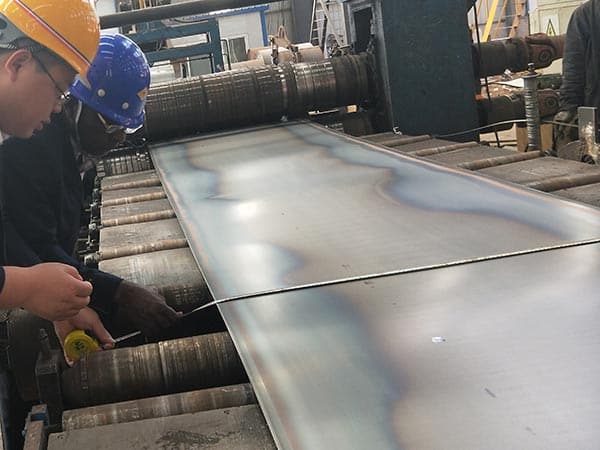
The Metallurgical Foundation of S355MC High-Strength Steel
S355MC is a thermomechanically rolled, high-yield-strength cold-forming steel governed by the EN 10149-2 standard. Unlike traditional hot-rolled structural steels, S355MC is engineered specifically for the automotive and heavy machinery industries, where weight reduction and structural integrity are paramount. The "MC" suffix denotes its thermomechanical rolling process and high formability, which are direct results of a precisely controlled chemical composition. Understanding the interplay between various alloy elements is essential for engineers who seek to optimize vehicle chassis components, crane booms, and structural frames.
The Role of Carbon (C) and Manganese (Mn) in Strength Balancing
Carbon remains the primary hardening element in steel. In S355MC, the carbon content is strictly limited, typically below 0.12%. This low carbon concentration is critical for ensuring exceptional weldability and cold-forming capabilities. High carbon levels would lead to the formation of brittle martensite during welding, compromising the safety of automotive structural parts. By keeping carbon low, the steel maintains a predominantly ferritic microstructure with fine pearlite, providing the necessary ductility for complex bending operations.
Manganese, usually present in concentrations up to 1.50%, serves as a vital solid solution strengthener. It increases the hardenability of the steel and significantly improves its tensile strength without drastically reducing its toughness. Manganese also plays a secondary role by combining with residual sulfur to form manganese sulfides (MnS), which prevents "hot shortness" during the rolling process. The balance between Carbon and Manganese is the first step in achieving the 355 MPa yield strength requirement while maintaining a high elongation percentage.
Micro-Alloying Elements: The Impact of Niobium (Nb), Vanadium (V), and Titanium (Ti)
The defining characteristic of S355MC is its use of micro-alloying. These elements, even in minute quantities (often less than 0.1% combined), exert a profound influence on the grain structure. Niobium (Nb) is perhaps the most critical micro-alloying element in S355MC. It raises the recrystallization temperature of austenite during the rolling process, allowing for "non-recrystallization rolling." This results in a highly refined ferrite grain size in the final product. Finer grains lead to a simultaneous increase in both strength and impact toughness—a phenomenon described by the Hall-Petch relationship.
Titanium (Ti) is often added to stabilize nitrogen and protect Niobium from forming nitrides, ensuring that Niobium remains available for grain refinement. Titanium carbonitrides also act as grain growth inhibitors during the reheating of slabs. Vanadium (V) contributes through precipitation hardening, forming fine carbides within the ferrite matrix that block dislocation movement, further boosting the yield strength of the engineering car steel.
Mechanical Properties and Chemical Composition Table
To visualize the relationship between the chemistry and the resulting performance, the following table outlines the standard requirements for S355MC under EN 10149-2:
| Element/Property | Requirement (Max % or Range) | Impact on Performance |
|---|---|---|
| Carbon (C) | 0.12% max | Ensures weldability and ductility |
| Manganese (Mn) | 1.50% max | Solid solution strengthening |
| Silicon (Si) | 0.50% max | Deoxidation and strength |
| Nb + V + Ti | 0.22% max | Grain refinement and precipitation hardening |
| Yield Strength (ReH) | ≥ 355 MPa | Structural load-bearing capacity |
| Tensile Strength (Rm) | 430 - 550 MPa | Ultimate resistance to fracture |
| Elongation (A80mm) | ≥ 19% (t < 3mm) | Complex cold-forming capability |
Processing Performance: Cold Forming and Laser Cutting
S355MC is favored in automotive engineering due to its superior cold-forming properties. The low carbon and micro-alloyed structure allow for tight bending radii without the risk of cracking. This is essential for manufacturing longitudinal beams and cross-members in truck chassis. When designing components, engineers must account for the anisotropy of the steel; while S355MC is designed for formability, the bending direction relative to the rolling direction can still influence the minimum bend radius.
Furthermore, the controlled Silicon and Aluminum content makes S355MC an ideal candidate for laser cutting. Modern automotive manufacturing relies heavily on automated laser systems. A clean chemical composition with minimal non-metallic inclusions ensures a stable cutting process, smooth edges, and minimal heat-affected zones (HAZ). This reduces the need for secondary grinding operations, significantly lowering production costs in high-volume car manufacturing.
Environmental Adaptability and Fatigue Resistance
Engineering car steel must withstand harsh environmental conditions, from road salts to extreme temperature fluctuations. The fine-grained structure of S355MC provides better resistance to atmospheric corrosion compared to coarse-grained structural steels. Although it is not a dedicated weathering steel, its dense microstructure slows the penetration of oxidative agents.
Fatigue resistance is another critical factor for automotive components subject to cyclic loading. The micro-alloying elements ensure a homogenous distribution of carbides, which prevents the localized stress concentrations that typically initiate fatigue cracks. The high yield-to-tensile ratio of S355MC allows for designs that can absorb energy during impacts (crashworthiness) while maintaining structural stiffness during normal operation. This makes it a preferred choice for safety-critical components such as bumper brackets and suspension mounts.
Optimizing Material Selection for Automotive Engineering
Choosing S355MC over standard s355jr offers significant advantages in weight reduction. Because S355MC has a more consistent yield strength and better formability, engineers can use thinner gauges without sacrificing structural integrity. This "lightweighting" is a core strategy for improving fuel efficiency and reducing carbon emissions in modern vehicles. The precise control of Sulfur (S) and Phosphorus (P) levels—often kept below 0.020% and 0.025% respectively—ensures that the steel remains tough even at sub-zero temperatures, which is a vital requirement for vehicles operating in cold climates.
- High Yield Strength: Enables thinner wall thicknesses for chassis components.
- Excellent Weldability: Compatible with MAG, TIG, and laser welding processes.
- Superior Surface Quality: Suitable for subsequent coating, painting, or galvanizing.
- Consistent Mechanical Properties: Predictable spring-back during stamping and bending.
By leveraging the specific effects of Niobium and Titanium, S355MC transcends the limitations of traditional carbon steels. It represents a sophisticated balance of metallurgy and processing technology, providing the automotive industry with a reliable, high-performance material that meets the rigorous demands of modern engineering and environmental standards.
Leave a message