
What are the properties of S500MC steel complete specifications
A comprehensive guide to S500MC steel properties, covering chemical composition, mechanical performance, welding characteristics, and industrial applications for high-strength structural projects.
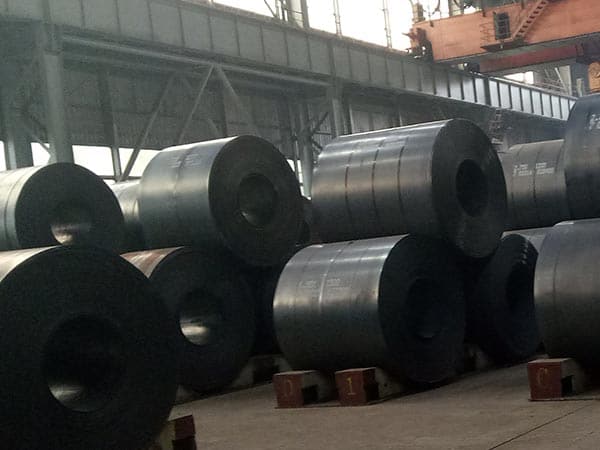
The Metallurgical Foundation of S500MC High-Yield Steel
S500MC steel represents a sophisticated category of high-yield strength steels specifically designed for cold forming. Governed by the European standard EN 10149-2, this material is produced through a meticulous Thermomechanically Controlled Processing (TMCP) route. Unlike traditional hot-rolled steels that rely on heavy alloying or subsequent heat treatment, S500MC achieves its superior strength through a combination of precise rolling temperatures and controlled cooling rates. This process results in an exceptionally fine-grained microstructure, which is the primary driver behind its high yield strength of 500 MPa and its remarkable toughness.
The "S" in S500MC denotes structural steel, while "500" indicates the minimum yield strength in Megapascals. The "M" signifies the thermomechanically rolled delivery condition, and "C" highlights its suitability for cold forming. This grade is engineered to meet the modern industrial demand for lightweighting—reducing the mass of components without sacrificing structural integrity. By utilizing S500MC, engineers can specify thinner sections compared to conventional S355 grades, leading to significant weight savings in transport and heavy machinery sectors.
Detailed Chemical Composition and Micro-Alloying Strategy
The performance of S500MC is dictated by its lean but effective chemical profile. The steel maintains a low carbon content to ensure excellent weldability and ductility. The strength is primarily derived from micro-alloying elements such as Niobium (Nb), Vanadium (V), and Titanium (Ti). These elements form fine carbonitride precipitates during the cooling process, which pin grain boundaries and prevent grain growth, effectively strengthening the matrix through grain refinement and precipitation hardening.
| Element | Maximum Content (%) |
|---|---|
| Carbon (C) | 0.12 |
| Manganese (Mn) | 1.60 |
| Silicon (Si) | 0.50 |
| Phosphorus (P) | 0.025 |
| Sulphur (S) | 0.015 |
| Aluminum (Al) | 0.015 (min) |
| Niobium (Nb) | 0.09 |
| Vanadium (V) | 0.20 |
| Titanium (Ti) | 0.15 |
Low sulfur and phosphorus levels are critical for maintaining the cleanliness of the steel. This high level of purity reduces the risk of lamellar tearing and improves the material's isotropic properties, meaning it performs consistently whether stressed longitudinally or transversely to the rolling direction. The inclusion of Aluminum acts as a deoxidizer and further assists in grain size control.
Mechanical Properties and Structural Integrity
The mechanical specifications of S500MC are the benchmark for high-performance structural applications. While the yield strength is the headline figure, the relationship between yield and tensile strength (the yield ratio) is equally vital for predictable deformation behavior during manufacturing and service life.
| Property | Value Range |
|---|---|
| Yield Strength (ReH) | Min 500 MPa |
| Tensile Strength (Rm) | 550 - 700 MPa |
| Elongation (A80mm, t < 3mm) | Min 12% |
| Elongation (A5, t ≥ 3mm) | Min 14% |
Beyond these standard figures, S500MC exhibits impressive impact toughness. Although EN 10149-2 does not always mandate impact testing for all sub-grades, many manufacturers provide S500MC with guaranteed Charpy V-notch impact values at temperatures as low as -20°C or -40°C. This makes the material suitable for equipment operating in harsh, cold climates where brittle fracture is a significant concern. The fine-grained structure ensures that the ductile-to-brittle transition temperature remains safely below the operating environment.
Cold Forming and Bending Characteristics
One of the standout attributes of S500MC is its exceptional formability. Despite its high strength, it can be bent to tight radii without cracking. This is a direct result of the controlled rolling process which ensures a uniform distribution of micro-constituents. For fabricators, this means complex geometries can be achieved using standard hydraulic press brakes. When bending S500MC, it is essential to consider the minimum recommended bending radius to avoid surface strain and localized necking.
- Bending Transverse to Rolling Direction: Typically requires a minimum radius of 1.0 to 1.5 times the material thickness (t).
- Bending Parallel to Rolling Direction: Typically requires a slightly larger radius, often 1.5 to 2.0 times the thickness (t).
- Springback: Due to the higher yield strength compared to mild steel, S500MC exhibits greater springback. Tooling adjustments and over-bending techniques are necessary to achieve precise final angles.
The material's consistent thickness tolerances and surface quality also contribute to its success in automated laser cutting and punching operations. The lack of heavy scale on pickled and oiled versions of S500MC ensures clean cuts and minimal wear on cutting nozzles.
Welding Performance and Technical Considerations
S500MC is designed for excellent weldability across all common processes, including MAG (Metal Active Gas), TIG (Tungsten Inert Gas), and laser welding. The low carbon equivalent (CEV) value minimizes the risk of cold cracking in the heat-affected zone (HAZ). Unlike older generations of high-strength steels, S500MC generally does not require preheating for standard thicknesses, which significantly reduces production time and energy costs.
However, because the strength of S500MC is derived from its TMCP microstructure, excessive heat input during welding can lead to localized grain coarsening in the HAZ, potentially reducing the yield strength in that specific area. It is recommended to use low heat input techniques and maintain controlled interpass temperatures. Selecting the correct filler metal is also paramount; typically, a filler wire with a yield strength matching or slightly exceeding 500 MPa (such as ER80S-G or equivalent) is utilized to ensure the weld joint is as strong as the base metal.
Industrial Applications and Strategic Utility
The adoption of S500MC is widespread across industries where the strength-to-weight ratio is a critical performance metric. In the commercial vehicle industry, it is the preferred choice for truck chassis frames, cross members, and longitudinal beams. By switching from S355 to S500MC, manufacturers can reduce the weight of a trailer chassis by up to 20%, which translates directly into higher payload capacity and improved fuel efficiency.
In the crane and lifting equipment sector, S500MC is used for telescopic booms and support structures. The material's high strength allows for longer reach and higher lifting capacities while keeping the overall weight of the crane manageable for road transport. Similarly, in the agricultural sector, S500MC is found in the frames of large-scale machinery like harvesters and plows, where durability and weight are constantly in tension. Other notable uses include cold-pressed parts for automotive safety systems, racking systems for heavy-duty warehouses, and structural components for renewable energy infrastructure, such as solar mounting brackets that must withstand high wind loads.
Environmental Adaptability and Longevity
The long-term performance of S500MC in diverse environments is bolstered by its chemical stability. While it is not a corrosion-resistant steel like stainless or weathering steel, its smooth surface finish allows for excellent adhesion of protective coatings. Whether through hot-dip galvanizing, powder coating, or sophisticated E-coating processes, S500MC provides a reliable substrate that ensures the longevity of the finished assembly. Furthermore, the high fatigue strength of S500MC makes it exceptionally resilient under cyclic loading conditions, which is a frequent requirement for mobile machinery and transport equipment subjected to constant vibration and stress fluctuations during operation.
The move toward S500MC also aligns with global sustainability goals. Using less steel to achieve the same structural performance reduces the carbon footprint associated with ore extraction, smelting, and transport. This makes S500MC not just a high-performance engineering choice, but also an environmentally conscious one for the next generation of industrial design.
Leave a message